
Every cat owner eventually tells the same story with a different cast: two cats, one cardboard box, zero common sense. One cat gets halfway inside the box and forgets how doors work. The other sees a sunbeam, sprints toward it like a tiny furry missile, and crashes into the laundry basket with the confidence of an Olympic athlete and the judgment of a wet sock.
That is the magic behind the phrase two stupid cats. It sounds insulting, but most cat lovers say it with affection. “Stupid” usually means hilarious, dramatic, stubborn, curious, overconfident, or temporarily defeated by a plastic bag. In truth, cats are not dumb. They are highly alert, instinct-driven animals with flexible bodies, strong hunting habits, sharp senses, and a talent for making humans question reality before breakfast.
This article is a playful but practical look at why two cats can seem ridiculous together, what their strange behavior really means, and how to keep them happy, safe, and entertained without turning your home into a feline circus. Although, to be fair, the circus may already be underway.
Why “Two Stupid Cats” Is Usually Just Two Smart Cats Being Weird
Cats often look foolish because they are operating on cat logic, not human logic. A person sees a grocery bag. A cat sees a cave, a trap, a hunting blind, a suspicious enemy, and possibly a retirement home. A person sees a glass of water. A cat sees a scientific experiment about gravity. A person sees a closed door. A cat sees betrayal.
When two cats live together, their behavior becomes even more entertaining. They copy each other, compete for the same sunny spot, take turns pretending not to care, and occasionally act as if the other cat is a supernatural event. One jumps; the other jumps because the first jumped; now both are running down the hallway for reasons known only to ancient feline ancestors.
Cats Are Hunters, Not Office Managers
Many silly cat behaviors come from hunting instincts. Stalking, pouncing, hiding, chasing, scratching, climbing, and ambushing are normal feline activities. When a cat leaps at your ankle from behind the couch, it is not necessarily being rude. It may be practicing predatory play. When two cats chase each other at midnight, they are not scheduling a neighborhood emergency. They are burning energy in the most inconvenient way possible.
This is especially true for indoor cats. Indoor life protects cats from outdoor dangers, but it can also limit their opportunities to explore, hunt, climb, and solve problems. Without enough enrichment, cats may invent their own entertainment. Unfortunately, their hobbies often include knocking items off shelves, wrestling curtains, or treating your clean laundry like a luxury jungle.
The Comedy of Two Cats Living Together
One cat can be strange. Two cats can become a full sitcom. Their personalities bounce off each other in ways that feel scripted by a writer who had too much coffee.
The Copycat Problem
One cat discovers that the bathroom sink is a throne. The second cat immediately believes the sink is prime real estate. One cat scratches the cardboard pad. The other cat scratches the cardboard pad, the wall near the cardboard pad, and possibly the emotional stability of everyone in the room. Cats learn from watching, and in a two-cat household, bad ideas can spread faster than cat hair on black pants.
The Shared Brain Cell Theory
Many owners joke that two cats share one brain cell, and neither has custody on weekends. This is usually said after one cat gets stuck behind a curtain while the other attacks the moving curtain shape, apparently unaware that his roommate is inside. The truth is less dramatic: cats are quick reactors. They respond to motion, sound, scent, and tension. If one cat creates chaos, the other may join before fully understanding the plot.
The Great Invisible Enemy
Sometimes two cats stare at the same blank wall. Humans become nervous. Is there a bug? A ghost? A tiny portal? More likely, the cats hear or smell something humans cannot detect. Cats have sensitive hearing and a strong sense of smell, so their “stupid” staring contest may actually be focused investigation. Or maybe they are judging the paint color. With cats, both explanations remain possible.
Common “Stupid Cat” Behaviors and What They Really Mean
Funny cat behavior becomes easier to understand when you look at the need behind it. Cats are not trying to create a mess as an art form. Usually, they are expressing energy, stress, curiosity, discomfort, or natural behavior in a home that was designed by humans, a species that foolishly buys breakable decorations.
Knocking Things Off Tables
When a cat taps a pen off the desk, watches it fall, and then looks at you like gravity was your idea, it may be exploring cause and effect. Cats are curious. They use their paws to test objects. If the object moves, makes noise, or gets a big human reaction, congratulations: you have created premium entertainment.
In a two-cat household, this can become a team sport. One cat knocks. The other investigates the crash. The first cat receives attention. The second cat files the idea for later. To reduce this behavior, offer puzzle feeders, interactive toys, climbing spaces, and scheduled play sessions. Also, move your favorite mug away from the edge. That mug has seen enough.
Zoomies at the Worst Possible Time
Two cats racing through the house at night can sound like a herd of tiny furniture movers. Zoomies often happen when cats have stored energy. Because cats naturally enjoy short bursts of activity, a long quiet day can become an evening explosion.
Short play sessions help. Wand toys, chasing games, food puzzles, and climbing opportunities can give cats a better outlet. A routine of active play followed by a meal can also work with their natural hunt-eat-rest rhythm. The goal is not to eliminate feline weirdness. That would be impossible and frankly tragic. The goal is to direct the chaos away from your sleeping face.
Scratching the Sofa Like It Owes Money
Scratching is normal. Cats scratch to stretch, maintain claws, mark territory, and relieve tension. The problem is not that cats scratch. The problem is that your sofa is apparently delicious.
Two cats may need multiple scratching options in different locations. Some prefer vertical posts. Others prefer horizontal scratchers. Some like cardboard. Some like sisal. Some appear to prefer the most expensive object in the room. Place scratchers near resting areas, doorways, and favorite furniture. Praise and reward the cats when they use the right spot. Punishment often increases fear and stress, which can make behavior problems worse.
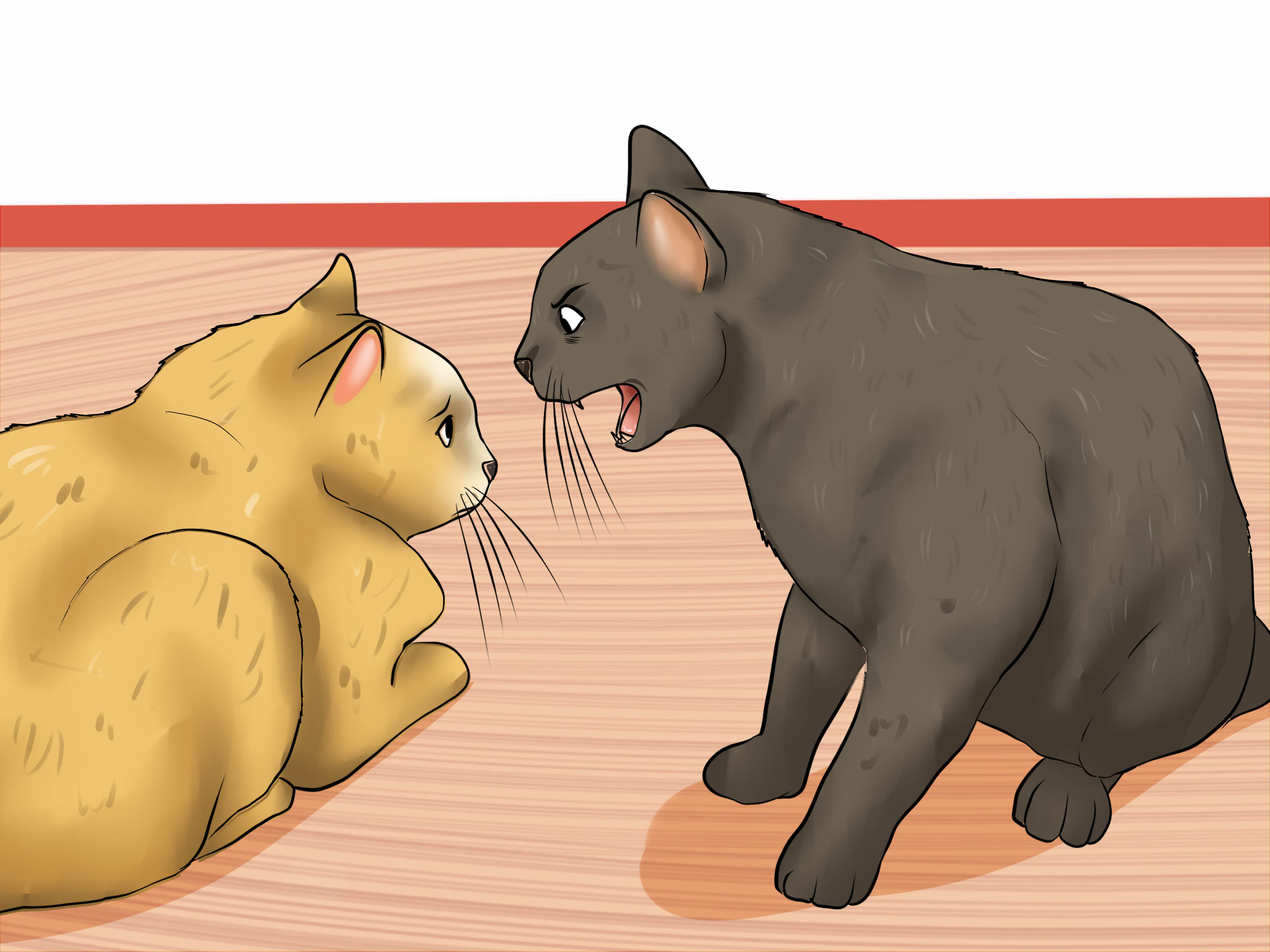
Fighting Over the Same Useless Object
You buy two identical cat beds. Naturally, both cats want the box the beds came in. You place two water bowls. They both drink from the dog’s bowl. You provide multiple toys. They fight over one dust bunny that looks vaguely mouse-shaped.
This is not stupidity. It is preference, novelty, and competition. In multi-cat homes, resources matter. Cats often do best when food, water, litter boxes, scratching areas, resting spots, and hiding places are spread around the home. This reduces tension because one cat cannot guard everything at once.
Are Cats Actually Intelligent?
Yes, cats are intelligent, but their intelligence does not always look like obedience. Dogs often show intelligence through social cooperation and trained responses. Cats are more independent problem-solvers. They observe, remember routines, learn locations, recognize patterns, and manipulate humans with the subtle power of a slow blink near an empty food bowl.
A cat who refuses to come when called may not be confused. He may understand perfectly and choose not to participate. This can feel insulting, but it is also part of the cat’s charm. Cats are motivated by safety, comfort, food, play, scent, routine, and trust. When training or encouraging behavior, rewards work better than pressure.
Two Cats Can Be Smarter Togetheror Dumber in Stereo
Two cats can learn from each other. A confident cat may help a shy cat explore. A playful cat may encourage exercise. But two cats can also amplify nonsense. If one figures out how to open a cabinet, the other may become the lookout. If one discovers that yelling at 5:00 a.m. produces breakfast, the second may join the choir.
The best response is consistency. Feed on a routine. Reward calm behavior. Avoid accidentally rewarding chaos with snacks, shouting, or dramatic chasing. To a cat, even negative attention can become part of the game.
How to Keep Two “Stupid Cats” Happy and Less Destructive
A happier cat is often a less ridiculous cat, though never a completely normal one. The goal is to meet feline needs before the cats invent hobbies that involve your curtains.
1. Create Vertical Space
Cats love height because it gives them security and a good view. Cat trees, shelves, window perches, and safe furniture arrangements can help two cats share territory without constantly bumping into each other. Vertical space is especially useful when one cat wants attention and the other wants to pretend he has never met anyone in this family.
2. Offer Multiple Resources
In a two-cat home, do not make every important resource a competition. Provide more than one resting spot, feeding station, water source, scratching area, and litter box area. Spread them out. Two bowls side by side may look generous to humans, but to cats, that can still feel like one crowded resource zone.
3. Use Puzzle Feeders and Food Games
Food puzzles can turn mealtime into mental exercise. Instead of simply inhaling dinner, cats can bat, sniff, search, and problem-solve. This helps satisfy hunting instincts and may reduce boredom. Start with easy puzzles so your cats do not file a formal complaint with management.
4. Schedule Short Play Sessions
Cats often prefer short bursts of play rather than one long workout. Try a few 10- to 15-minute sessions with wand toys, soft balls, tunnels, or chase games. Let each cat win sometimes by catching the toy. A game that never ends in a catch can become frustrating, like watching a pizza commercial during a diet.
5. Respect Their Different Personalities
Even littermates can have opposite personalities. One cat may be bold, loud, and convinced the vacuum cleaner is a dragon worth fighting. The other may be quiet, thoughtful, and emotionally unavailable until tuna appears. Avoid forcing them into the same routine. Watch what each cat enjoys and build enrichment around those preferences.
When Funny Behavior Is Not Funny Anymore
Most “two stupid cats” moments are harmless. However, sudden behavior changes deserve attention. If a cat suddenly hides, becomes aggressive, stops eating, urinates outside the litter box, overgrooms, cries, or avoids normal activities, the issue may be stress, pain, illness, or conflict. Cats are skilled at hiding discomfort, so behavior is often one of the first clues that something is wrong.
Litter box changes are especially important. A cat who urinates outside the box may not be “bad.” The cause could involve stress, box location, cleanliness, competition with another cat, urinary discomfort, or another medical issue. A veterinarian should evaluate sudden or repeated changes. The same applies to dramatic appetite changes, mobility problems, or unusual vocalizing.
The Internet Loves Two Stupid Cats for a Reason
Funny cat stories work because they reveal a familiar truth: cats are elegant animals wrapped in unpredictable software. They can land gracefully on a narrow shelf and then fall off the couch while washing one foot. They can ignore an expensive toy and become emotionally attached to a twist tie. They can look majestic in a window and then sneeze themselves backward.
Two cats make the comedy richer because they create contrast. One is the mastermind, the other is the unpaid intern. One starts the trouble, the other gets blamed. One sits in the box, the other sits on the cat sitting in the box. Their relationship becomes a daily drama of affection, rivalry, suspicion, grooming, chasing, and synchronized naps.
Experience Section: Living With Two Stupid Cats
Living with two cats teaches you that silence is not peace. Silence is a warning. If the house goes quiet for too long, there is a strong chance one cat is inside a cabinet and the other is standing nearby pretending not to know how that happened.
Imagine two cats named Biscuit and Pickle. Biscuit is round, dramatic, and deeply offended by closed doors. Pickle is long, fast, and built like a question mark. Separately, they are manageable. Together, they become a small committee dedicated to testing household limits.
One morning, Biscuit discovers a paper grocery bag on the kitchen floor. He enters with the seriousness of an explorer claiming new land. Pickle sees the bag move and decides it must be attacked. The bag slides across the floor, Biscuit panics, Pickle panics because Biscuit panicked, and both cats sprint into different rooms. Five minutes later, they return to inspect the bag as if it has personally apologized.
Another day, Pickle learns that the treat drawer makes a soft clicking sound. That is all he needs. From then on, every kitchen visit becomes a negotiation. He sits by the drawer and stares. Biscuit, who has no idea what is happening but supports snack-related activism, sits beside him. Now there are two cats staring at a drawer like tiny lawyers waiting for evidence.
The funniest experience is often bedtime. Humans believe bedtime means rest. Two cats believe bedtime means the apartment has become a private racetrack. Pickle launches from the hallway. Biscuit follows with less speed but more sound. They thunder past the bedroom, leap onto a chair, skid across a rug, and stop suddenly as if they have received a message from space. Then they calmly wash their paws. The performance is over. No explanation will be provided.
There are sweet moments too. After all the chaos, the same two cats may curl up near each other in a patch of sunlight. Biscuit rests his chin on Pickle’s back. Pickle pretends not to enjoy it. They nap like angels, conveniently hiding the fact that ten minutes earlier they were fighting over a bottle cap. This is the emotional contract of cat ownership: they create disorder, then look adorable enough to avoid consequences.
Over time, you learn to manage the madness. You put breakable things away. You rotate toys. You provide scratching posts, window perches, puzzle feeders, and separate feeding spots. You stop asking why a cat would climb into a laundry basket and then complain that laundry exists. You accept that some questions have no answer.
Most importantly, you learn that “stupid” is just a love language. Two stupid cats are not really stupid. They are curious, sensitive, energetic, instinctive, and wonderfully strange. They turn ordinary rooms into obstacle courses and ordinary days into stories. They remind us that joy does not have to be elegant. Sometimes joy has whiskers, knocks your pen off the desk, and gets scared of the pen.
Conclusion
Two Stupid Cats is more than a funny phrase. It is a tribute to the lovable chaos of living with feline companions. Their odd choices usually come from natural instincts, environmental needs, curiosity, play, stress, or social dynamics. When owners understand those needs, the comedy stays charming instead of becoming destructive or worrying.
Give two cats space, routine, enrichment, safe resources, and patient attention, and they will still do ridiculous things. That is part of the deal. But they will also be healthier, calmer, and more connected to the home they rule with soft paws and questionable decisions.