
Every Thanksgiving, right after someone asks who forgot to chill the cranberry sauce, another ancient question rises from the steam: what is the difference between stuffing and dressing? At first glance, the two dishes look suspiciously similar. Both are cozy, savory mixtures of bread or cornbread, aromatics, herbs, broth, butter, and enough holiday nostalgia to make a grown adult defend a casserole dish like it is family property.
The simplest answer is this: stuffing is traditionally cooked inside the turkey, while dressing is baked separately in a pan. But because American food traditions enjoy keeping us humble, that answer is only part of the story. In many homes, especially in the North, people call it stuffing even when it never gets within arm’s length of the bird. In much of the South, the same kind of dish is called dressing, especially when it is made with cornbread and baked in a casserole dish.
So yes, the difference between stuffing and dressing is partly about cooking method, partly about regional language, and partly about whether your grandmother would raise an eyebrow if you used the “wrong” word at the table.
Stuffing vs. Dressing: The Quick Answer
If you need a fast explanation before the gravy boat makes its second lap around the table, here it is:
- Stuffing is technically a seasoned mixture cooked inside poultry, meat, or vegetables.
- Dressing is typically the same kind of seasoned bread mixture baked separately in a casserole dish.
- In everyday American speech, the names are often regional. Northerners commonly say stuffing; Southerners often say dressing.
- Food-safety experts generally recommend baking it separately because stuffing inside a turkey must reach 165°F in the center to be safe.
That means the dish on your Thanksgiving table may be “technically dressing” but still called stuffing by everyone who made it, ate it, and went back for seconds. Food has rules. Families have stronger rules.
What Is Stuffing?
Stuffing gets its name from the old cooking technique of stuffing a seasoned mixture into another food before cooking. In Thanksgiving terms, that usually means filling the turkey cavity with a bread-based mixture before roasting. The stuffing absorbs some of the turkey’s juices while cooking, which can create deep, savory flavor.
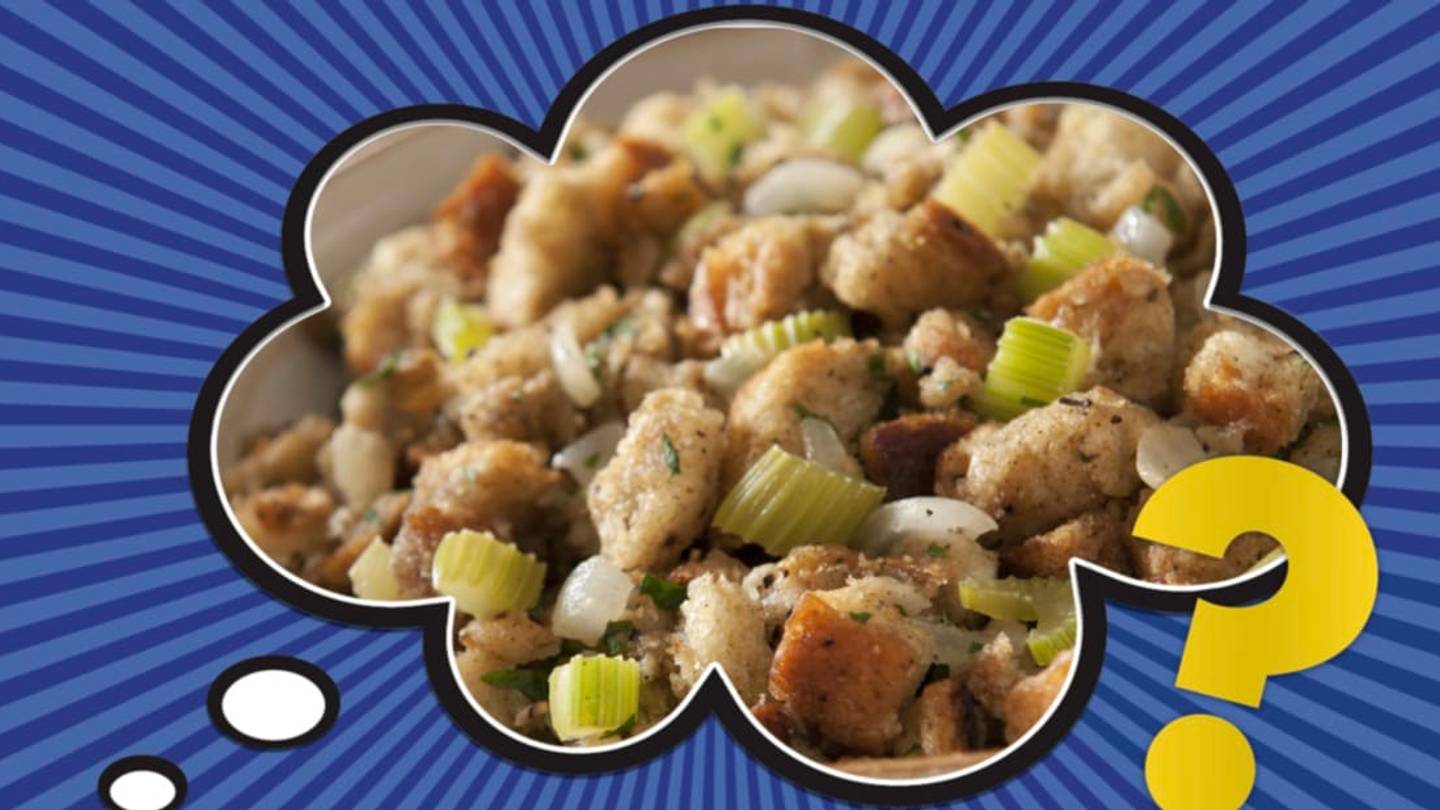
Classic stuffing usually starts with dried or stale bread cubes. Those cubes are tossed with sautéed onions and celery, butter, broth or stock, herbs, salt, pepper, and sometimes sausage, apples, cranberries, chestnuts, mushrooms, oysters, or nuts. The goal is a dish that is moist but not soggy, flavorful but not overwhelming, and structured enough that it does not collapse into holiday paste. Nobody wants spoonable wallpaper.
Common stuffing ingredients
Although stuffing recipes vary from kitchen to kitchen, many versions include:
- White bread, sourdough, French bread, Italian bread, challah, or brioche
- Butter, turkey drippings, chicken broth, or turkey stock
- Onion, celery, garlic, leeks, or shallots
- Sage, thyme, parsley, rosemary, poultry seasoning, or black pepper
- Eggs for binding, depending on the recipe
- Sausage, bacon, mushrooms, apples, dried cranberries, pecans, or chestnuts
The flavor profile is usually savory, herbal, and slightly rich. Good stuffing should taste like the best parts of Thanksgiving gathered in one bite: bread, butter, herbs, turkey flavor, and a tiny whisper of “I should have worn stretchy pants.”
What Is Dressing?
Dressing is most commonly understood as a seasoned bread or cornbread mixture baked outside the bird. It is usually cooked in a baking dish, casserole pan, skillet, or disposable aluminum tray if the holiday kitchen has already reached full chaos mode.
In the South, dressing is often made with cornbread rather than white bread. Southern cornbread dressing may include crumbled cornbread, biscuits, sautéed celery and onion, stock, eggs, sage, black pepper, and sometimes sausage, oysters, pecans, or chicken. The texture can range from soft and spoonable to firm enough to cut into squares, depending on the family recipe.
Why Southerners often say “dressing”
The word “dressing” became especially common in Southern cooking traditions. Some food historians note that “dressing” sounded more refined than “stuffing,” which may have helped the word gain popularity in polite Southern households. Today, though, the preference is less about etiquette and more about identity. In many Southern kitchens, “dressing” is not just a side dish. It is a family heirloom with onions.
Southern dressing is also closely tied to cornbread. A pan of cornbread gives the dish a slightly sweet, earthy flavor and a tender crumb that absorbs broth beautifully. It pairs well with poultry gravy, cranberry sauce, greens, sweet potatoes, and whatever aunt is quietly judging everyone’s macaroni and cheese.
The Technical Difference: Inside vs. Outside the Bird
From a strict culinary perspective, the stuffing and dressing difference comes down to location.
If the mixture is cooked inside the turkey, it is stuffing. If the mixture is cooked in a separate dish, it is dressing. That is the neat textbook answer.
But real-life Thanksgiving does not always follow textbook logic. Many people bake the dish separately and still call it stuffing because that is what their family has always called it. Others may stuff a turkey with cornbread dressing and still call it dressing because “stuffing” simply is not the family word. The name can tell you where someone is from, how they grew up eating Thanksgiving dinner, or who taught them to cook.
The Food Safety Difference
Food safety is one of the biggest practical reasons modern cooks often choose dressing over traditional stuffed turkey. When stuffing is cooked inside a turkey, it sits in direct contact with raw poultry juices. That means the center of the stuffing must reach 165°F to be safe to eat.
The challenge is timing. The turkey meat may reach a safe temperature before the stuffing in the center of the bird does. If you keep roasting until the stuffing is safe, the turkey breast may become dry. If you pull the turkey early to protect the meat, the stuffing may be undercooked. This is the Thanksgiving version of a group project where nobody’s schedule lines up.
That is why many food-safety experts recommend cooking stuffing separately. A casserole dish heats more evenly, is easier to monitor, and allows the top to become golden and crisp. You can still get plenty of turkey flavor by using turkey stock, chicken stock, roasted drippings, or a little gravy at serving time.
Safe stuffing tips
If you do cook stuffing inside a turkey, follow a few important rules:
- Stuff the bird loosely, not tightly packed.
- Stuff the turkey right before roasting, not hours in advance.
- Use a food thermometer in the center of the stuffing.
- Make sure the stuffing reaches 165°F.
- Let the turkey rest before removing the stuffing.
- Refrigerate leftovers within two hours.
For the easiest and safest approach, bake the mixture separately and call it whatever keeps peace at your table.
The Regional Difference in the United States
In the United States, the stuffing vs. dressing debate is deeply regional. The North and parts of the Midwest tend to use the word stuffing, even when the dish is baked in a pan. The South tends to use dressing, especially for cornbread-based versions.
That regional split is not absolute. Families move, recipes travel, and Thanksgiving tables are now deliciously mixed. A New Yorker might marry into a Mississippi family and suddenly learn that cornbread dressing is not optional. A Texan might spend the holiday in New England and discover stuffing with sausage, apples, and sourdough. Nobody is wrong. Everyone is just armed with a serving spoon and memories.
Northern-style stuffing
Northern-style stuffing often uses white bread, sourdough, rye, or bakery-style loaves. It may include sausage, apples, chestnuts, cranberries, mushrooms, or herbs. The texture often resembles a savory bread pudding, especially when eggs and plenty of broth are used.
Southern-style dressing
Southern-style dressing often starts with cornbread. Some families add leftover biscuits, white bread, or saltine crackers. Sage is a signature seasoning, and the mixture is commonly moistened with chicken or turkey stock. Depending on the region, you may find oyster dressing, pecan dressing, sausage dressing, crawfish dressing, or chicken dressing.
Pennsylvania “filling” and other names
In some Pennsylvania Dutch communities, a similar Thanksgiving side may be called filling, and it can include mashed potatoes along with bread. Other regional versions may use rice, wild rice, masa, saltines, or local seafood. The big idea remains the same: a starchy base, aromatics, seasoning, moisture, and a starring role beside the turkey.
Is Cornbread Dressing the Same as Stuffing?
Cornbread dressing can be considered a type of stuffing-style side dish, but it has its own personality. Compared with white-bread stuffing, cornbread dressing is usually more crumbly, tender, and earthy. It absorbs broth differently and often has a richer, more rustic texture.
White-bread stuffing tends to hold distinct cubes or chunks, especially when made with crusty bread. Cornbread dressing often blends into a more cohesive casserole. One is not better than the other. They simply answer different cravings. White-bread stuffing says, “I brought herbs and structure.” Cornbread dressing says, “I brought soul and a cast-iron skillet.”
Which One Tastes Better?
The better dish depends on what you like. If you love crispy edges, dressing baked in a wide casserole dish has a major advantage. More surface area means more browned top, which means more crunchy, buttery bites. If you love deep turkey flavor and soft texture, traditional stuffing cooked inside the bird may appeal to you.
For many home cooks, the best compromise is to bake dressing separately but flavor it like stuffing. Use good stock, sautéed vegetables, herbs, butter, and maybe a splash of turkey drippings. You get the safety and crisp edges of dressing with the cozy flavor people expect from stuffing.
How to Make Better Stuffing or Dressing
No matter what you call it, a great Thanksgiving stuffing or dressing depends on balance. The bread should be dry enough to absorb liquid without turning gummy. The vegetables should be cooked before mixing so they add sweetness instead of raw crunch. The herbs should be noticeable but not so aggressive that the dish tastes like it fell into a lawn mower.
Use dry bread
Fresh bread is too soft and moist. It can turn mushy when mixed with broth. Cut or tear the bread into cubes and let it dry overnight, or toast it gently in the oven. Dry bread acts like a sponge, soaking up broth, butter, and seasoning while keeping its shape.
Season in layers
Season the vegetables while sautéing, season the bread mixture before baking, and taste as you go if the mixture does not contain raw egg. Herbs like sage, thyme, parsley, and rosemary are classic for a reason. They make the dish smell like Thanksgiving has officially entered the building.
Do not drown it
Broth is essential, but too much creates a soggy casserole. Add liquid gradually until the bread is moistened but not swimming. The perfect texture is damp enough to hold together and dry enough to brown on top.
Choose the right pan
A shallow baking dish gives you more crispy top. A deeper dish creates a softer, custard-like center. Cast iron can produce especially flavorful edges. If your family fights over corner pieces, use a wider pan and prepare for applause.
Stuffing and Dressing Variations Worth Trying
The classic onion-celery-sage combination is beloved, but stuffing and dressing are flexible. Here are a few variations that bring personality without starting a family argument:
- Sausage and herb stuffing: Rich, savory, and excellent with turkey gravy.
- Cornbread dressing: A Southern favorite with sage, broth, and tender texture.
- Oyster dressing: Popular in coastal regions, with briny depth and old-school holiday charm.
- Apple and cranberry stuffing: Sweet-tart flavor that pairs well with pork or turkey.
- Mushroom dressing: Earthy, hearty, and easy to make vegetarian with vegetable stock.
- Pecan dressing: Adds crunch, richness, and a Southern holiday feel.
- Wild rice stuffing: A gluten-free-friendly option if made without bread.
Can You Make Stuffing or Dressing Ahead of Time?
Yes, but the safest method is to prepare components ahead rather than holding a fully mixed, uncooked stuffing for too long. You can dry the bread, chop the vegetables, cook the sausage, prepare the broth, and measure the herbs in advance. Then combine and bake the dish on the day you serve it.
If you fully bake dressing ahead of time, cool it quickly, refrigerate it, and reheat it to 165°F before serving. Add a little broth before reheating if it seems dry. Cover it with foil first, then uncover near the end so the top crisps again. Leftover dressing can be wonderful, but it should not sit on the counter for half the football game and three family stories about “the old days.”
So, Should You Say Stuffing or Dressing?
Use the word that makes sense for your audience. If you are writing a recipe and want to be technically precise, call the inside-the-bird version stuffing and the casserole version dressing. If you are cooking for your family, use the name they know. Holiday food is not just about accuracy; it is about belonging.
For SEO and recipe clarity, you can even use both terms naturally. A title like “Classic Thanksgiving Stuffing or Dressing” helps readers find the recipe no matter which word they type into Google or Bing. In the kitchen, the distinction matters less than flavor, safety, and whether you made enough for leftovers.
Personal Experiences: What Stuffing and Dressing Teach Us at the Table
The first time you notice the stuffing versus dressing debate, it may not happen in a cookbook. It often happens at a family table, where one person casually says “stuffing” and another person reacts like someone has insulted the state bird. That is the funny thing about holiday food: the smallest words can carry entire family histories.
In many homes, stuffing is the dish kids learn to love before they fully understand what is in it. They just know it is soft, buttery, salty, and somehow better when pressed against turkey and mashed potatoes. Later, they discover the details: the celery was always chopped small because one cousin hated big pieces; the bread was left out overnight because “fresh bread ruins it”; the sage came from a little tin that appeared every November like a holiday ornament.
Dressing, especially cornbread dressing, often has an even stronger sense of place. Someone baked the cornbread the day before. Someone crumbled it by hand. Someone added broth slowly, judging texture by sight rather than measuring cups. The recipe may have existed for decades without being written down. When younger cooks ask how much sage to add, the answer might be “enough.” This is not helpful in a technical sense, but it is extremely accurate in a grandmother sense.
One of the best experiences related to stuffing and dressing is learning that both dishes reward attention. A rushed version can taste flat, but a thoughtful one becomes the plate’s quiet hero. Toasting the bread gives nuttiness. Browning sausage adds depth. Cooking onions and celery slowly makes them sweet. Fresh herbs brighten the whole dish. A little extra butter on top gives the casserole that golden finish people pretend not to pick at before dinner.
Another common experience is the leftover miracle. Stuffing or dressing may be a side dish on Thanksgiving Day, but the next morning it becomes breakfast potential. Crisp it in a skillet and top it with an egg. Tuck it into a turkey sandwich with cranberry sauce. Warm it with gravy and call it lunch. Nobody needs to know you ate it standing at the refrigerator door. The refrigerator understands.
Stuffing and dressing also teach the importance of compromise. Some people want soft centers; others want crunchy edges. Some love sausage; others want a vegetarian version. Some insist on cornbread; others believe sourdough is the superior bread. The smartest holiday cooks often solve this by making a big basic batch and splitting it into variations. One pan gets sausage. One gets mushrooms. One gets extra crispy edges. Peace is restored, at least until dessert.
Most of all, the stuffing versus dressing question shows how American food traditions evolve. The technical difference is useful, but the emotional difference is richer. Stuffing may remind someone of a snowy New England Thanksgiving. Cornbread dressing may taste like a Southern kitchen full of cousins, casseroles, and controlled chaos. A wild rice version may reflect a Midwestern table. Oyster dressing may carry memories of the coast.
So when someone asks, “What’s the difference between stuffing and dressing?” the best answer is both simple and generous. Technically, stuffing goes inside the bird and dressing bakes separately. Culturally, the name depends on where you are, who raised you, and what your family has been calling it since before anyone owned a digital thermometer. Either way, if it is seasoned well, baked safely, and served hot, it deserves a place on the plate.
Conclusion
The difference between stuffing and dressing is easy to explain but wonderfully complicated in practice. Technically, stuffing is cooked inside poultry, while dressing is baked separately. Regionally, Americans use the words differently, with “stuffing” more common in the North and “dressing” especially beloved in the South. Ingredient choices also vary: white bread, sourdough, cornbread, biscuits, sausage, oysters, apples, pecans, mushrooms, and herbs all have their place.
For modern home cooks, dressing baked outside the turkey is usually the safer and easier option. It cooks more evenly, develops a crisp top, and avoids the challenge of making sure the center of stuffed poultry reaches 165°F. But whether you call it stuffing, dressing, or filling, the goal is the same: a warm, savory, comforting side dish that makes the holiday table feel complete.
Note: This article is written for general culinary and food-safety education. For holiday cooking, always use a reliable food thermometer and make sure stuffing or dressing reaches 165°F before serving.