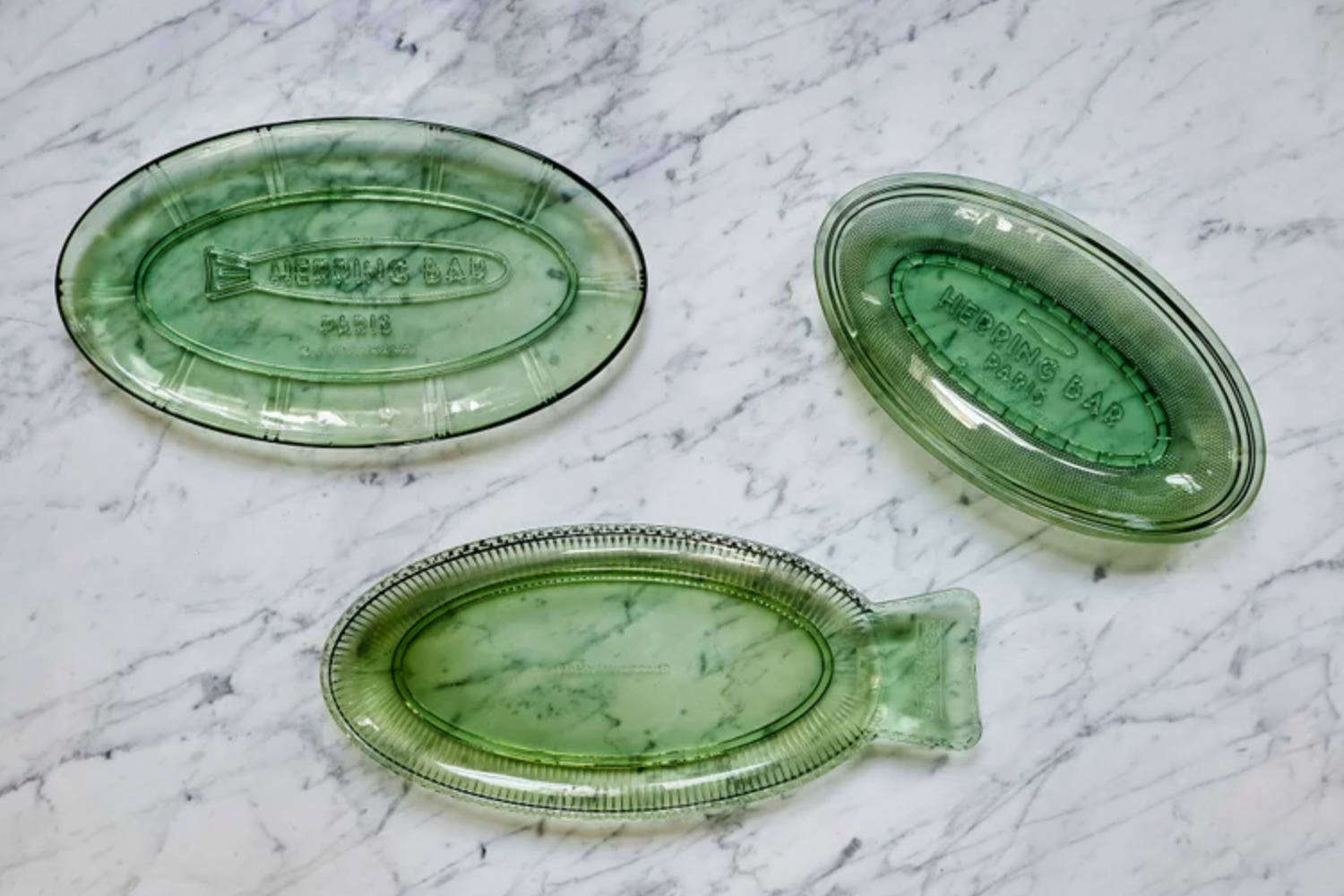

Some plates politely wait beneath the food. Others arrive at the table shaped like an entire fish and immediately become the evening’s most interesting guest. Paola Navone’s Herring Plates for Serax belong firmly to the second group.
Part of the playful Fish & Fish tableware collection, these pressed-glass dishes combine the nostalgic colors of vintage American glassware with the unmistakable outline of a herring. They are useful serving pieces, decorative objects, conversation starters, and proof that a dinner plate does not have to look as serious as a tax form.
With transparent green glass, creamy milk-white finishes, jadeite-inspired tones, scalloped details, and a cheeky “Herring Bar” identity, the collection turns an ordinary table into something resembling a relaxed European seafood café. It is whimsical without becoming childish and distinctive without demanding that every napkin match.
Why Paola Navone’s Herring Plates Inspire Desire
The appeal begins with silhouette. Instead of fitting food inside a predictable circle, the Herring Plates stretch across the table in a long, recognizable fish shape. A defined tail, rounded body, textured surface, and gently scalloped edges give each piece enough detail to feel sculptural, even when it is holding nothing more glamorous than crackers.
The design works because Navone does not treat the fish motif too literally. There are no cartoon eyes staring accusingly at your appetizer. The form has been simplified into a bold graphic object, allowing it to live comfortably in minimalist kitchens, colorful dining rooms, beach houses, city apartments, and homes located hundreds of miles from the nearest respectable herring.
Several pieces also feature “Herring Bar” lettering, a detail that makes the collection feel like tableware rescued from an imaginary Paris café. That little stamp adds history, even though the history is partly invented. It gives each plate personality and helps transform it from novelty serveware into something that feels collected.
The Story Behind the Fish & Fish Collection
Paola Navone designed Fish & Fish for Belgian design brand Serax as a relaxed tableware collection centered on casual eating, aperitifs, small plates, and shared meals. The herring became its visual mascot, appearing across dishes, bottles, glasses, jars, seasoning pieces, and hammered aluminum trays.
The collection was introduced in connection with Paris concept store Merci and later presented during Milan Design Week in 2016. The original installations leaned into the idea of a Herring Bar, complete with fish-shaped serving pieces and an informal atmosphere intended for tasting, snacking, and social dining.
Designed for Food That Does Not Require a Seating Chart
That casual spirit remains one of the collection’s greatest strengths. These plates are not precious objects that must be reserved for a state dinner or the annual visit of a particularly judgmental relative. They are meant for olives, bread, seafood, fruit, cheese, desserts, and whatever else can be arranged attractively in a long line.
The forms encourage sharing. Place one in the middle of the table and people instinctively reach toward it. Instead of separating every portion into individual territory, the plate creates a communal focal point. It suggests that dinner should involve passing, tasting, talking, and occasionally negotiating over the last roasted potato.
Paola Navone’s Signature Design Language
Navone is known for mixing influences that are not expected to share the same room. Industrial manufacturing meets traditional craft. European design meets objects and colors gathered through travel. Familiar household forms are enlarged, simplified, recolored, or placed in surprising contexts.
Her background helps explain the Herring Plates’ unusual balance of practicality and eccentricity. After studying architecture in Turin, Navone became associated with Italy’s progressive design scene and worked alongside figures such as Alessandro Mendini, Ettore Sottsass, and Andrea Branzi. Throughout her career, she has moved between architecture, interiors, product design, art direction, exhibitions, and furniture.
Rather than pursuing one rigidly recognizable style, she approaches design like an enthusiastic collector. A traditional utensil, an inexpensive market object, a restaurant sign, or a vintage glass can become the starting point for something new. The resulting products often look as though they have accumulated stories before arriving in the store.
Humor Without the Gimmick
Fish-shaped tableware can go wrong quickly. One overly cheerful fin and suddenly the dining room looks like a themed seafood restaurant beside a miniature-golf course. Navone avoids that trap by combining humor with restrained colors and substantial materials.
The herring outline is amusing, but the thick pressed glass gives it visual weight. The transparent and softly opaque finishes prevent the design from feeling disposable. These are playful plates made with the confidence of serious design objects.
Pressed Glass and the Beauty of Useful Nostalgia
A major inspiration for Fish & Fish was the affordable pressed glass produced in the United States during the Great Depression. Historically, pressed-glass manufacturing made patterned tableware available to a much broader audience than expensive hand-cut crystal. Molds allowed manufacturers to create repeatable textures, decorative edges, and matching sets efficiently.
Depression glass became especially memorable for its cheerful colors. Pink, amber, pale blue, clear, and green pieces brought brightness to everyday tables during a financially difficult period. Many surviving examples are now collectible, partly because their tinted surfaces transform dramatically in sunlight.
Navone borrows that emotional language rather than simply copying an antique pattern. Her plates capture the thickness, color, molded texture, and accessible spirit of vintage pressed glass while introducing an exaggerated contemporary shape.
Transparent Green
The transparent green finish is perhaps the most immediately recognizable. Light passes through it, emphasizing the molded details and giving the plate a watery appearance. On a white tablecloth, it looks crisp and graphic. On dark wood, it becomes richer and moodier. Near a window, it starts behaving like a piece of sea glass that has developed excellent posture.
Jadeite Green
The opaque jadeite-style version offers a softer retro character. Its creamy green tone recalls vintage kitchenware and works particularly well with natural linen, pale woods, white ceramics, and stainless-steel flatware. It is colorful, but the muted finish keeps it from dominating the table.
Milk White
Milk-white pieces are the easiest to integrate into an existing dinnerware collection. Their shape remains playful, while the neutral color allows food to take visual priority. They pair naturally with plain white plates but add enough texture to prevent the setting from looking like a conference-room lunch.
Shapes, Sizes, and Serving Possibilities
The collection includes flat fish dishes, deeper bowls, smaller fish plates, oval serving dishes, carafes, drinking glasses, jars, and larger metal trays. Product availability can vary by retailer and season, but the signature flat fish plate is commonly listed at approximately 13.8 inches long, 6.3 inches wide, and just under an inch high.
That elongated footprint is useful for foods that look awkward on conventional round plates. A line of grilled asparagus suddenly appears intentional. Sliced citrus becomes a composition. Even a collection of grocery-store cookies can look editorial if they are arranged with sufficient confidence.
What to Serve on Herring Plates
- Seafood: Smoked fish, shrimp, oysters, anchovy toast, crab cakes, or sushi rolls reinforce the nautical theme without requiring a decorative lighthouse.
- Cheese and charcuterie: The long body naturally organizes cheese, cured meat, nuts, fruit, and crackers into a neat progression.
- Vegetables: Grilled carrots, asparagus, roasted peppers, or sliced tomatoes benefit from the elongated shape.
- Desserts: Macarons, cookies, petit fours, chocolate truffles, or thin slices of cake create a playful contrast with the fish form.
- Entryway objects: When not serving food, a smaller dish can hold keys, coins, jewelry, or the mysterious screws everyone saves but nobody can identify.
How to Style Herring Plates on a Modern Table
Keep the Supporting Pieces Simple
A fish-shaped plate already contributes plenty of character. Pair it with plain dinner plates, straightforward flatware, and unfussy glassware. This allows the herring dish to become a focal point rather than one member of a tabletop talent competition.
Mix the Three Finishes
Transparent green, jadeite, and milk white work especially well together because they share a vintage foundation. Combining them creates a collected look without producing visual chaos. Use white for larger food portions, transparent green for garnishes or seafood, and jadeite for snacks or desserts.
Add Natural Textures
Linen napkins, woven placemats, unfinished wood, stone, and brushed metal complement the pressed-glass surfaces. The resulting table feels relaxed and tactile rather than overly decorated.
Try an Unexpected Setting
The plates make sense in a coastal interior, but they are arguably more interesting elsewhere. Place one on a severe black dining table, a concrete countertop, or a minimalist white shelf. The contrast highlights the humor and prevents the fish theme from becoming predictable.
Are the Serax Herring Plates Practical?
Despite their sculptural appearance, the collection was created as functional tableware. Many pieces are described as dishwasher-safe, although owners should follow the care instructions supplied with their specific item. Pressed glass is substantial, but it is not indestructible; avoid abrupt temperature changes, crowded dishwasher racks, and countertops that seem eager to test gravity.
The unusual shape does require more cabinet space than a round plate. Flat pieces may be stacked carefully, while deeper or more dimensional designs are often safer stored individually or separated with soft liners.
For frequent entertainers, the versatility justifies the footprint. One plate can serve seafood on Friday, pastries on Sunday, and sit on a shelf looking decorative for the rest of the week. That is a respectable work schedule for any fish.
Buying and Collecting Fish & Fish Tableware
Before purchasing, check the exact dimensions, color name, material, and care instructions. Retail photographs can make transparent green and jadeite pieces appear similar, but their effects are quite different: one transmits light, while the other has an opaque, milky surface.
Buyers should also distinguish between flat dishes, deep dishes, oval platters, and small fish plates. The dramatic full-size fish dish works as a centerpiece, while smaller pieces are more convenient for appetizers or individual servings.
Availability and pricing vary significantly by market. Some designs remain in current production, while particular colors or sizes may appear through specialty design retailers and resale marketplaces. When buying secondhand, inspect photographs for rim chips, scratches, cloudiness, and damage around the tail, where the narrow shape may be more vulnerable.
A mixed collection can be built gradually. Starting with one transparent green serving plate provides the strongest visual statement. Later, add a milk-white dish for contrast, a jadeite bowl, or the well-known fish-shaped carafe. There is no need to purchase the entire aquatic ecosystem at once.
Why These Plates Still Feel Fresh
The lasting charm of the Herring Plates comes from contradiction. They are nostalgic but not reproductions. They are decorative yet practical. They are humorous but made with enough restraint to feel sophisticated. Most importantly, they make the table less formal without making it careless.
Contemporary interiors can become overly controlled: beige upholstery, beige walls, beige ceramics, and perhaps a daring oatmeal cushion. A translucent green fish offers a useful interruption. It brings shape, color, history, and a little mischief into the room.
That is what a successful object of desire should accomplish. It should solve a modest practical problem while making daily life more enjoyable. The plate holds the olives, certainly, but it also gives everyone something to talk about before the olives are gone.
Living With the Herring Plates: A Real-World Table Experience
The first lesson from using a fish-shaped serving plate is that guests notice it before they notice almost anything placed on it. During a casual appetizer night, I arranged smoked salmon, cucumber ribbons, lemon wedges, capers, and rye crisps along the length of a transparent green plate. The food was simple, but the presentation looked surprisingly polished. One guest asked where the dish came from before taking off a coat. Another photographed it before eating, which is either a triumph of design or evidence that dinner now requires documentation.
The elongated shape proved especially effective because it encouraged linear arrangements. Round platters often invite the host to build a mound in the center. The herring plate suggests a sequence instead: salmon, cucumber, lemon, herbs, and bread. Each ingredient remains visible, making even an improvised appetizer feel organized.
At breakfast, the same dish handled sliced melon, berries, and pastries. This was less thematically obvious than seafood, but arguably more useful. The transparent green glass gave red strawberries and orange melon strong contrast, while sunlight passing through the plate created shifting patterns on the table. A plain fruit plate had somehow become morning entertainment.
The Small-Table Test
On a compact dining table, the full-size plate requires planning. Its narrow body is space-efficient, but its length can interfere with large dinner plates if placed horizontally. Positioning it down the center of the table worked better, almost like a small edible runner. Guests could reach the food from either side without passing the plate around.
The deep dish was more forgiving. It held roasted potatoes without allowing them to escape, and its raised sides made it easier to move between the kitchen and dining area. The flat plate remained better for foods arranged in a single layer, while the deeper version handled anything involving sauce, oil, or energetic cherry tomatoes.
Mixing It With Ordinary Dinnerware
The collection does not require a matching set. In fact, it looked better beside basic white plates and clear glasses than it did when surrounded by too many decorative objects. The fish already supplies the joke, the color, and the unusual outline. Adding patterned napkins, novelty salt shakers, and shell-shaped bowls made the table feel as though it were auditioning for a cruise-ship buffet.
A restrained setup allowed the Herring Plate to appear spontaneous rather than themed. White stoneware, natural linen, and one green glass fish created enough contrast. A small vase of herbs added color without starting a maritime costume party.
Cleaning, Storage, and the Tail Problem
Cleaning was straightforward, but loading the plate into a dishwasher required more attention than washing a standard round dish. The tail and elongated rim should not press against neighboring pieces. Hand-washing may be preferable when the dishwasher is crowded or when the plate has been used for foods that rinse away easily.
Storage was the only genuine inconvenience. The large plate did not fit comfortably inside a cabinet designed around round dinnerware. A vertical plate rack solved the problem and had the added benefit of displaying the fish when it was not in use. Because the design is decorative, visible storage feels intentional rather than like surrender.
The Final Experience
After several meals, the strongest impression was not that the Herring Plate was eccentric. It was that most ordinary serving dishes are unnecessarily anonymous. A useful object can carry humor, memory, color, and cultural references without losing its purpose.
Paola Navone’s design makes entertaining feel less ceremonial. Food can be simple, settings can be mismatched, and guests can help themselves. The plate contributes enough personality that the host does not need to perform elaborate decorative gymnastics. Put down the fish, add something delicious, and let the object do a little of the social work.
For design lovers, collectors of modern tableware, or anyone whose cabinets contain too many sensible circles, the Serax Herring Plates are an appealing rebellion. They are functional, photograph beautifully, and turn small meals into memorable arrangements. Just be prepared for the plate to receive more compliments than the recipe.