
Note: This article synthesizes historical public information about World Maker Faire New York 2015, Tommy Mintz’s Automated Digital Photo Collage project, Raspberry Pi camera-based art, and computer-vision collage techniques.
World Maker Faire 2015 in Queens, New York, was not the kind of event where people politely stared at exhibits and whispered, “How interesting.” It was the kind of place where robots rolled past families, 3D printers hummed like caffeinated bees, science museums turned into playgrounds, and somewhere near the entrance, a camera on a pole quietly turned passing humans into strange, funny, layered artwork.
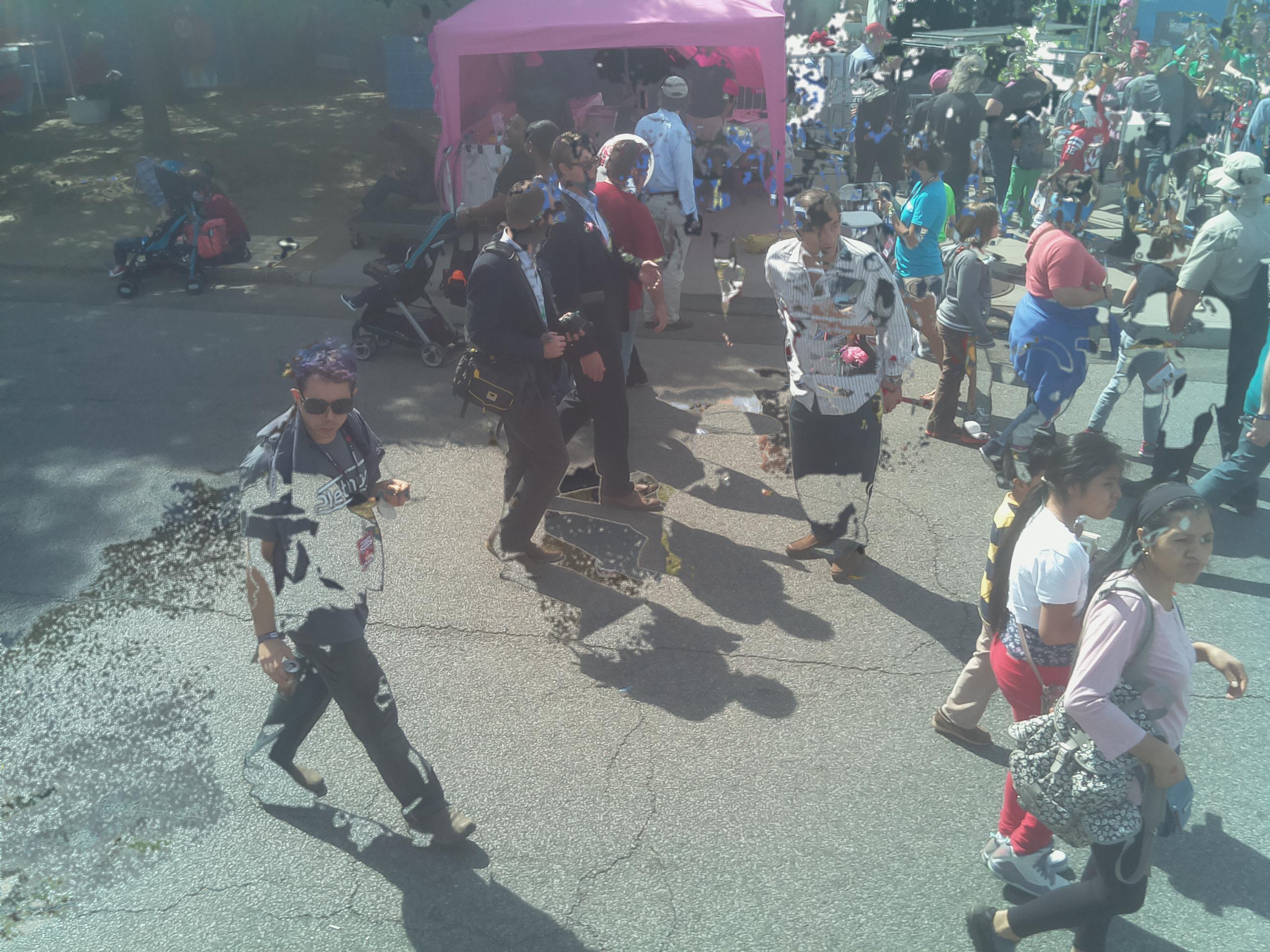
That project was the Automatic Photo Collage, also known through Tommy Mintz’s broader work as the Automated Digital Photo Collage. At first glance, it looked simple: a Raspberry Pi, a camera, a high viewpoint, some code, and a printer. But the magic was in what happened between the frames. The system captured a background image, watched for visual changes, and built collages from the moving parts of the scene. In other words, it made a picture not of one moment, but of many moments arguing with each other on the same canvas.
That is exactly why the project felt so at home at World Maker Faire 2015. It was technical, playful, visual, portable, and just a little weirdthe official spice blend of maker culture.
What Was World Maker Faire 2015?
World Maker Faire New York 2015 took place on September 26 and 27 at the New York Hall of Science in Queens. It was the sixth annual World Maker Faire New York, staged on and around the historic grounds of Flushing Meadows Corona Park. The setting mattered. The same park that once hosted mid-century visions of tomorrow became, for one weekend, a living workshop for people building tomorrow out of plywood, Python, LEDs, solder, pancake batter, and stubborn optimism.
The event brought together artists, engineers, teachers, students, inventors, hobbyists, startups, museum educators, and families. Reports from the event described crowds of more than 90,000 attendees, with hundreds of exhibits spread across indoor and outdoor areas. The projects ranged from robotics and 3D printing to crafts, digital art, educational tools, kinetic sculpture, and hands-on science demonstrations.
That mix is important for understanding the Automatic Photo Collage. It was not just a camera trick. It was part of a larger creative environment where art, open-source computing, photography, public participation, and engineering could stand shoulder to shoulder without anyone asking them to pick a department.
The Star of the Snapshot: Automatic Photo Collage
The Automatic Photo Collage spotted at World Maker Faire 2015 was an improved portable automated digital photo collage system. Tommy Mintz connected a Raspberry Pi to a camera mounted high on a monopod, giving the device a bird’s-eye view of the surrounding crowd. From that elevated position, the system could observe motion across a busy scene: people walking, pausing, pointing, waving, and generally doing what Maker Faire visitors do bestmoving toward the next shiny invention.
The process began with a background image. After that, the system captured additional images and compared them against the scene. Areas that changed were selected and layered into a collage. The result was not a traditional photo booth portrait. It was more like a visual fossil record of activity: one image containing multiple slices of time.
Some results looked playful. Some looked surreal. Some probably made visitors wonder whether they had briefly entered a parallel universe where elbows, backpacks, hats, and curious children could all exist in several times at once. That oddness was not a bug. It was the personality of the project.
How the Automatic Photo Collage Worked
1. A Raspberry Pi Served as the Brain
The Raspberry Pi was a natural choice for this project because it was small, affordable, programmable, and friendly to camera experiments. By 2015, makers were already using Raspberry Pi boards for photo booths, robots, home automation, media servers, and interactive installations. The board gave the Automatic Photo Collage enough computing power to capture images, process differences, and manage output without needing a full desktop computer sitting awkwardly under a table like a nervous office intern.
2. A Camera Watched from Above
Mounting the camera on a monopod gave the system a wide, elevated perspective. This mattered because the project depended on changes in the scene. A higher angle reduced visual clutter and helped the camera see people and objects moving through space. Instead of taking a close-up portrait, the camera treated the crowd as raw material for a changing composition.
3. Python and Image Comparison Did the Heavy Lifting
The Automated Digital Photo Collage concept relies on comparing sequences of photographs and identifying areas of difference. In computer-vision language, this is related to background subtraction and motion detection. A static background is established, new frames are captured, and the software decides which pixels or regions have changed enough to be included.
The artistic twist is that the system does not simply detect motion and draw boxes around people. Instead, it uses those differences to build a new image. The collage becomes a record of change, not a clean surveillance-style output. It is less “security camera” and more “machine with a sense of visual mischief.”
4. Visitors Could Download or Print the Results
At the 2015 Faire, the system offered digital access through Wi-Fi and physical output through an onboard Epson photo printer. That was a smart maker-friendly decision. Digital sharing made the project modern and convenient, while printed photos gave visitors something tangible to hold. A print at a public event has a special charm: it turns a temporary interaction into a souvenir before the person has even finished saying, “Wait, is that my arm?”
Why This Project Fit Maker Faire So Well
Maker Faire has always celebrated the idea that invention does not have to stay behind factory doors or university lab walls. The Automatic Photo Collage embodied that philosophy beautifully. It was built from accessible components, used open programming ideas, invited public interaction, and produced an immediate creative result.
It also blurred categories. Was it photography? Yes. Was it computer vision? Yes. Was it installation art? Absolutely. Was it a DIY public photo booth with a mischievous robot brain? Also yes. That category confusion is part of the fun. Some of the best maker projects are hard to label because they are too busy being interesting.
The Art of Algorithmic Humor
One of the most compelling ideas behind the Automated Digital Photo Collage is “algorithmic humor.” The phrase sounds fancy, but the effect is easy to understand. The machine makes choices that feel logical to the software but surprising to humans. It notices change, extracts it, and layers it. The final image follows rules, yet the outcome can look delightfully unpredictable.
That contrast creates humor. A person may appear twice. A crowd may dissolve into fragments. A passerby may become a ghostly stripe of motion. The machine is not trying to be funny in the human sense, but its strict logic creates results that feel playful. It is the comedy of computation: the computer takes instructions very seriously, and somehow that seriousness becomes absurd.
This is what made the project more than a clever gadget. It invited viewers to think about how machines see. Humans remember a crowded event as a flow of moments: sounds, faces, weather, smells, conversations, and the vague memory of almost buying a robot kit. The Automatic Photo Collage remembered the event as differences between frames. Its memory was literal, pixel-based, and strangely poetic.
Automatic Photo Collage as a Lesson in Creative Technology
For students, hobbyists, and digital artists, the project offered several practical lessons.
Start with a Simple Concept
The core idea was easy to explain: take a background photo, detect what changes, and build a collage from the changes. That simplicity made the project approachable. Great maker projects often begin with a sentence that a curious twelve-year-old can understand, even if the final implementation takes months of debugging and a heroic amount of cable management.
Use Constraints as Creative Fuel
A Raspberry Pi is not a giant workstation. A public event is not a quiet studio. Lighting changes, crowds move unpredictably, Wi-Fi behaves like a moody raccoon, and printers have been known to develop personalities. Yet these constraints pushed the project toward a compact, portable, event-ready design. Constraints did not weaken the art; they shaped it.
Make the Audience Part of the Work
The Automatic Photo Collage needed people moving through the frame. Without visitors, the project would have been a camera admiring the floor. Audience participation transformed the system from a technical demo into a social artwork. Every passerby became a collaborator, whether they knew it or not.
How You Could Build a Similar Automatic Photo Collage Today
A modern version of this project could be built with a Raspberry Pi, a compatible camera module or USB camera, Python, and image-processing libraries such as OpenCV or Pillow. The general workflow would look like this:
- Mount a camera in a stable position with a clear view of the scene.
- Capture a clean background image.
- Take new photos at regular intervals.
- Compare each new image against the background or previous frame.
- Create a mask showing areas of meaningful change.
- Composite changed regions onto a master canvas.
- Save, display, share, or print the final collage.
The beauty is that the technical core can be simple, while the artistic possibilities are enormous. You could adjust the sensitivity so the system captures only large movements or includes tiny changes. You could use color filters, transparency, edge detection, random delays, or multiple cameras. You could display the collage live on a projector, print it as a postcard, or upload it to a local gallery page. The project scales from classroom experiment to public installation.
Why It Still Matters
Looking back, World Maker Faire 2015 captured a moment when affordable creative computing was becoming deeply mainstream. Raspberry Pi projects were no longer just blinking LEDs on a desk. They were entering museums, public spaces, art installations, classrooms, and festivals. The Automatic Photo Collage showed how a small computer could do more than automate a task. It could create a point of view.
Today, conversations about AI art, computer vision, generative media, and surveillance are everywhere. Mintz’s project feels relevant because it sits at the intersection of those topics without becoming heavy-handed. It asks a simple question: What happens when a machine watches a scene and turns change into memory?
The answer is an image that feels familiar and alien at the same time. It is public life as seen by an algorithm. It is photography with a delayed giggle. It is a collage made not by cutting paper, but by cutting time.
Experiences Related to World Maker Faire 2015: Automatic Photo Collage
Imagine walking into World Maker Faire 2015 with no specific plan beyond “see cool stuff and try not to spend all my money on kits.” Near the entrance, the energy would have been immediate: families moving in groups, kids tugging adults toward robots, makers explaining projects with the cheerful intensity of people who have definitely stayed up too late soldering something important, and cameras everywhere.
Then you notice a camera perched above the crowd. It does not behave like a normal camera. Nobody is saying “cheese.” Nobody is posing in front of a curtain with oversized sunglasses. Instead, the camera quietly watches the scene from above. A person walks through. Another person stops. Someone waves. A backpack enters the frame, then disappears. The machine collects these changes and turns them into a single image that looks like time spilled onto a page.
The experience would have been different from using a regular photo booth. A regular photo booth flatters the idea that a moment can be captured neatly. The Automatic Photo Collage challenges that idea. It suggests that public events are not neat moments at all. They are layers: footsteps, gestures, pauses, accidents, overlaps, and tiny interruptions. Maker Faire was the perfect environment for that kind of artwork because the event itself was a collage of disciplines.
One minute, a visitor might be watching a 3D printer slowly form plastic into an object. The next, they might be learning about electronics, seeing an educational museum project, or laughing at a kinetic sculpture. The Automatic Photo Collage did visually what the Faire did culturally: it gathered many moving parts and made them coexist.
There is also something wonderfully democratic about the project. It did not require visitors to understand Python, Raspberry Pi hardware, image masks, or background subtraction. They could simply look at the output and enjoy it. But for those who wanted to go deeper, the project opened a door into programming, photography, computer vision, and interactive art. That layered accessibility is one of the strongest qualities of maker education. A child can enjoy the image. A student can ask how it works. An engineer can study the system. An artist can debate what it says about memory. A tired parent can simply be grateful that the printer works.
The printed-photo option added another layer to the experience. In a festival full of screens and demonstrations, a physical print feels personal. It says, “This happened, and here is your strange little artifact to prove it.” Visitors could leave with a collage that did not look like a standard souvenir. It was not a polished portrait. It was evidence of participation in a living system.
That is why the Automatic Photo Collage remains memorable. It was not trying to impress people with expensive hardware or cinematic spectacle. Its charm came from the clever recombination of ordinary pieces: a small computer, a camera, code, public movement, and curiosity. It showed that technology does not need to shout to be magical. Sometimes it just needs to watch carefully, compare patiently, and print something weird enough to make everyone smile.
Conclusion
World Maker Faire 2015: Automatic Photo Collage is a perfect example of what makes maker culture so exciting. It turned accessible hardware into public art, transformed crowd movement into visual storytelling, and showed how code can become playful rather than cold. By combining Raspberry Pi computing, camera-based observation, Python image processing, and instant sharing or printing, Tommy Mintz’s project captured the spirit of the Faire in one beautifully strange machine-made image at a time.
The project still feels fresh because it connects to questions we continue to ask today: How do machines see us? Can algorithms make art? What happens when photography stops freezing one instant and starts layering many? At World Maker Faire 2015, the answer was standing near the gate, watching from above, quietly turning motion into collage.