
Imagine driving across town with a bumper sticker that changes its personality faster than a politician at a county fair. One minute it displays a message that fits the coffee-shop crowd downtown. A few miles later, it quietly swaps to something more neighborhood-friendly. That is the strange, funny, and surprisingly thought-provoking idea behind an AI-powered bumper sticker designed for context-sensitive urban camouflage.
At first glance, the concept sounds like a prank from a clever maker with too much coffee and a spare Raspberry Pi. Look closer, though, and it becomes a compact case study in artificial intelligence, location-based personalization, digital signage, privacy, political identity, automotive safety, and the very human desire to avoid awkward conversations in parking lots. In other words, it is not just a bumper sticker. It is a rolling mood ring for the modern city.
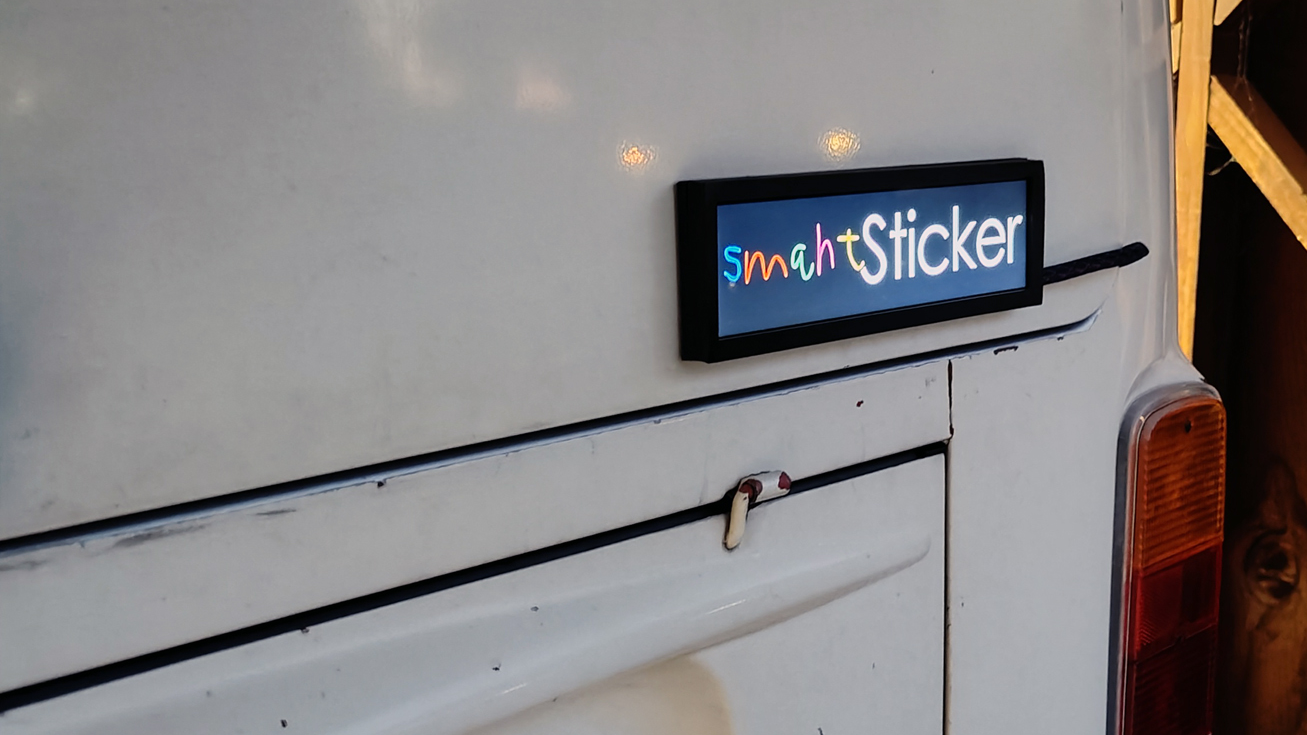
The project that inspired the phrase “AI-powered bumper sticker” is commonly known as the “smahtSticker,” a smart, programmable vehicle display that uses GPS and AI to select messages based on where the car is located. Its joke is simple: if local opinions change from block to block, why should your bumper sticker be stuck in 1998?
What Is an AI-Powered Bumper Sticker?
An AI-powered bumper sticker is a digital display mounted on or near the back of a vehicle that can change its message automatically. Unlike a traditional vinyl sticker, which makes one permanent declaration until the sun, rain, and your future embarrassment fade it away, a smart bumper sticker can update based on data.
In the case of the smahtSticker concept, the system combines a small display, a Raspberry Pi Zero, a GPS module, geolocation software, and an AI model such as ChatGPT. The device checks the vehicle’s location, determines the surrounding area, and asks AI to identify a message likely to blend in with local attitudes. The result is a bumper sticker that behaves less like a fixed opinion and more like a social chameleon.
The phrase “context-sensitive urban camouflage” is the perfect description. The device is not camouflage in the military sense. It is not hiding a car under a holographic bush, though frankly, someone is probably trying that in a garage somewhere. Instead, it is social camouflage. It attempts to make the car’s visible message feel locally familiar, reducing the chance that the driver sticks out in a politically, culturally, or socially charged environment.
How the Smart Bumper Sticker Works
The basic workflow is easy to understand, even if the implications are delightfully weird.
1. The Display Shows the Message
The smart bumper sticker uses a compact, wide digital screen rather than printed vinyl. The original project was reported as using an 8-inch-class HDMI display with a wide resolution suitable for sticker-like graphics. This format matters because bumper stickers are long and narrow. A regular tablet screen would look clunky, but a wide display can imitate the familiar shape of a sticker while allowing crisp text and simple images.
2. GPS Tracks the Vehicle’s Location
A GPS module gives the system location awareness. When the vehicle moves enough to justify an update, the software can check where it is. In the original concept, the location was converted into a ZIP code using geolocation tools. That ZIP code then became the basis for asking AI what kind of message might fit the local area.
3. AI Interprets the Local Context
This is where the project becomes more than a screen with a playlist. Instead of manually selecting a message from a phone, the system uses AI to infer local sentiment. For example, it might ask which political viewpoint, cultural reference, or social slogan is most likely to be popular in a given ZIP code.
That does not mean AI truly “knows” a neighborhood. AI systems generate responses based on patterns in data, not psychic communion with the guy double-parked outside the bagel shop. Still, the concept highlights a major direction in consumer technology: devices that adapt content based on place, time, audience, and behavior.
4. The Sticker Updates Automatically
Once the AI suggests a contextually appropriate message, the device can display a matching image or slogan. A conventional bumper sticker says, “This is who I am.” A context-sensitive smart sticker says, “This is who I appear to be in this ZIP code.” That small shift is both hilarious and slightly unsettling, which is exactly why the project caught attention.
Why This Idea Feels So Modern
The AI-powered bumper sticker works as satire because it exaggerates something already happening everywhere. Our phones change recommendations based on location. Streaming platforms adjust suggestions based on behavior. Digital ads follow us around the internet like needy raccoons. Smart thermostats learn routines. Navigation apps reroute us in real time. The bumper sticker simply drags personalization onto the rear of a car, where everyone behind you can read it at a red light.
Traditional bumper stickers have always been tiny billboards of identity. They can announce your favorite band, your dog breed, your school, your politics, your vacation spot, your sarcasm level, or your deep commitment to telling strangers that you brake for turtles. They are low-tech, public, and oddly intimate. Once you put one on your vehicle, you have turned your car into a traveling comment section.
A digital AI bumper sticker changes that relationship. It makes identity dynamic. It asks whether a displayed opinion is still meaningful if it changes to fit the crowd. It also suggests a future where personal expression becomes programmable, optimized, and maybe even A/B tested by neighborhood.
Urban Camouflage: Funny Concept, Serious Commentary
Urban camouflage usually refers to blending into a city environment. In fashion, it might mean wearing neutral colors. In design, it could mean hiding infrastructure in plain sight. In social behavior, it means adapting to local norms so you do not draw unwanted attention.
The AI-powered bumper sticker turns that social behavior into hardware. It recognizes that cities are not culturally uniform. One neighborhood may be full of university students, another packed with luxury condos, another shaped by blue-collar commuters, and another defined by activist posters, church signs, or sports loyalties. A static bumper sticker might delight one crowd and irritate another before the driver even finds parking.
That is what makes the “camouflage” joke land. The device imagines a driver who wants all the benefits of self-expression with none of the consequences. It is the automotive equivalent of nodding thoughtfully during every family argument and saying, “Interesting point,” until dessert arrives.
Possible Real-World Uses Beyond the Joke
Although the original idea is playful, the underlying technology has serious potential. A location-aware vehicle display could support practical messaging when used responsibly and legally.
Public Safety Messaging
Emergency vehicles, utility fleets, roadside assistance vans, and city service vehicles could use digital rear displays to communicate simple safety alerts. A maintenance truck might show “Lane closed ahead” or “Crew working nearby.” A shuttle could display route updates. A delivery fleet could show low-distraction status messages while parked.
Local Advertising
Digital signage on taxis, buses, and commercial vehicles already exists in many cities. AI could make those messages more relevant by changing content based on neighborhood, time of day, weather, or local events. A coffee ad in the morning, a restaurant promotion near lunchtime, and an event reminder near a stadium are all obvious examples.
Community Information
A smart vehicle display could share civic information, such as voting reminders, road closure notices, parking changes, or neighborhood event announcements. The challenge would be keeping the message short, accurate, and not distracting. Nobody needs a scrolling novella on the back of a sedan during rush hour.
Personal Expression
For regular drivers, a digital bumper sticker could simply be fun. It could rotate between jokes, family-friendly messages, holiday greetings, sports team graphics, or “student driver” warnings. The AI layer could help generate fresh, readable slogans without forcing users to become part-time copywriters.
The Big Safety Question
Any display placed on a moving vehicle raises an important question: will it distract drivers?
Vehicle safety guidance in the United States has long focused on reducing visual-manual distraction. Regulators and safety researchers have emphasized that long glances away from the road increase risk. That matters because digital messages are designed to attract attention. A bright, changing display on the back of a car could tempt other drivers to read it, especially if the message is funny, political, animated, or weird enough to deserve a second look.
For an AI-powered bumper sticker to be road-friendly, it should follow strict design principles. Messages should be short. Text should be large and readable at a glance. Motion should be limited or disabled while the car is moving. Brightness should adapt to conditions so the display is visible without becoming a tiny Times Square on wheels. The system should avoid flashing, rapidly changing graphics, video, or anything that encourages drivers to stare.
The safest version of this technology would probably update only when parked or stopped, use static images while moving, and avoid any message that mimics official road signs, emergency lights, license plates, or law enforcement notices. A smart bumper sticker should be clever, not confusing. The road already has enough chaos without someone’s bumper yelling “BREAKING NEWS” in animated neon.
Privacy Concerns: Your Sticker Knows Where You Are
The other major issue is privacy. A context-sensitive bumper sticker needs location data to do its magic. That means the system may collect, process, or transmit information about where the vehicle is. If connected to a cloud AI service, location prompts could potentially reveal travel patterns unless handled carefully.
A privacy-conscious design would minimize data collection. It would process location on the device whenever possible, send only coarse location data such as a ZIP code rather than precise coordinates, avoid storing travel history, and give users clear controls. The system should not quietly become a tracking tool disguised as a novelty gadget.
Digital license plates and connected vehicle devices have already raised similar debates. Features such as registration renewal, stolen vehicle alerts, fleet management, and GPS tracking can be useful, but they also create questions about who owns the data, who can access it, and how long it is stored. An AI bumper sticker might seem less official than a license plate, but the privacy logic is similar: if a device knows where your car is, that information deserves protection.
AI, Persuasion, and the Weird Future of Public Identity
The most interesting part of this project is not the hardware. It is the social question: what happens when AI starts managing public identity?
People already tailor themselves to context. We speak differently at work than at a backyard barbecue. We may dress differently for a downtown meeting than for a late-night grocery run. Social adaptation is not new. What is new is outsourcing that adaptation to software.
If AI can choose the bumper sticker that best fits a neighborhood, it can also choose the storefront message that best fits passersby, the political ad that best fits a block, or the public-facing slogan that best avoids controversy. That may be useful in marketing, but it can also feel manipulative. When messages become hyper-contextual, the line between relevance and opportunism gets blurry.
For brands, this is a reminder to be honest about AI-powered personalization. The Federal Trade Commission has made clear that companies cannot use AI hype as a free pass for deceptive claims. If a product says it uses AI, it should actually use AI. If it personalizes content, users should understand how. If it collects data, the privacy policy should not read like it was written by a fog machine.
Design Lessons from the AI Bumper Sticker
The smahtSticker concept is funny because it is exaggerated, but it teaches real lessons for designers and product teams.
Context Is Powerful
Location changes meaning. A joke that lands in one place may flop in another. A brand message that works in a college town may feel strange in a retirement community. AI systems that understand context, even imperfectly, can make digital experiences feel more relevant.
Automation Needs Boundaries
Just because a system can update automatically does not mean it should do so constantly. Good automation knows when to stay quiet. In a vehicle, restraint is not boring; it is responsible design.
Public Displays Require Public Thinking
A phone screen is personal. A bumper display is public. That changes the rules. Designers must think about pedestrians, nearby drivers, law enforcement, local sign codes, and people who never agreed to participate in the experiment.
Humor Makes Technology Easier to Discuss
The best thing about the AI-powered bumper sticker is that it makes serious issues approachable. Privacy, AI ethics, political polarization, and traffic safety can be heavy topics. Put them on a bumper sticker that changes its mind by ZIP code, and suddenly everyone has an opinion.
Experience Section: What It Would Feel Like to Use One
Picture starting the day in a dense city neighborhood where every parked car seems to have three stickers, two magnets, and at least one deeply specific opinion about zoning. You start the car, and the AI-powered bumper sticker wakes up quietly. Instead of showing a fixed message, it checks the local context and chooses a mild, friendly slogan. Nothing too spicy. Nothing likely to start a debate before breakfast. The screen glows with the confidence of a gadget that believes it understands humanity, which is adorable.
As you drive into a different part of town, the system notices the location shift. It does not need to know your life story. It only needs enough geographic context to make a guess. Maybe the message changes from a civic-minded slogan to a sports reference. Maybe it swaps a political wink for a neighborhood joke. The experience feels like watching your car develop social anxiety and then solve it with cloud computing.
The first practical feeling would likely be amusement. Drivers love novelty, and a bumper sticker that can change itself has instant “Wait, did that just update?” energy. Passengers would ask how it works. Friends would suggest ridiculous slogans. Someone would inevitably ask whether it can display “Back off, I’m emotionally attached to this lane.” The answer should probably be yes, but only in large static text.
The second feeling would be caution. A responsible user would quickly realize that the rear of a vehicle is not the place for long text, tiny fonts, flashing animations, or hot takes that require a graduate seminar to decode. The best messages would be short, calm, and glanceable. A smart sticker should not become a moving argument machine. The funniest message in the world is not worth creating a distraction at 45 miles per hour.
The third experience would involve trust. Users would want to know what the device is doing with location data. Is it storing routes? Is it sending exact coordinates to a remote service? Can the owner delete history? Can the system be turned off? A good product would answer those questions clearly in the setup process, not hide them under seventeen menus labeled “Advanced.”
There would also be a social learning curve. A context-sensitive bumper sticker might blend in too well, and that raises a funny problem: if your car displays whatever the neighborhood likes, is it expressing you or flattering the pavement? Some drivers would use it as satire. Others might use it for business promotions, community updates, or rotating jokes. A few would absolutely use it to avoid arguments at family gatherings, and honestly, technology has done worse things.
The most realistic experience is that the AI-powered bumper sticker would be entertaining in small doses and most useful when treated as a controlled display rather than a fully autonomous opinion generator. The driver should remain in charge. The AI can suggest, update, and personalize, but the human should set boundaries. That includes approved message categories, brightness limits, parked-only modes, privacy settings, and a big friendly off switch. Every futuristic gadget is better with an off switch. Even the toaster knows that.
In daily life, the best version of this device would not shout. It would behave like a smart, polite sign: helpful when needed, funny when appropriate, and silent when the road deserves full attention. That is the real charm of the idea. The AI bumper sticker is not just a novelty. It is a tiny preview of how public technology may adapt to local context while forcing us to ask who controls the message, who sees the data, and whether blending in is always a good thing.
Conclusion: A Tiny Screen With Big Questions
The AI-powered bumper sticker is one of those inventions that seems silly until you realize it is pointing directly at the future. It combines artificial intelligence, GPS, digital signage, social signaling, and urban life in one compact package. It can be read as a joke about political polarization, a prototype for smarter vehicle displays, or a warning about personalization that follows us into the physical world.
Its biggest lesson is not that every car needs a context-sensitive sticker. Most cars are doing just fine with dust, dog hair, and one faded beach decal. The bigger lesson is that AI-powered public messaging is coming in many forms. As it arrives, designers, regulators, businesses, and everyday users will need to balance relevance with safety, personalization with privacy, and humor with common sense.
Done well, a smart bumper sticker could be charming, useful, and surprisingly thoughtful. Done badly, it could become a distracting, data-hungry, opinion-swapping billboard on wheels. The difference will come down to design choices, legal boundaries, and whether humans remember that not every clever idea needs to blink at traffic.
Note: This article is written for web publication and intentionally omits source links while synthesizing public information about AI vehicle displays, smart bumper sticker concepts, digital signage, privacy, and road safety.