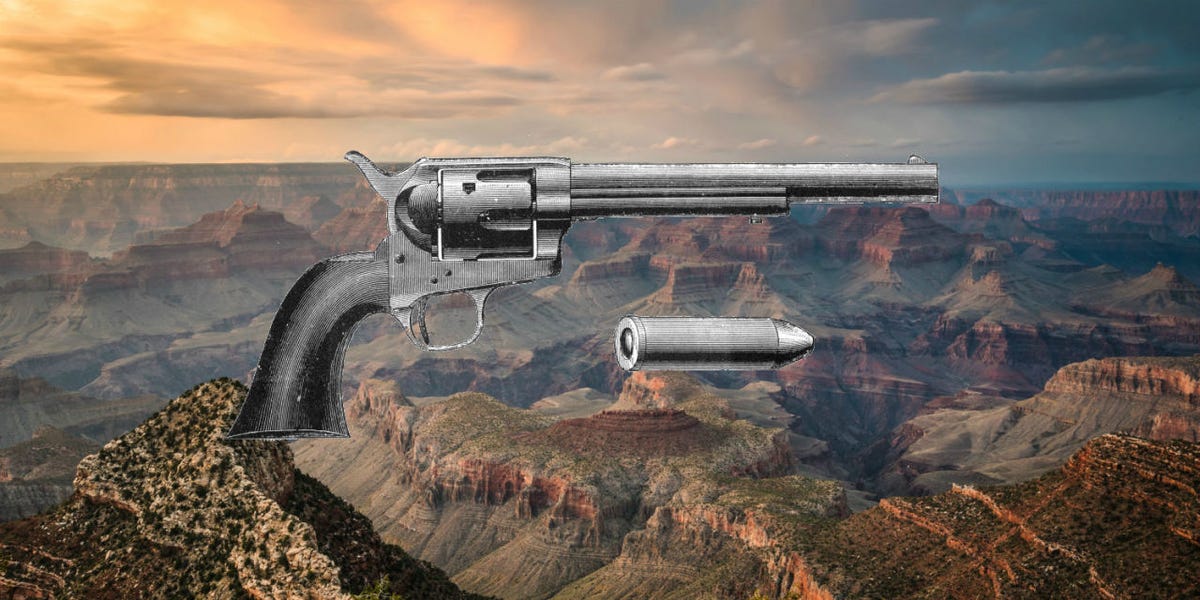

The Colt 45 is one of those rare American artifacts that can make historians, collectors, Western movie fans, and people who own too many cowboy hats all lean forward at the same time. Officially, the firearm most people mean by “Colt 45” is the Colt Single Action Army revolver, also known as the Colt SAA, Model 1873, Model P, or Peacemaker. Introduced in 1873, it became one of the most recognizable revolvers in American history and a permanent symbol of the Old West.
Its fame did not happen by accident. The Colt Single Action Army arrived at exactly the right moment: after the Civil War, during westward expansion, when metallic cartridges were replacing older percussion firearms, and when the U.S. Army needed a stronger, more reliable sidearm. Add frontier lawmen, cavalry troopers, ranchers, outlaws, dime novels, Hollywood Westerns, and a nickname as smooth as “Peacemaker,” and you have a revolver that practically rode into legend wearing spurs.
What Is the Colt Single Action Army?
The Colt Single Action Army is a six-shot, single-action revolver first manufactured by Colt’s Patent Fire Arms Manufacturing Company in Hartford, Connecticut. “Single action” means the hammer must be manually cocked before the trigger releases it. That may sound slow compared with modern firearms, but in the 1870s it was a practical, rugged, and respected design.
The original U.S. military model was chambered in .45 Colt and commonly fitted with a 7.5-inch barrel, which collectors later called the “Cavalry Model.” Civilian versions appeared in other barrel lengths, including 5.5 inches and 4.75 inches. Over time, Colt offered the Single Action Army in many chamberings, but .45 Colt remained the cartridge most closely tied to its identity.
The Road to 1873: Why the Colt 45 Mattered
Before the Colt Single Action Army, many revolvers used percussion caps, loose powder, and lead balls. These older designs worked, but they were slower and messier than metallic cartridge firearms. After the Rollin White patent expired in 1869, Colt could finally compete more aggressively in the market for bored-through cylinder cartridge revolvers.
Colt engineers William Mason and Charles Brinckerhoff Richards played key roles in developing the design. Their earlier conversion revolvers helped bridge the gap between percussion arms and purpose-built cartridge revolvers. The Single Action Army was not merely a converted old gun; it was a new service revolver built around the needs of the U.S. military and the realities of frontier use.
U.S. Army Adoption and the First Military Contract
The U.S. Army tested competing revolvers in the early 1870s and adopted the Colt Single Action Army as its standard service revolver in 1873. The first major order included thousands of revolvers for cavalry use. This military approval gave the Colt 45 instant credibility. In frontier America, an Army-tested sidearm carried a certain “if it’s good enough for the cavalry, it’s good enough for my saddlebag” appeal.
Between 1873 and the early 1890s, the Colt SAA served as a major U.S. military sidearm. It was eventually replaced by newer double-action revolvers, but it never disappeared from American memory. In fact, its retirement from official service may have helped its legend grow. Nothing becomes myth faster than a tool that people decide was better in the good old days.
The .45 Colt Cartridge: Big Reputation, Bigger Legend
The .45 Colt cartridge was developed alongside the revolver and became one of the most famous handgun cartridges in American history. The early black-powder load used a heavy lead bullet and delivered the kind of performance the Army wanted for mounted troops. In plain English: it was made to be serious.
The phrase “.45 Long Colt” is often used today, although the original name is simply “.45 Colt.” The “Long Colt” label became popular partly because of confusion with the shorter .45 Schofield cartridge, which appeared after Smith & Wesson’s Schofield revolver entered military use. The Colt revolver could chamber the shorter Schofield round, but the Schofield could not chamber the longer .45 Colt. Quartermasters, naturally, loved this problem about as much as a cowboy loves a rattlesnake in his boot.
Why It Was Called the Peacemaker
The nickname “Peacemaker” helped transform the Colt Single Action Army from a military revolver into a cultural icon. The name was promoted by dealers and embraced by the public because it sounded dramatic, confident, and slightly ironic. After all, the revolver did not make peace by writing polite letters.
In the late 19th century, the Peacemaker became associated with sheriffs, marshals, ranchers, scouts, cavalrymen, and armed citizens on the American frontier. Its image appeared in advertising, popular fiction, and later film. The nickname stuck because it captured both the romance and the roughness of the era.
Design Features That Made the Colt SAA Famous
1. A Strong Solid Frame
The Colt Single Action Army used a solid frame with a topstrap, giving it strength and durability. Earlier open-top designs were important stepping stones, but the Army wanted a tougher revolver for field conditions. The SAA answered that demand with a frame that looked simple but meant business.
2. Comfortable Grip Shape
The revolver’s plow-handle grip is one of its most recognizable features. Its shape was inherited from earlier Colt revolvers and gave the gun a balanced, natural feel. Collectors and historians often note that the Colt SAA’s handling helped build its popularity.
3. Multiple Barrel Lengths
The earliest military pattern used a 7.5-inch barrel. Later models included 5.5-inch and 4.75-inch versions, which became popular with civilians. Collectors often refer to them as Cavalry, Artillery, and Civilian or Gunfighter lengths. Colt also made special-order barrel lengths, some very short and some dramatically long.
4. Wide Caliber Options
Although the .45 Colt is the star of the story, the Single Action Army was produced in many calibers. The .44-40 Winchester chambering became especially popular because it allowed owners of Winchester Model 1873 rifles to carry one type of ammunition for both rifle and revolver. That kind of convenience mattered on the frontier, where the nearest store might be farther away than your optimism.
The Colt 45 and the American West
The Colt Single Action Army became closely tied to the mythology of the American West. It was carried by lawmen, cattlemen, soldiers, stagecoach guards, and plenty of people whose job descriptions were less suitable for polite company. Its reputation grew through real frontier use and through storytelling.
Names like Bat Masterson, Buffalo Bill Cody, and other Western figures are often associated with Colt revolvers. Some connections are well documented; others are wrapped in legend, collector lore, or Hollywood seasoning. That is part of the Colt 45’s charm. It sits at the crossroads of artifact and myth, where museum labels meet campfire stories.
Famous Variations and Collector Terms
Cavalry Model
The Cavalry Model usually refers to the original 7.5-inch military revolver. These early U.S.-marked examples are highly desirable among collectors, especially when they retain original condition and inspection markings.
Artillery Model
The Artillery Model generally refers to 5.5-inch barrel revolvers, including many that were altered from longer cavalry revolvers. These shorter versions were handier and became strongly associated with late 19th-century service and civilian use.
Civilian Model
The 4.75-inch version is often called the Civilian Model or Gunfighter Model by collectors. It is compact, visually balanced, and strongly tied to the classic Western image of the Colt Peacemaker.
Frontier Six Shooter
Colt used the “Frontier Six Shooter” name for Single Action Army revolvers chambered in .44-40 Winchester Center Fire. This version appealed to people who also carried Winchester lever-action rifles in the same cartridge.
Bisley Model
The Colt Bisley, introduced in the 1890s, was a target-oriented variation with a different grip, hammer, and trigger profile. It was named after the famous Bisley shooting range in England and remains a fascinating branch of the SAA family tree.
Production Generations: From Frontier Tool to Collector Treasure
Collectors often divide Colt Single Action Army production into generations. First Generation revolvers were made from 1873 until 1941, when production stopped during World War II. These are the classic antique examples most strongly associated with the Old West.
Second Generation production began in the 1950s, fueled by renewed interest in Western television shows and movies. America had rediscovered cowboys from the comfort of living-room couches, and Colt wisely noticed. Third Generation production began in the 1970s, and the Single Action Army has continued to appear in modern Colt catalogs in traditional barrel lengths and .45 Colt chambering.
Hollywood, Television, and the Return of the Peacemaker
If the frontier made the Colt 45 famous, Hollywood made it immortal. Western films and television shows introduced the Peacemaker to generations who had never ridden a horse, slept under the stars, or argued with a saloon door. From Saturday matinees to prime-time TV, the Colt SAA became the visual shorthand for “cowboy.”
By the 1950s and 1960s, Western entertainment helped revive public demand for traditional single-action revolvers. Replicas, commemoratives, and new Colt production all benefited from this cultural wave. The Peacemaker was no longer just a tool of the 19th century; it became a prop, a collectible, a symbol, and a piece of American design history.
Colt 45 Facts Worth Remembering
- The Colt Single Action Army was introduced in 1873.
- It was adopted by the U.S. Army as a standard service revolver.
- Its most famous chambering is .45 Colt.
- The nickname “Peacemaker” became one of the best-known firearm nicknames in history.
- Common collector barrel lengths include 7.5 inches, 5.5 inches, and 4.75 inches.
- The .44-40 version was known as the Frontier Six Shooter.
- First Generation production ended in 1941.
- Modern interest remains strong among collectors, historians, and Western enthusiasts.
- Arizona designated the Colt Single Action Army as its official state firearm in 2011.
Why Collectors Still Care About the Colt Single Action Army
The Colt SAA remains collectible because it combines mechanical history, frontier mythology, craftsmanship, and scarcity. A plain working revolver can tell one kind of story; an engraved, documented, factory-lettered revolver can tell another. Condition, provenance, caliber, barrel length, finish, and historical association all influence collector interest.
Early military revolvers with inspection marks can be especially valuable. So can examples connected to famous people, rare factory engraving, unusual calibers, or special-order features. But even ordinary examples have appeal because the design itself is so iconic. The Colt 45 is one of the few objects that can sit in a museum case and still look like it might have a schedule to keep in Dodge City.
Myth vs. Reality: The Colt 45 Was Not Alone
The phrase “the gun that won the West” is catchy, but history is rarely that tidy. Winchester rifles, Smith & Wesson revolvers, Remington firearms, shotguns, military arms, and countless other tools all shaped frontier life. The Colt Single Action Army did not single-handedly win anything. History does not fit neatly into a holster.
Still, the Colt SAA earned its reputation honestly. It arrived at the right moment, performed well, gained military approval, became widely available, and looked unforgettable. Its cultural power comes from the fact that it was both real and symbolic. It was used by actual people in actual places, then magnified by newspapers, novels, stage shows, movies, and television.
Experiences Related to Colt 45 History
Spending time with Colt 45 history feels less like reading a product timeline and more like walking through a dusty museum where every display case has an attitude. The Colt Single Action Army is not interesting only because it is old. Plenty of things are old, including tax forms and uncomfortable chairs. The Peacemaker is interesting because it sits at the center of so many American stories: military modernization, frontier settlement, industrial design, marketing genius, celebrity mythmaking, and the endless tug-of-war between fact and legend.
One of the most memorable experiences for history lovers is seeing an original Colt SAA in person. Photographs show the shape, but they do not fully capture the personality. The curved grip, color case-hardened frame, blued barrel, and simple fixed sights create a design that looks both elegant and practical. It is not covered in unnecessary decoration unless it was specially engraved. It is direct, almost stubbornly so. You can understand why it appealed to people who needed equipment that worked without drama.
Another rewarding experience is comparing real historical examples with Hollywood versions. In movies, the Colt 45 often becomes a magic wand for the hero. In museums and serious collections, it becomes something more grounded: a manufactured object with serial numbers, inspector marks, factory records, wear patterns, and sometimes repairs. That difference is fascinating. The movie gun belongs to imagination; the historical revolver belongs to evidence.
Researching the Colt Single Action Army also teaches patience. A single revolver can raise dozens of questions. When was it made? Where was it shipped? Was the barrel changed? Is the finish original? Are the grips correct? Was it military issued or civilian sold? Suddenly, what looked like a simple six-shooter becomes a detective story with screws, stamps, ledgers, and a surprising amount of argument.
For writers, the Colt 45 offers a useful lesson in why certain objects become icons. It was not the only revolver of its time, and it was not perfect. But it had a memorable silhouette, a powerful cartridge, a strong name, and a historical moment ready to turn it into legend. That combination is rare. The Colt Single Action Army became famous because it was practical first and symbolic second. The symbolism lasted because the practical foundation was real.
That is why the Colt 45 still attracts attention today. It reminds readers that history is not just dates and battles. Sometimes history is a manufactured object that passes from soldier to rancher, from catalog page to dime novel, from holster to movie poster, and from working tool to collectible treasure. The Peacemaker’s story is bigger than steel and walnut. It is a compact, six-shot chapter of American memory.
Conclusion
The Colt 45, properly known as the Colt Single Action Army revolver, remains one of the most famous firearms ever produced in the United States. Introduced in 1873, adopted by the U.S. Army, chambered most famously in .45 Colt, and immortalized as the Peacemaker, it became a defining symbol of the American West.
Its importance comes from more than nostalgia. The Colt SAA reflected major changes in firearms technology, military needs, cartridge design, industrial production, and American popular culture. It served soldiers, appealed to civilians, inspired collectors, and became a permanent fixture in Western storytelling. Not bad for a revolver that began life with a very practical job and somehow ended up as a legend with better branding than most modern startups.
Note: This article synthesizes historically established information from reputable manufacturer, museum, state archive, encyclopedia, collector, and firearms-history references. It is written for educational, historical, and cultural context only, with no external source links embedded for publication-ready formatting.