Doctors Raise Concerns About Dangerous Social Media Trend “Wreaking Havoc” On Pre-Teen Girls’ Health

There was a time when a pre-teen skin care routine meant washing your face, maybe borrowing a parent’s moisturizer, and hoping your bangs would distract from a surprise pimple. Today, many girls are scrolling through “Get Ready With Me” videos before breakfast and learning that a “basic” morning routine apparently requires six products, three serums, a toner, a roller, an ice globe, a headband with bunny ears, and the financial planning skills of a small hedge fund.
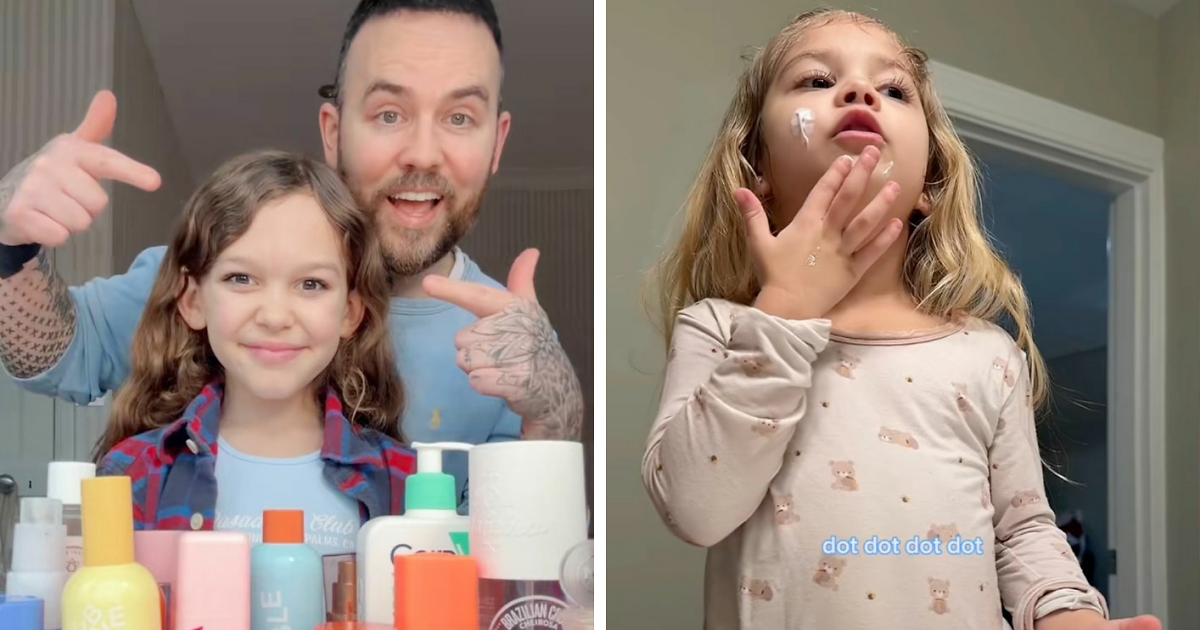
Doctors are now raising concerns about a dangerous social media trend that is quietly changing how pre-teen girls think about their skin, their health, and their appearance. Fueled by TikTok, Instagram, YouTube Shorts, influencer hauls, and the viral “Sephora Kids” phenomenon, girls as young as seven are copying complex skin care routines built for adults. These routines often include anti-aging creams, exfoliating acids, retinoids, fragrance-heavy products, and brightening formulas that were never meant for young, developing skin.
On the surface, it looks harmless. A child applies moisturizer. A tween films a cute routine. Friends compare lip balms and face masks. What could go wrong? According to pediatricians and dermatologists, quite a lot. Medical experts warn that product-heavy routines can damage the skin barrier, trigger allergic contact dermatitis, worsen acne, increase sun sensitivity, and create long-term skin sensitivities. Even more concerning, these routines may teach girls that normal skin is a problem to be fixed before they have even finished elementary school.
What Is the Pre-Teen Skin Care Trend Doctors Are Warning About?
The trend is often called “tween skin care,” “Sephora Kids,” or the “GRWM skin care routine.” In these videos, young girls show viewers how they prepare for school, bedtime, a sleepover, a dance, or sometimes just an ordinary Tuesday that apparently requires an executive-level beauty strategy. The videos often feature shelves of colorful products, luxury brands, scented creams, exfoliating toners, eye creams, glow drops, and anti-aging serums.
The problem is not that children are interested in hygiene or self-care. Doctors generally support teaching kids to wash their face, wear sunscreen, and care for their skin gently. The issue is that social media has turned basic hygiene into a competitive performance. Instead of learning that healthy skin can be simple, many pre-teens are absorbing the message that skin must be constantly polished, brightened, tightened, blurred, and corrected.
Research from Northwestern Medicine found that girls ages 7 to 18 appearing in popular TikTok skin care videos used an average of six products on their faces, with some using more than a dozen. The routines were not only complicated but also expensive, with an average cost estimated around $168 per regimen and some costing more than $500. For a child who still needs help remembering where she left her homework folder, that is a lot of money and chemistry to put on one face.
Why Young Skin Does Not Need Adult Anti-Aging Products
Pre-teen skin is not miniature adult skin with a glitter sticker on top. Children’s skin can be more sensitive, and their skin barrier is still developing. The skin barrier acts like a protective wall, helping keep moisture in and irritants out. When harsh ingredients are layered too often, that wall can become disrupted. The result may be redness, burning, stinging, peeling, dryness, breakouts, rashes, or increased sensitivity.
Many viral routines include ingredients such as retinol, alpha hydroxy acids, beta hydroxy acids, vitamin C, exfoliating acids, benzoyl peroxide, alcohol-heavy toners, strong fragrances, and brightening agents. These ingredients can be useful in the right person, at the right age, for the right reason, under the right guidance. That last part matters. A dermatologist may recommend certain acne treatments for a teen, but that is very different from a 10-year-old stacking three exfoliating products because an influencer said it gives “glass skin.”
Anti-aging products are especially unnecessary for pre-teens. A child does not need wrinkle cream because a child does not have wrinkles. That is not dermatology; that is common sense wearing a lab coat. Retinoids and exfoliating acids may increase irritation and sun sensitivity when used incorrectly. When a young person layers these products without understanding what they do, the risk rises quickly.
The Hidden Health Risks Behind “Glow-Up” Routines
Skin Barrier Damage
One of the biggest concerns is skin barrier damage. When the barrier becomes weakened, skin may feel tight, itchy, or inflamed. Products that once seemed harmless may suddenly burn. A child may then add even more products to “fix” the problem, creating a frustrating cycle: irritation, more products, more irritation, more panic, more late-night scrolling.
Allergic Contact Dermatitis
Doctors are also worried about allergic contact dermatitis, a skin reaction that can develop after repeated exposure to certain ingredients. Once a person becomes sensitized to a specific allergen, the reaction can last for years or even a lifetime. That means a pre-teen experimenting with trendy creams today could later struggle with reactions to soaps, shampoos, cosmetics, or sunscreens that contain the same allergen.
Sun Sensitivity
Exfoliating acids and retinoids can make skin more sensitive to sunlight. Ironically, many of the viral routines doctors reviewed did not consistently include sunscreen, even though sunscreen is one of the most important products for children and teens. Skipping sun protection while using ingredients that increase sun sensitivity is like bringing an umbrella to a hurricane but leaving it in the car.
Acne and Irritation
Some products promoted as “clean,” “glowy,” or “hydrating” can clog pores or irritate acne-prone skin. Heavy creams, oils, fragranced masks, and layered makeup may worsen breakouts. For a pre-teen already feeling self-conscious, a product-triggered breakout can feel emotionally huge, even if adults dismiss it as “just skin.”
The Mental Health Side: When Skin Care Becomes Self-Criticism
The physical health risks are serious, but doctors say the psychological message may be just as troubling. Social media beauty content often presents flawless faces as normal faces. Filters smooth pores. Lighting erases texture. Editing removes blemishes. Influencers speak with confidence while selling products, and young viewers may not understand the difference between education, entertainment, advertising, and algorithmic bait.
For pre-teen girls, this matters. The years before and during puberty are already filled with rapid physical changes. Skin may become oilier. Acne may begin. Hair texture may change. Bodies grow unevenly. Emotions can feel louder than a school cafeteria at lunchtime. When a child in this stage is repeatedly told that her natural face needs correction, the message can land deeply.
Pediatric experts have linked social comparison on image-heavy platforms with body dissatisfaction, anxiety, envy, obsessive thoughts, and lower confidence in some young people. The issue is not that every child who watches a skin care video will develop poor self-esteem. The issue is exposure, repetition, and vulnerability. A single video may be forgettable. Hundreds of videos saying “fix this,” “fade that,” “brighten this,” and “prevent aging before middle school” can become a very loud chorus.
How Algorithms Help the Trend Spread
One reason this trend is so difficult for parents to manage is that social media feeds are personalized. A parent may open an app and see cooking tips, dog videos, and someone organizing a pantry with the intensity of a military operation. Their child may open the same app and see skin care routines, beauty hauls, diet-adjacent content, and “perfect morning routine” videos.
Algorithms reward engagement. If a young user watches a skin care video, searches for a brand, likes a beauty routine, or pauses on a product haul, the platform may serve more of the same. Soon, skin care content can become a child’s digital neighborhood. That makes it hard for adults to know what their kids are seeing, especially when content looks cheerful and harmless at first glance.
Many videos also blur the line between self-care and shopping. A routine may be presented as “healthy,” but the underlying message is often “buy more.” The child is not only learning how to wash her face; she is learning that confidence comes in a bottle, usually one with cute packaging and a price tag that makes parents blink twice.
Why the “Lighter, Brighter Skin” Message Raises Extra Concern
Doctors and researchers have also flagged the language used in some beauty videos. Phrases like “brighter,” “lighter,” “clearer,” and “flawless” may seem ordinary in skin care marketing, but they can carry deeper social meanings. When young girls repeatedly hear that lighter or brighter skin is the ideal, beauty standards can become tangled with race, colorism, and narrow definitions of attractiveness.
This is especially concerning for girls with deeper skin tones, who may already face pressure from media images that center lighter skin or Eurocentric beauty ideals. Skin care should not teach children that their natural tone is something to erase. Healthy skin comes in every shade, with texture, pores, freckles, birthmarks, and the occasional pimple that arrives like an uninvited guest.
What Doctors Recommend Instead
The safest skin care routine for most pre-teens is refreshingly boring. That is good news. Skin does not need a 12-step routine to be healthy. For most children and young teens without a diagnosed skin condition, doctors generally recommend three basics: gentle cleansing, moisturizing if needed, and daily sunscreen.
1. Gentle Cleanser
A mild, fragrance-free cleanser can help remove sweat, dirt, and oil without stripping the skin. Harsh scrubs, gritty exfoliants, and strong acne washes should be avoided unless recommended by a clinician. Scrubbing harder does not make skin healthier; it just makes skin angrier.
2. Simple Moisturizer
A lightweight, non-comedogenic moisturizer can support the skin barrier. Ingredients such as ceramides, glycerin, hyaluronic acid, panthenol, and niacinamide may be helpful for many skin types. The goal is comfort and protection, not a glow so reflective it could guide aircraft.
3. Broad-Spectrum Sunscreen
Sunscreen is the true skin care MVP. A broad-spectrum SPF 30 or higher helps protect against sunburn, premature skin aging, and long-term skin cancer risk. Mineral sunscreens with zinc oxide or titanium dioxide may be a good option for sensitive skin, though the best sunscreen is the one a child will actually use consistently.
When a Pre-Teen Should See a Dermatologist
Some children do need more than the basics. Acne, eczema, allergic reactions, painful rashes, infections, and persistent irritation should be evaluated by a pediatrician or dermatologist. Parents should seek professional help if a child has acne that is painful, scarring, spreading to the chest or back, or not improving after several weeks of gentle care.
A dermatologist can recommend age-appropriate treatments, explain how to use active ingredients safely, and prevent a child from accidentally turning her face into a science fair project. Professional advice is especially important before using retinoids, strong acids, prescription acne products, or multiple actives at once.
How Parents Can Talk About the Trend Without Starting World War III
Telling a pre-teen, “That’s stupid, stop watching it,” usually works about as well as telling a cat to respect your boundaries. A better approach is curiosity. Ask what she likes about the videos. Is it the routine? The packaging? The influencer? The feeling of being grown-up? The relaxing ritual? The social connection with friends?
Once parents understand the appeal, they can redirect it. A child who loves routines can have a safe routine. A child who loves pretty packaging can choose a gentle moisturizer in a fun container. A child who loves filming can make content about sunscreen, sports, books, art, pets, or realistic self-care. The goal is not to shame interest in beauty; it is to separate healthy care from harmful pressure.
Parents can also teach children how marketing works. Explain that influencers may receive free products, earn commissions, use filters, or promote items because brands pay them. This does not mean every influencer is dishonest. It means children need media literacy before they treat a 30-second video as medical advice.
Red Flags in Viral Skin Care Advice
Some social media advice should make parents pause. Be cautious when a video encourages children to use anti-aging products, promises instant “glass skin,” suggests burning or stinging means a product is working, recommends multiple exfoliants, pushes expensive products as essential, or says sunscreen is optional. Also watch for content that makes normal features sound like flaws: pores, texture, freckles, oil, acne, darker skin, or facial hair.
A good rule is simple: if the routine seems too complicated for a child to explain, it is probably too complicated for a child to use. Skin care should not require a spreadsheet, a chemistry degree, or a parental loan application.
Real-Life Experiences: What Families Are Seeing at Home
Many parents describe the same pattern. First, their daughter asks for a lip balm or a face mask. That seems sweet and harmless. Then she wants a cleanser she saw online. Then a serum. Then a toner. Then a product with “retinol” in the name, even though she cannot yet pronounce it without sounding like she is naming a dinosaur. Suddenly, the bathroom counter looks like a beauty store had a small explosion.
One common experience is the “birthday wish list shock.” Parents report seeing expensive creams, luxury serums, and anti-aging products on lists from girls who are not old enough to drive, vote, or stay awake through a long documentary. The request often comes with urgency: “Everyone has it.” That phrase has been haunting parents since the invention of friendship, but social media makes it more powerful. A child is no longer comparing herself to five classmates. She may be comparing herself to thousands of polished faces online.
Another familiar scene happens after irritation begins. A girl tries a viral product, feels burning, and assumes the product is “working.” She keeps using it. The skin becomes red, flaky, or bumpy. Instead of stopping, she adds a moisturizer, then another serum, then a mask recommended by someone in the comments. By the time a parent notices, the original problem is buried under five new ones. Dermatologists say this cycle is common: irritation leads to insecurity, insecurity leads to more products, and more products lead to more irritation.
Some families also describe emotional changes. A child who once ran out the door without thinking about her face may begin checking mirrors repeatedly. She may refuse photos, worry about pores, compare her skin tone, or feel embarrassed by a normal pimple. Parents may hear comments like “My skin is disgusting” or “I need to fix my face.” These statements can be heartbreaking because they show that the trend is not only sitting on the skin; it is sinking into self-image.
There are positive experiences too. Some parents have turned the trend into a teaching moment. They shop with their child and choose a gentle cleanser, a simple moisturizer, and sunscreen. They explain what each product does and why more is not always better. They create a small routine together at night that feels caring rather than corrective. In these homes, skin care becomes a calm habit, not a beauty emergency.
Teachers, camp counselors, and pediatric clinicians have also noticed the shift. Some camps have limited luxury skin care products because cabins were filling with creams, sprays, and beauty tools instead of bug spray and books. Pediatricians report more questions from parents about which products are safe. Dermatologists are seeing young patients with irritation from adult-strength products. The pattern is clear: what begins as an online trend can quickly become an offline health issue.
The most useful family response is not panic. It is guidance. Pre-teen girls do not need lectures about vanity; they need adults who understand that social belonging, curiosity, and insecurity are powerful at this age. A calm conversation can do more than a ban. A safe routine can replace a risky one. A reminder that skin is supposed to have texture can quiet some of the digital noise. And sometimes, the best medicine is simply telling a child, clearly and often, “There is nothing wrong with your face.”
Conclusion: Healthy Skin Should Not Come With a Side of Anxiety
The dangerous social media trend worrying doctors is not simply about children buying too many beauty products. It is about the collision of young skin, adult ingredients, algorithmic marketing, and impossible beauty standards. Pre-teen girls deserve to learn self-care in a way that protects their health rather than making them suspicious of every pore.
Skin care for kids should be simple, safe, and age-appropriate. A gentle cleanser, moisturizer, and sunscreen will do more for most pre-teens than a shelf full of viral products. When acne, eczema, or irritation appears, a doctor or dermatologist is a better guide than a stranger with perfect lighting and a discount code.
Most importantly, adults should help girls understand that healthy skin is not the same as flawless skin. Pores are normal. Texture is normal. Pimples are normal. Changing bodies are normal. Childhood should not be spent fighting imaginary wrinkles. Let kids be kids, let skin be skin, and let the anti-aging serum wait until they are old enough to complain about back pain like the rest of us.