
The factual biography, materials, techniques, collection details, collaborations, and sustainable-design context below were cross-checked against 14 artist, museum, government, hospitality, and design sources.
EsMadrid
+3
JAVIER S. MEDINA
+3
Loewe
+3
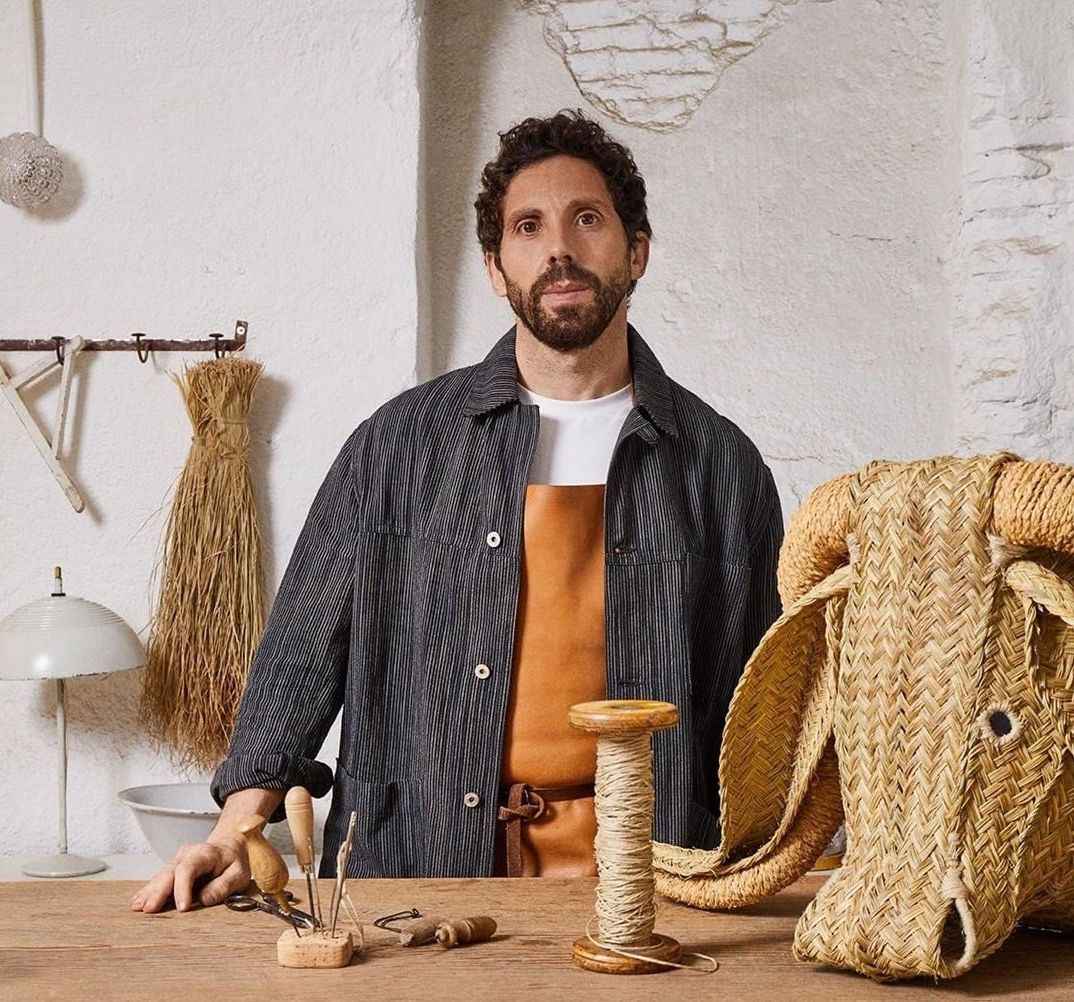
There is something wonderfully mischievous about a bull’s head hanging over a fireplace when the bull involved is perfectly fine, probably standing in a sunny field and minding his own business. That is the playful idea behind the eco animal trophies created by Spanish artisan Javier S. Medina.
Instead of antlers, hide, or taxidermy glass eyes that seem to follow guests around the room, Medina uses braided esparto grass, wicker, rattan, bamboo, and twine. The result is a family of sculptural animal heads that feel rustic, modern, theatrical, and surprisingly friendly all at once.
His best-known woven grass bull heads offer a fresh interpretation of Spanish visual culture. Yet the collection goes far beyond bulls. Rhinos, reindeer, buffalo, donkeys, goats, rams, sheep, and deer also emerge from Medina’s workshop, each shaped by hand and given a personality through curves, horns, ears, and carefully arranged fibers.
Who Is Javier S. Medina?
Javier Sánchez Medina, commonly known as Javier S. Medina, is an artisan and antique restorer from Extremadura, a region in western Spain with strong rural craft traditions. He later established his studio in Madrid, where he transformed an old carpentry workshop in the Malasaña neighborhood into a space for making, restoring, teaching, and displaying his work.
The historic atmosphere of the workshop is not decorative theater. Old tools, worn furniture, natural fibers, and workbenches connect his contemporary designs to the practical craft environments that once filled Spanish towns and city neighborhoods.
A Craft Education That Began at Home
Medina describes himself as largely self-taught, but his earliest lessons came from watching his grandfather work with plant fibers in Extremadura. He remembers traditional weaving taking place in the courtyard, including the braiding and repair of useful household objects.
That memory matters because Medina’s work is not simply an attempt to imitate antique country decor. He takes methods associated with chair seats, baskets, mats, ropes, agricultural tools, and domestic storage, then directs them toward expressive sculpture. A technique once used to make something carry potatoes can now make a rhinoceros look unexpectedly elegant. Craft has range.
Why He Calls Them Ecological Trophies
Medina refers to his animal heads as ecological trophies. The phrase works on several levels. Most obviously, no animal is killed to create them. The forms borrow the visual language of hunting trophies and ceremonial animal displays while replacing bone, skin, and fur with braided plant material.
The bull designs also offer a gentle reinterpretation of Spanish bullfighting imagery. They acknowledge the animal’s cultural symbolism without reproducing the violence historically associated with a mounted bull’s head. The finished sculpture can look proud and imposing, but it is also warm, tactile, and slightly humorous.
Natural Materials With Visible Character
Depending on the design, Medina works with materials such as:
- Esparto grass
- Wicker
- Rattan
- Bamboo
- Jute and other plant fibers
- Twine used to stitch the forms together
These materials are not forced to look perfectly smooth or mechanically identical. Their variations remain visible. One strand may be thicker, another darker, and a braided section may curve differently from its neighbor. Those irregularities help each natural fiber sculpture feel alive.
That does not mean every object made from grass automatically earns a glowing environmental halo. Responsible sourcing, transportation, durability, repairability, and eventual disposal all influence a product’s impact. Medina’s strongest sustainability argument is therefore broader than material choice alone: his pieces are handmade, repairable, designed to last, and connected to skills that might otherwise disappear.
How Woven Grass Bull Heads Are Made
A finished bull’s head may appear loose and spontaneous, but its construction requires careful control. Plant fibers must be selected, prepared, braided, shaped, and joined without losing the proportions of the animal. The maker is essentially drawing in three dimensions with grass.
Traditional Braiding Meets Sculpture
Medina uses traditional Spanish braiding techniques associated with esparto and related fibers. Braided lengths create structure and texture, while a strong needle and twine help assemble the components. Horns, muzzles, foreheads, and ears must be built so the head reads clearly from both the front and side.
The process sits somewhere between basketmaking, sewing, model building, and freehand sculpture. A basket must hold its contents; an animal head must hold a convincing expression. Both depend on tension, rhythm, and an understanding of how flexible fibers behave when bent.
Why Handmade Variations Matter
Machine-made wall decor often aims for complete repetition. Medina’s work benefits from the opposite. Slight changes in the angle of a horn or the fullness of a muzzle can make one bull look calm while another appears ready to challenge the dining-room chandelier.
These variations are not defects. They are evidence of the maker’s decisions and the natural behavior of the material. In a market crowded with identical resin ornaments, a handwoven piece has the quiet confidence of an object that knows it will never meet its exact twin.
More Than Bulls: A Whole Woven Menagerie
The bull remains Medina’s most iconic design, partly because of its strong connection to Spanish identity. However, his official collection includes a much larger woven menagerie.
Rhinoceroses and Buffalo
A rhinoceros is an ambitious subject for grass sculpture. Its heavy face, distinctive horn, and broad proportions must be translated into a light material without losing visual weight. Medina solves this contradiction by using dense braiding and bold outlines. The result looks substantial while remaining suitable for wall mounting.
Buffalo heads have a similarly powerful silhouette. Their broad horns and compact faces work especially well above a mantel, sideboard, or large doorway where the sculpture has enough visual space to breathe.
Deer, Reindeer, Goats, and Rams
Animals with antlers or curled horns introduce more delicate line work. A woven deer or reindeer can feel woodland-inspired without becoming predictable holiday decor. Goats and rams bring stronger rural associations, making them natural companions for stone, linen, aged wood, terracotta, and hand-thrown ceramics.
Donkeys, Sheep, and Other Characters
Donkeys and sheep soften the trophy concept even further. Their longer ears, rounded faces, and familiar farmyard expressions make them playful additions to kitchens, children’s rooms, creative studios, or informal dining spaces.
Medina also creates ornamental mirrors framed with wicker in sun, flower, and star-like forms. These pieces share the animal trophies’ warmth and handmade texture, allowing collectors to build a coordinated wall without turning the room into a full botanical zoo.
From a Madrid Workshop to International Recognition
Medina opened his namesake Madrid shop and workshop in 2014. The internet later helped his work travel far beyond the physical storefront, but one particularly visible moment came in 2017, when actress Sarah Jessica Parker visited the studio, purchased pieces, and shared the discovery online.
The attention introduced a wider audience to Medina’s ecological trophies. His work subsequently became associated with collectors, designers, actors, models, and hospitality projects interested in objects that communicate craft, place, and personality.
Collaborations With Loewe and The Madrid EDITION
For Loewe’s Paula’s Ibiza 2021 presentation, Medina produced a special series of natural-fiber animal heads for international stores and pop-up spaces. The collaboration made sense: both the collection and Medina’s work celebrated Spanish culture, tactile materials, handcrafted forms, and a relaxed sense of experimentation.
He also created a custom esparto-grass bull for The Madrid EDITION. Hand-braided and stitched in Madrid, the piece translated his signature animal into a collectible object associated with the hotel’s local identity.
These collaborations show how vernacular techniques can move comfortably into luxury settings without losing their origins. A material associated with ropes, mats, baskets, and rural furnishings can occupy a boutique hotel or fashion installation and still look completely at home.
Why Natural Fiber Wall Art Feels So Contemporary
Woven animal heads may be rooted in old techniques, but they respond neatly to current interior-design preferences. Many homes now combine clean architectural lines with tactile materials, handmade objects, and nature-inspired forms. Medina’s work provides all three without requiring a room to become aggressively rustic.
Texture Without Visual Clutter
Natural fibers create depth through shadow and surface variation rather than bright color. This allows a large bull or deer head to become a focal point while maintaining a calm palette. Against white plaster, limewash, warm gray, deep green, or charcoal walls, the woven structure becomes especially clear.
A Form of Biophilic Decoration
Biophilic design aims to strengthen the connection between people and nature through materials, patterns, light, vegetation, and organic forms. An eco animal trophy is not a living plant, of course, and thankfully does not require watering. Still, its plant fibers, earthy tones, and animal-inspired shape can add a natural reference to an interior.
Unlike a flat wildlife print, a woven head interacts with changing daylight. Shadows move through the braids, horns project into the room, and the surface rewards close inspection. The experience is sculptural rather than merely graphic.
How to Style Eco Animal Trophies at Home
Give the Sculpture Room to Breathe
A large woven bull head already has presence. Avoid surrounding it with numerous tiny frames and ornaments unless an intentionally layered gallery wall is the goal. A clear area around the horns makes the piece look more like art and less like it has become trapped in a yard sale.
Use Contrast Strategically
Pale fibers stand out against saturated walls, reclaimed brick, dark wood, and moody paint colors. On a light wall, stronger shadows or nearby darker materials can help define the silhouette. Directional lighting placed above or to one side emphasizes the braiding.
Mix Rustic and Modern Elements
These sculptures do not require a Spanish farmhouse. A woven grass bull can add warmth to a minimalist apartment, soften a sleek office, or introduce humor into a formal dining room. Pair it with modern furniture, simple linen curtains, metal lighting, or polished stone to prevent the scheme from becoming overly themed.
Choose the Animal to Match the Mood
Bulls and buffalo feel bold and architectural. Deer and reindeer create more delicate silhouettes. Donkeys and sheep appear approachable and playful. Rhinos provide sculptural drama and a convenient conversation starter for evenings when everyone has already discussed the weather.
The Cultural Value of Keeping Basketry Skills Alive
Basketry is one of humanity’s oldest practical technologies. Across cultures, artisans have twisted, coiled, plaited, wrapped, and stitched plant fibers into storage containers, mats, furniture, clothing, fishing equipment, ceremonial objects, and works of art.
Contemporary fiber artists often blur the boundary between functional craft and fine art. Medina participates in that wider story by using inherited techniques for objects whose primary purpose is visual and symbolic.
His workshops also give participants the chance to experience the patience behind the finished product. Braiding natural fibers can look effortless when performed by an experienced artisan. In beginner hands, the material quickly reveals that it has opinions. It bends, resists, slips, and occasionally behaves like a houseplant seeking revenge.
Teaching the technique helps preserve more than a decorative style. It preserves knowledge about tools, hand pressure, preparation, repair, local materials, and the relationship between a maker and a slowly developing form.
Experiencing Eco Animal Trophies in Everyday Spaces
The most interesting part of living with an eco animal trophy is how quickly it changes from an unusual object into a recognizable personality within the room. On the first day, guests notice the materials. They step closer, examine the stitching, and ask whether the head is made from straw, wicker, or some secret ingredient harvested by extremely artistic goats.
After a few weeks, the sculpture begins to feel like part of the architecture. A bull positioned above a fireplace visually anchors the wall in much the same way a large painting would, but its projecting horns add depth that a framed image cannot provide. Morning light creates crisp shadows. In the evening, softer lamps make the braided surface appear warmer and more rounded.
The Living-Room Experience
In a living room, a woven bull or buffalo works best when it can command a clear sightline. Visitors usually understand the joke immediately: the pose resembles a traditional trophy, yet the material announces that this animal was constructed rather than hunted.
The piece can make a polished room feel less serious. It introduces craftsmanship without the precious atmosphere sometimes associated with gallery art. People tend to discuss how it was made, which fibers were used, and how long the process may have taken. In other words, it earns its wall space by doing social work.
The Dining-Room Experience
A dining room provides an especially theatrical setting. A ram, deer, or bull above a sideboard adds symmetry and height while creating a connection to food, agriculture, and rural traditions. The trick is to avoid excessive competition. One strong sculpture, a few ceramics, and perhaps a simple branch arrangement usually create more impact than a crowded display.
Because the fibers are visually soft, the head can balance harder materials such as glass, steel, stone, or lacquered wood. It also looks particularly comfortable near linen napkins, handmade pottery, and woven dining chairs.
The Bedroom or Children’s-Room Experience
A donkey, sheep, or small deer can bring gentle humor to a bedroom. In a child’s room, the animal form feels imaginative without relying on plastic character merchandise. The natural color also adapts easily as the room changes over time.
Secure installation is essential, especially above beds, cribs, or play areas. Even a lightweight fiber sculpture should be attached with hardware suitable for its size, wall type, and projection. Good design is much less charming when it makes an unscheduled midnight landing.
The Home-Office Experience
In a home office, a woven animal head provides a distinctive background for video calls. It communicates an interest in craft and design without displaying a shelf full of business books that everyone knows have not all been read.
The neutral fibers also photograph well under ordinary lighting. Unlike glossy wall art, they do not create harsh reflections. A modest bull, goat, or ram can become a visual signature while keeping the workspace calm.
What Owners Notice Over Time
Natural-fiber art benefits from occasional gentle dusting with a soft brush or low-suction vacuum attachment. It should be protected from prolonged dampness, direct splashing, and locations where cooking grease can settle into the weave. Strong, continuous sunlight may also change the fiber’s color over time.
Those gradual changes are not necessarily undesirable. Like leather, wood, or linen, woven grass can develop a subtle patina. The object’s appeal comes partly from its honesty: it looks like plant fiber, behaves like plant fiber, and ages like plant fiber rather than pretending to be an indestructible synthetic imitation.
The deeper experience is one of connection. The sculpture links a modern room to rural Spain, family memory, patient handwork, and materials that have served practical purposes for generations. It may begin as unusual wall decor, but it ultimately becomes a small ambassador for the value of making things slowly.
Conclusion: A Kinder Trophy With a Stronger Story
Javier S. Medina’s eco animal trophies succeed because they contain several apparent contradictions. They are traditional and contemporary, rustic and refined, humorous and dignified. They resemble hunting trophies while celebrating animals through plant-based materials and skilled handwork.
The woven grass bull heads remain the stars of the collection, but the wider family of rhinos, buffalo, deer, donkeys, goats, sheep, rams, and reindeer demonstrates how flexible the idea can be. Each design transforms basketry from a familiar domestic craft into expressive three-dimensional wall art.
Most importantly, Medina’s work reminds us that sustainable design is not only about replacing one material with another. It can also mean preserving knowledge, making durable objects, supporting repair, honoring local traditions, and choosing possessions with enough personality to remain loved for years.
A grass bull may not solve every environmental problem. It will, however, improve a blank wall considerablyand no bull has to file a complaint.
:::