
Finding a bone in the woods, beneath an old floor, or in a backyard excavation can turn an ordinary afternoon into an episode of a crime showminus the dramatic soundtrack and conveniently available laboratory.
Although certain anatomical clues can suggest whether a bone may be human, visual identification is rarely conclusive. Animal bones, weathered wood, shell, plaster, and oddly shaped rocks can fool untrained observers. Even experienced investigators may require comparative collections, microscopes, X-rays, chemical testing, or DNA analysis before reaching a reliable conclusion.
This guide explains how professionals approach the question while emphasizing one essential rule: if remains could be human, do not clean, move, arrange, photograph excessively, or take them home. Preserve the location and contact local law enforcement or the medical examiner. Forensic anthropologists are trained to analyze skeletal remains, document their recovery context, and help establish a biological profile or scientific identification.
Why Human Bone Identification Requires Caution
An adult human skeleton normally contains 206 bones, ranging from the large femur to tiny bones inside the ear. However, remains found outdoors are rarely presented as a tidy classroom skeleton. They may be fragmented, burned, gnawed, stained, buried, or scattered. Young individuals also have unfused skeletal elements that can look very different from adult bones.
The objective of a casual observer should therefore be recognition, not confirmation. You are looking for enough warning signs to stop disturbing the area and call someone qualifiednot to perform a backyard autopsy with a flashlight and three search-engine tabs.
How to Identify Human Bones in 15 Steps
1. Stop and Leave Everything Where It Is
If a bone might be human, stop digging or moving nearby objects. Do not pick it up to inspect the underside. Its position, orientation, depth, relationship to clothing, soil disturbance, or nearby objects may be important evidence.
Step away carefully, restrict access if possible, note the location, and contact local police, the sheriff’s office, a coroner, or a medical examiner. On federal or Tribal land, discoveries may trigger additional legal and cultural-protection procedures. State requirements differ, but official guidance consistently recommends reporting suspected human remains and leaving them undisturbed.
2. Examine the Discovery Context Without Disturbing It
Context often provides clues before anatomy does. A bone beside a hiking trail may be an animal remain carried by a scavenger. Multiple bones in anatomical order, personal belongings, a depression in the ground, coffin hardware, or carefully arranged stones may indicate a burial.
Remember that old human remains are not automatically unrelated to the law. They might come from a historic cemetery, an Indigenous burial, a missing-person case, or a recent crime scene. Forensic teams document the entire setting because skeletal material and its surroundings must be interpreted together.
3. Decide Whether the Object Is Actually Bone
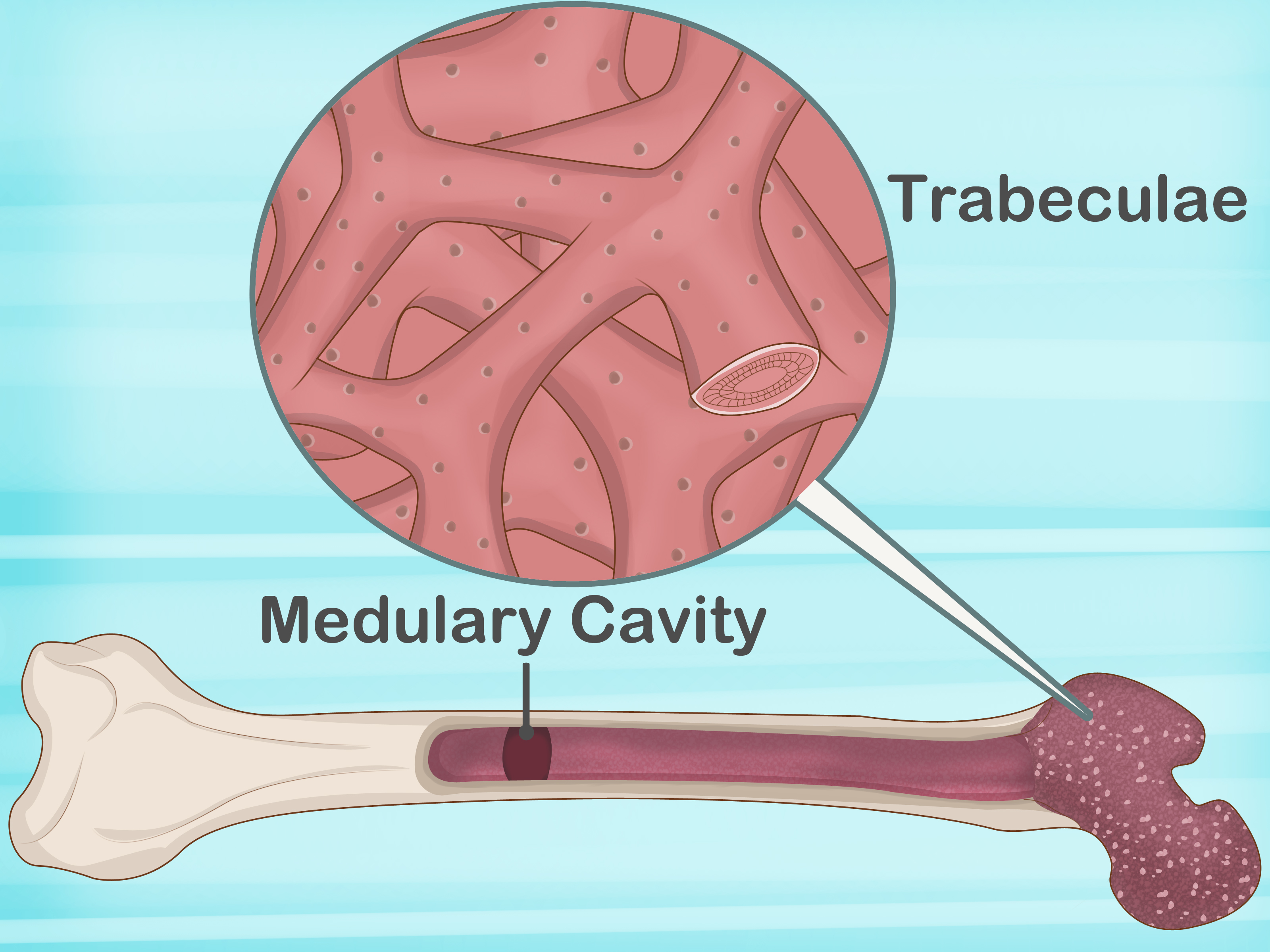
Real bone usually has a dense outer layer called cortical bone and a porous, lattice-like interior called trabecular or cancellous bone. Broken ends may reveal this layered structure. Weathered bone may feel lighter than an equally sized rock and can show natural openings, joint surfaces, ridges, or grooves.
However, visual inspection can be misleading. Plaster, coral, antler, ivory, roots, and certain minerals may imitate bone. Highly fragmented or altered material sometimes requires microscopy, elemental analysis, or other laboratory techniques. Do not use destructive internet “tests,” such as burning, cutting, bleaching, licking, or soaking the object. Yes, licking is sometimes suggested online. No, it should not become part of your weekend plans.
4. Look for Recognizable Joint Surfaces
Many bones can be identified by their articular surfacesthe smooth areas where they meet neighboring bones. A rounded head may fit into a socket, while hinge-like surfaces may belong near an elbow, knee, finger, or toe.
Recognizing the type of joint can narrow the possibilities, but mammals share the same basic skeletal plan. A deer, pig, bear, dog, and human all possess versions of many corresponding bones. Size alone is therefore unreliable; a large animal bone is not necessarily human, and a small human bone may belong to a child.
5. Compare Overall Human and Animal Proportions
Human bones reflect upright walking, dexterous hands, and a relatively large brain. Nonhuman mammals frequently have longer facial regions, differently shaped pelvises, limb proportions adapted for four-legged movement, and joint surfaces aligned for running, climbing, or digging.
These patterns are more useful when several complete bones are present. A single fragment may provide very little information. Forensic specialists use detailed morphology, measurements, histology, DNA, and comparative skeletal collections when ordinary visual comparison is insufficient. Species identification is one of the first major questions in both forensic and archaeological analysis.
6. Study the Skull CarefullyFrom a Distance
A human skull typically has a large, rounded braincase, a relatively flat face, small brow-to-jaw proportions compared with many animals, and a foramen magnum positioned beneath the skull to balance the head above an upright spine. The human lower jaw also has a true chin, although this feature may be absent when the jaw is fragmented.
Animal skulls often have longer snouts, pronounced tooth rows, differently positioned eye sockets, or strong crests for jaw-muscle attachment. Still, damaged skulls are easy to misinterpret, and even experts can struggle with comparisons based only on incomplete images. Never assume that a round object with two holes is automatically a skull; nature has an impressive talent for accidental special effects.
7. Check for the Distinctive Human Pelvis
The human pelvis is adapted for upright walking and forms a broad, bowl-like structure. Its iliac blades are relatively short and wide rather than long and narrow. The sacrum sits between the two hip bones, while large cup-shaped sockets receive the heads of the femurs.
In adult remains, the pelvis is also the most dependable skeletal region for estimating biological sex because features associated with childbirth and pelvic architecture often differ statistically. These observations are estimates based on patterns, not an instant or perfect classification, and they should be made by trained practitioners using multiple traits.
8. Inspect Long Bones and Their Ends
Human long bones include the femur, tibia, fibula, humerus, radius, and ulna. They generally have a long shaft and specialized ends that form joints. The femur has a spherical head connected to the shaft by a neck, while its lower end has two large rounded condyles that participate in the knee.
Animal long bones can appear surprisingly similar, particularly when cut by butchers or broken by scavengers. Professionals consider shaft shape, curvature, muscle attachments, wall thickness, joint geometry, measurements, and the species likely to be present in that environment. A fragment that “looks about the right size” is not enough for a human identification.
9. Examine Hands and Feet With Extra Skepticism
Human hands contain small wrist bones, five metacarpals, and finger bones arranged for precision gripping. Human feet have short toes, a robust heel, and a big toe aligned with the others rather than projecting outward like the grasping toe of many primates.
Yet paws can cause spectacular confusion. A skinned bear paw, for example, may resemble a human hand closely enough to alarm experienced observers. Detached animal toes and fragmented hoof bones can also look strangely familiar. Identification should depend on the complete anatomical pattern, not one dramatic resemblance.
10. Treat Ribs and Vertebrae as Difficult Evidence
Human ribs are curved, flattened bones that connect the spine to the chest. Vertebrae contain a central body, an opening for the spinal cord, and several projections for joints and muscle attachment. Their shapes vary depending on whether they come from the neck, chest, or lower back.
Unfortunately, rib and vertebral fragments from pigs, deer, cattle, and other mammals can resemble human remains. These are among the bones most likely to produce false alarms after cooking, hunting, farming, or wildlife activity. Unless a diagnostic feature is present, an expert may need comparative specimens or microscopic examination.
11. Look at Teeth and Jaws
Teeth are among the most durable tissues in the body and may survive decomposition, burning, or environmental exposure. Humans normally have incisors, canines, premolars, and molars arranged in a curved dental arcade. Human canine teeth are generally less projecting than those of many other mammals.
Dental restorations, missing teeth, root shapes, unusual alignment, and previous dental work may help compare unknown remains with dental records. Teeth can therefore contribute not only to recognizing human remains but also to establishing identity. Never remove a tooth from a jaw; its position and surrounding structures are part of the evidence.
12. Consider Whether the Bones Are From a Child
Juvenile remains are especially difficult to recognize. Children’s bones are not simply miniature adult bones. Growth plates may still be open, the ends of long bones may be unfused, and some skeletal elements may appear as separate pieces. A developing jaw can contain both baby teeth and unerupted permanent teeth.
Because unfused bones can resemble animal remains or unrelated fragments, specialists use patterns of tooth development, bone length, growth-plate fusion, and skeletal maturation to estimate age. Small size by itself proves almost nothing.
13. Understand What a Biological Profile Canand CannotShow
After remains are confirmed as human, forensic anthropologists may estimate age at death, biological sex, stature, and population affinity. They may also record disease, healed injuries, surgical changes, occupational stress, or unusual anatomical traits.
These findings narrow an investigation; they do not automatically provide a name. Skeletal estimates have uncertainty, depend on the bones available, and may be affected by population variation. Gender identity cannot be determined from a skeleton. Positive identification usually requires comparison with dental records, medical images, DNA, fingerprints, uniquely documented implants, or other individualizing evidence.
14. Distinguish Possible Trauma From Environmental Damage
Bones can be altered by injury, fire, soil pressure, roots, water, tools, animals, weather, and repeated freezing and thawing. Investigators study fracture shape, surface color, edge texture, impact patterns, cut marks, tooth marks, and relationships among fragments.
Damage occurring when bone still contains moisture may behave differently from breakage after it has become dry and brittle. Even so, estimating when and how a fracture occurred is specialized work. A mark that resembles a knife cut may be a rodent groove, excavation scrape, mower strike, or postmortem break. Do not attempt to “fit” pieces together or scrub away soil to reveal the mark.
15. Obtain Professional Confirmation
The final step is not a more ambitious visual test. It is professional examination. Law-enforcement agencies may consult forensic anthropologists, forensic pathologists, odontologists, archaeologists, radiologists, wildlife specialists, or DNA laboratories depending on the circumstances.
Experts begin by determining whether the material is bone, whether it is human, how many individuals may be represented, and whether the case is archaeological or medicolegal. Identification may then involve measurements, dental comparison, medical X-rays, DNA profiling, isotope analysis, or serial numbers on orthopedic devices.
Common Mistakes When Examining Suspected Human Bones
One common mistake is assuming that color reveals age. Fresh-looking bone is not necessarily recent, and dark or stained bone is not necessarily ancient. Soil minerals, sun exposure, water, fire, vegetation, and preservation conditions can dramatically change appearance.
Another mistake is collecting every visible fragment into a bag. This destroys spatial information and may mix remains from different individuals or animals. Washing can remove trace material, tool marks, residues, or DNA. Applying glue can interfere with laboratory analysis. Posting close-up photographs online can also be disrespectful and may compromise an investigation.
Finally, avoid estimating identity from stereotypes. Skull shape, apparent size, or one pelvic feature cannot responsibly establish race, ethnicity, sex, occupation, or cause of death. Forensic conclusions are built from documented methods, multiple observations, reference data, and explicit statements of uncertainty.
Field Experiences and Practical Lessons From Real Bone Discoveries
Documented investigations and professional training reveal a consistent lesson: the first impression is often wrong. Many calls about “human bones” involve food waste, livestock remains, hunted animals, or wildlife carried into residential areas. A sawn pig joint may look disturbingly human after weathering removes grease and soft tissue. Deer limb bones can resemble portions of a human arm or leg. Bear paws are famous for triggering reports because their bone arrangement looks remarkably hand-like.
These false alarms are not foolish. Reporting a plausible discovery is far better than quietly discarding material that later proves important. The useful response is calm documentation: stop, preserve the location, and let qualified personnel decide. Investigators would rather examine an animal bone than learn that someone moved possible evidence because they feared being embarrassed.
Landscaping and construction discoveries create another recurring scenario. A worker may uncover one fragment, assume it is isolated, and continue diggingonly to expose additional bones, coffin nails, fabric, or personal items. At that point, the machinery may already have displaced the burial. Archaeological and forensic recovery methods emphasize controlled excavation because the position of every object contributes to interpretation.
The Civil War burial pit discovered at Manassas National Battlefield Park illustrates how context and expert collaboration transform scattered remains into a meaningful historical account. National Park Service personnel and Smithsonian forensic anthropologists documented, recovered, and analyzed bones associated with a field hospital rather than treating them as disconnected curiosities. The investigation showed that even small or incomplete remains can carry historical, cultural, and personal significance.
Burned material presents a different challenge. Fire can shrink, warp, crack, whiten, darken, or fragment bone until its original form is barely recognizable. In training exercises, objects initially labeled as bone may turn out to be building material, while tiny unremarkable fragments may be skeletal. This is where laboratory imaging, chemical composition, and microscopic structure become more reliable than intuition.
Another practical lesson concerns respect. Human remains are not props, collectibles, or social-media puzzles. They may represent a missing person whose family has spent years waiting for answers. They may also belong to a historic or Indigenous community with legal and cultural interests in how the remains are treated. Federal protections such as the Native American Graves Protection and Repatriation Act establish procedures for certain discoveries involving Native American remains and cultural items.
Professionals also learn to resist exciting conclusions. A hole in a skull is not automatically a bullet wound. A straight mark is not automatically evidence of a weapon. A healed fracture may reflect an old accident rather than violence. The disciplined approach is to describe what is observable before interpreting how it happened.
The most valuable field skill, therefore, is not memorizing every bone in the skeleton. It is recognizing uncertainty. Anyone can notice a rounded joint, a tooth socket, or a honeycomb interior. Good judgment begins when the observer understands that these clues justify cautionnot certainty.
Conclusion
Learning how to identify human bones begins with anatomy, but responsible identification depends equally on context, preservation, and professional confirmation. Human skulls, pelvises, teeth, long bones, hands, and feet have recognizable patterns, yet animal remains and damaged materials can imitate them surprisingly well.
When you encounter suspicious bones, leave them in place, keep other people away, record the location without disturbing it, and notify the proper authorities. The smartest person at a possible recovery scene is not the one who produces the fastest theory. It is the one who protects the evidenceand knows when to call an expert.