
Los Angeles has always had a soft spot for beautiful oddities. This is the city where a Spanish Colonial hotel can become a celebrity magnet, a dusty studio can become a portrait laboratory, and a vintage garbage can can suddenly look like it deserves its own agent. That is the deliciously strange charm behind Olde LA: Amanda Demme’s Curiosity Shop, a story about objects, atmosphere, memory, and the kind of collecting that turns forgotten things into main characters.
Amanda Demme is not easy to file under one label, which is probably the point. She has worked across music, nightlife, photography, creative direction, and design. Her career has moved from music supervision on culturally sticky films such as Garden State and Mean Girls, to shaping the mood of Hollywood nightlife, to building a photographic practice defined by shadow, theatricality, and emotional weight. Then came State of Space, her online curiosity shop of vintage objects, antique books, sculptural finds, and timeworn pieces that seem to have wandered out of an old Los Angeles dream.
What makes Demme’s shop memorable is not simply that the objects are old. Plenty of things are old. Leftover takeout in the back of the fridge is old. The magic is that Demme treats each object as if it has a pulse. A ruler, a jump rope, a battered toolbox, a pair of mended Japanese gloves, a Chesterfield couch, or an old wrestling head cover becomes more than inventory. In her hands, it becomes a mood, a clue, a prop from a film no one has made yet.
Who Is Amanda Demme?
Amanda Scheer Demme is an American photographer and creative director whose creative path has zigzagged through several corners of culture. Before she became known for portraiture and atmospheric interiors, she worked as a music supervisor and helped shape soundtracks that became part of early-2000s pop culture. She also moved through the music business as a label owner and artist manager, giving her an instinct for rhythm, presentation, and the fine art of making people pay attention.
In Los Angeles, Demme became widely associated with nightlife. Her work around the Hollywood Roosevelt Hotel, including the Tropicana Bar and Teddy’s, helped define a specific moment in Hollywood social life. This was not nightlife as a room with drinks and a DJ. It was nightlife as theater. The door mattered, the lighting mattered, the crowd mattered, and the tension between access and mystery mattered most of all. A room, to Demme, was never just a room. It was a composition.
That same eye later sharpened in photography. Demme’s portrait work is often described as cinematic, painterly, and emotionally direct. She is drawn to faces, posture, negative space, and the story that can be told by one chair, one shadow, or one object sitting stubbornly in the frame. This explains why State of Space feels less like a typical vintage shop and more like a gallery where the merchandise has secrets.
The Birth of State of Space
State of Space was Demme’s online store for the unusual, the sculptural, and the deeply specific. The shop gathered antique books, vintage furniture, found objects, fashion pieces, and curiosities that reflected her eye for age, patina, and emotional texture. It was the kind of shop where “practical” was welcome but not required. A thing could be useful, decorative, symbolic, or simply too strange to ignore.
Demme’s interest in worn objects traces back to childhood memories of her electrician grandfather’s basement, a place filled with tools and curios. That origin story matters because it keeps the project from feeling like trend-chasing. Her attraction to old things is not about making a room look expensive. It is about contact with use. Scratches, dents, frayed fabric, repaired seams, and darkened wood all suggest that an object has lived a little. In a city famous for reinvention, Demme seems interested in what survives reinvention.
The shop’s name, State of Space, also feels precise. Demme is not only selling objects; she is selling a way to change the emotional state of a room. A vintage cake tray can soften a kitchen. A stack of antique books can make a corner feel intelligent, even if nobody has opened them since the Coolidge administration. A low, well-proportioned Chesterfield can make a studio feel like an old club after the last guest has left and the ghosts are still smoking imaginary cigarettes.
Why the Curiosity Shop Feels So “Olde LA”
“Olde LA” is not just a decorative phrase. It suggests a layered Los Angeles: Hollywood hotels, canyon houses, studios, prop rooms, flea markets, old bungalows, art galleries, and workshops where the past keeps sneaking into the present. Demme’s Atwater Village studio fits this world beautifully. Atwater Village, with its early 20th-century homes, Craftsman character, Spanish-style details, and proximity to the Los Angeles River, has the right kind of texture for a collector’s imagination.
Los Angeles is often accused of having no history, which is hilarious because the city is basically history wearing sunglasses. The Hollywood Roosevelt opened in 1927 and remains one of LA’s great symbols of glamour, myth, and reinvention. The city’s old hotels, theaters, studios, and hillside homes all carry the residue of performance. Demme’s curiosity shop taps into that same residue. Her objects feel as if they could belong to a retired stuntman, a silent-film actress, a mid-century set decorator, or a mysterious aunt who owned too many hats and exactly one excellent secret.
In this context, an old jump rope is not just sporting equipment. It is childhood, discipline, exhaustion, and nostalgia braided into one rope. A vintage toolbox is not just storage. It is labor, repair, and the dignity of making things by hand. A pair of patched gloves is not just fabric. It is evidence of care. That is the Olde LA mood: glamour mixed with grit, elegance with dust on its shoes.
Objects as Portraits
One of the most interesting things about Demme’s approach is that she photographs objects with the seriousness of portraiture. Her studio assistant once explained that Demme treats still lifes the way she treats people, finding the best side of each subject. That idea unlocks the whole project. State of Space is not merely about buying antiques; it is about seeing them.
Demme’s object photography uses moody light, shadow, and careful staging. Natural light and strobes create depth, making a stack of books or a worn container resemble an old-master painting. The result is both elegant and funny. A garbage can, under Demme’s eye, stops being a garbage can and starts acting like a brooding character actor. You half expect it to have a tragic backstory and a very good publicist.
This visual approach matters for interior design. Many people decorate by matching colors, measuring furniture, and asking whether a rug is “too much.” Demme’s method asks a different question: does the object have presence? Presence is harder to define, but you know it when you see it. It is the difference between a room that looks furnished and a room that feels inhabited.
The Beauty of Patina, Imperfection, and Age
The appeal of Amanda Demme’s curiosity shop connects to a broader design fascination with patina and imperfection. In wabi-sabi-inspired interiors, beauty often comes from irregularity, weathering, and the evidence of time. This does not mean filling your house with broken chairs and calling it philosophy. It means valuing materials and objects that show natural aging, handwork, and human touch.
Vintage objects can disrupt the flatness of modern interiors. A brand-new room can look clean, efficient, and emotionally empty, like a hotel lobby waiting for a software conference. Add one old wooden chair, one strange painting, one stack of books, or one battered trunk, and suddenly the room has a past. It might be an invented past, but interiors have always been part truth, part theater.
Demme’s selection of old gym equipment is a perfect example. Leather mats, pommel horses, wrestling gear, and football cleats carry physical memory. They suggest sweat, discipline, bodies in motion, and institutions that have long since repainted their walls. Used as decor, these pieces bring sculptural form and narrative tension. They also prevent a room from becoming too polite. Every good room needs at least one object that refuses to behave.
Curiosity Cabinets and the Modern Collector
The phrase “curiosity shop” has deep roots in the history of collecting. Cabinets of curiosities emerged in Europe centuries ago as collections of rare, strange, scientific, artistic, and exotic objects. They were early theaters of wonder before modern museums organized knowledge into tidy categories. The point was not minimalism. The point was amazement.
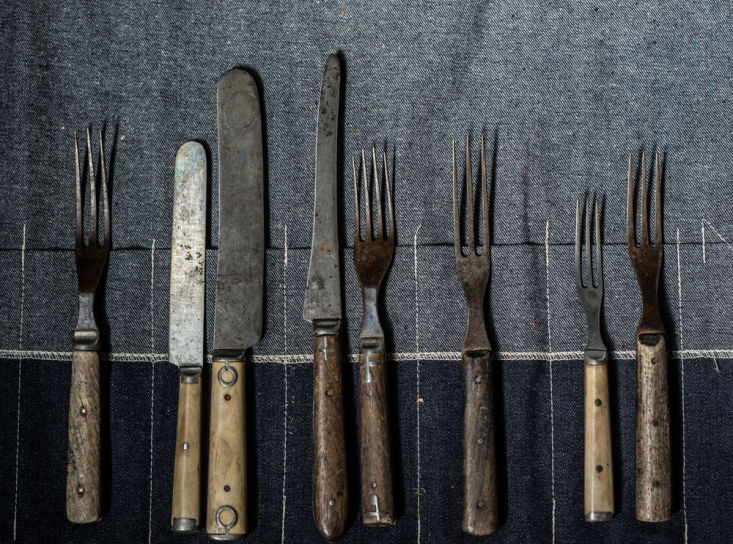
Demme’s version is modern, cinematic, and distinctly Los Angeles. Her curiosities are not displayed to prove ownership of the world. They are gathered to create atmosphere. A vintage ruler, a Civil War-era silverware set, a cake tray, a toolbox, or an antique book can all become part of a private museum of feeling. The collection does not need to explain itself immediately. In fact, the delay is part of the pleasure.
This is why State of Space attracts stylists, production designers, photographers, and design-minded shoppers. People who build visual worlds understand that objects do not simply fill space. They create context. A room with the wrong lamp can look like a dentist’s waiting area. A room with the right strange lamp can look like the beginning of a novel.
How to Style a Room the Amanda Demme Way
Start with One Object That Has a Pulse
Do not begin with a shopping list. Begin with a response. Find one object that makes you lean closer. It could be a worn chair, a framed photograph, a chipped bowl, a tool, a book, or a piece of fabric. If it makes you wonder where it came from, you are on the right track.
Mix Glamour with Utility
Demme’s eye often moves between grand and humble. That balance is key. A Chesterfield couch can sit near a battered toolbox. Antique books can share space with gym equipment. The contrast keeps the room alive. Too much glamour becomes stiff; too much utility becomes a garage sale with commitment issues.
Use Light Like a Storyteller
Lighting is central to Demme’s world. A vintage object needs shadow, not interrogation. Avoid blasting every corner with harsh overhead light. Use lamps, side light, and natural light to give objects dimension. A little darkness can be elegant. Too much darkness and you are just looking for your keys.
Let Imperfection Stay Visible
Do not sand away every mark. Do not polish every surface into obedience. Scratches, repaired seams, faded labels, and worn handles are part of the story. The goal is not decay; the goal is character.
Why Vintage Objects Still Matter
Beyond beauty, there is a practical argument for vintage and antique pieces. Reusing furniture and decor keeps existing materials in circulation and pushes back against disposable design. Fast furniture may solve a short-term decorating problem, but it often lacks the durability, uniqueness, and emotional resonance of older pieces. A vintage object has already passed one test: it survived.
There is also a psychological benefit. In a world of identical feeds, identical shelves, and identical “curated” corners, one truly odd object can make a home feel personal again. Demme’s curiosity shop reminds us that taste is not about copying a look. Taste is about noticing. It is about choosing the thing that speaks, even if what it says is, “Yes, I am an old cake tray, and frankly I have seen things.”
Experience Notes: Living With the Olde LA Curiosity-Shop Feeling
To experience the spirit of Olde LA: Amanda Demme’s Curiosity Shop, imagine spending a slow afternoon in Los Angeles with no strict plan, which is usually when the city behaves best. Start in a neighborhood like Atwater Village, where old homes, independent storefronts, and low-key creative studios still give the streets a lived-in rhythm. Walk slowly. Look at doors, signs, window displays, old tile, painted brick, and the kind of storefront lettering that appears to have survived three owners and one suspiciously ambitious rebrand.
The best curiosity-shop experience begins before you buy anything. It begins with noticing. In a flea market, antique store, salvage yard, or vintage booth, resist the urge to scan only for “useful” pieces. Instead, look for objects that create a small interruption in your mind. Maybe it is a wooden box with a strange latch. Maybe it is a stack of books with faded cloth covers. Maybe it is a metal stool that looks as if it once belonged in a school gym, a factory, or a magician’s very practical cousin’s garage.
Pick objects up when allowed. Weight matters. Texture matters. A heavy old ruler feels different from a decorative reproduction. A patched glove has a different emotional charge than a new one styled to look distressed. Real age is not always prettier, but it has better timing. It does not shout. It waits for you to understand the joke.
When bringing the Olde LA curiosity-shop feeling into your home, do not try to recreate a store display. Homes need breathing room. Choose one or two objects and give them enough space to be noticed. Place an antique book on a modern table. Hang a timeworn tool like a small sculpture. Put a vintage tray under a lamp. Let a weathered chair sit beside something clean-lined and contemporary. The goal is not to make your living room look like a prop warehouse. The goal is to create a room where the eye has somewhere interesting to land.
It also helps to think like a photographer. Move the object around at different times of day. See how morning light hits it. See what happens at dusk. A humble object can become surprisingly dramatic when placed near a window or under a warm lamp. This is one of Demme’s strongest lessons: objects do not reveal themselves all at once. They need framing, patience, and occasionally someone brave enough to say, “Yes, that old jump rope belongs on the wall.”
The real experience is not shopping. It is forming a relationship with things that have already had a life before you. That is the charm of Demme’s curiosity-shop universe. It makes collecting feel less like consumption and more like casting. Every room becomes a scene. Every object gets a role. And somewhere in the corner, the vintage garbage can steals the show.
Conclusion
Olde LA: Amanda Demme’s Curiosity Shop is more than a profile of a vintage store. It is a window into a way of seeing. Amanda Demme’s State of Space turns old objects into portraits, interiors into emotional landscapes, and collecting into a form of storytelling. Her eye connects Hollywood atmosphere, Atwater Village texture, fine-art photography, and the irresistible charm of objects with scars.
In an age of quick trends and disposable decor, Demme’s curiosity-shop approach feels refreshingly stubborn. It says that a room should not look assembled by algorithm. It should feel discovered. It should contain a little mystery, a little humor, and at least one object that makes guests ask, “Where did you find that?” That question, after all, is the beginning of every good story.