
Note: This article is based on reputable U.S. and North American Jewish education, candle safety, consumer protection, and organic-labeling sources, including My Jewish Learning, Chabad, USDA AMS, FTC Green Guides, CPSC, NFPA, and the National Candle Association.
Hanukkah is already a holiday with excellent lighting design. Eight nights, a glowing menorah, songs, family, latkes, jelly doughnuts, and that one relative who insists the dreidel rules are “actually very simple” right before starting a 14-minute lecture. But in recent years, many families have started asking a new question before lighting the menorah: what exactly are these candles made of?
That is where organic Hanukkah candles enter the conversation. For people who care about clean ingredients, natural materials, sustainable living, and a more mindful holiday table, the humble Hanukkah candle is no longer just a little stick of wax. It is part ritual object, part home product, and part environmental choice. And because Hanukkah is literally the Festival of Lights, it makes sense to think carefully about the lights we bring into our homes.
Still, the phrase “organic Hanukkah candles” can be confusing. Does it mean beeswax? Soy wax? Cotton wicks? Unscented? USDA certified? Eco-friendly packaging? A candle that does yoga and drinks oat milk? Not exactly. The best way to shop is to understand the tradition, the materials, the labeling, and the real-life performance of the candle before you buy.
What Are Organic Hanukkah Candles?
Organic Hanukkah candles are menorah candles made with natural or organically sourced materials, often including beeswax, soy wax, vegetable wax, cotton wicks, plant-based dyes, and minimal additives. In everyday shopping language, “organic” usually suggests that the candle avoids petroleum-based waxes, synthetic fragrances, artificial colors, and unnecessary chemical additives.
However, shoppers should know that “organic” is not a magical word that automatically proves a candle is certified, safe, natural, or environmentally perfect. In the United States, the USDA organic label applies to agricultural products that meet specific standards and are reviewed by accredited certifying agents. A candle may contain organic ingredients, such as organic soy wax or organic cotton wick, but that does not always mean the entire candle is certified organic.
So the smartest approach is to read the full product description. Look for clear language such as “100% beeswax,” “organic soy wax,” “cotton wick,” “unscented,” “plant-based dye,” “no paraffin,” or “free from synthetic fragrance.” A trustworthy seller should tell you what the candle contains, not hide behind a cloud of vague green adjectives.
Why Candle Choice Matters During Hanukkah
Hanukkah lasts eight nights, and a full menorah lighting requires a surprising number of candles. One menorah uses 44 candles across the holiday, including the shamash, the helper candle used to light the others. That is why many Hanukkah candle boxes include 45 candles, giving families a tiny wax-based safety net in case one candle breaks, bends, or disappears into the kitchen junk drawer.
Because the candles are lit indoors, often near windows or family gathering spaces, the wax and wick matter. A candle that smokes heavily, drips dramatically, smells artificial, or burns too quickly can turn a peaceful ritual into a tabletop cleanup operation. Nobody wants the eighth night to look like a wax museum had a small emotional crisis.
Traditional Hanukkah candles should burn long enough for the mitzvah. Many families look for candles that burn at least 30 minutes, while some beeswax options burn for 45 minutes, 60 minutes, or even longer. Burn time, wick quality, and fit are practical details, but they shape the whole experience.
Common Materials Used in Natural Hanukkah Candles
Beeswax Hanukkah Candles
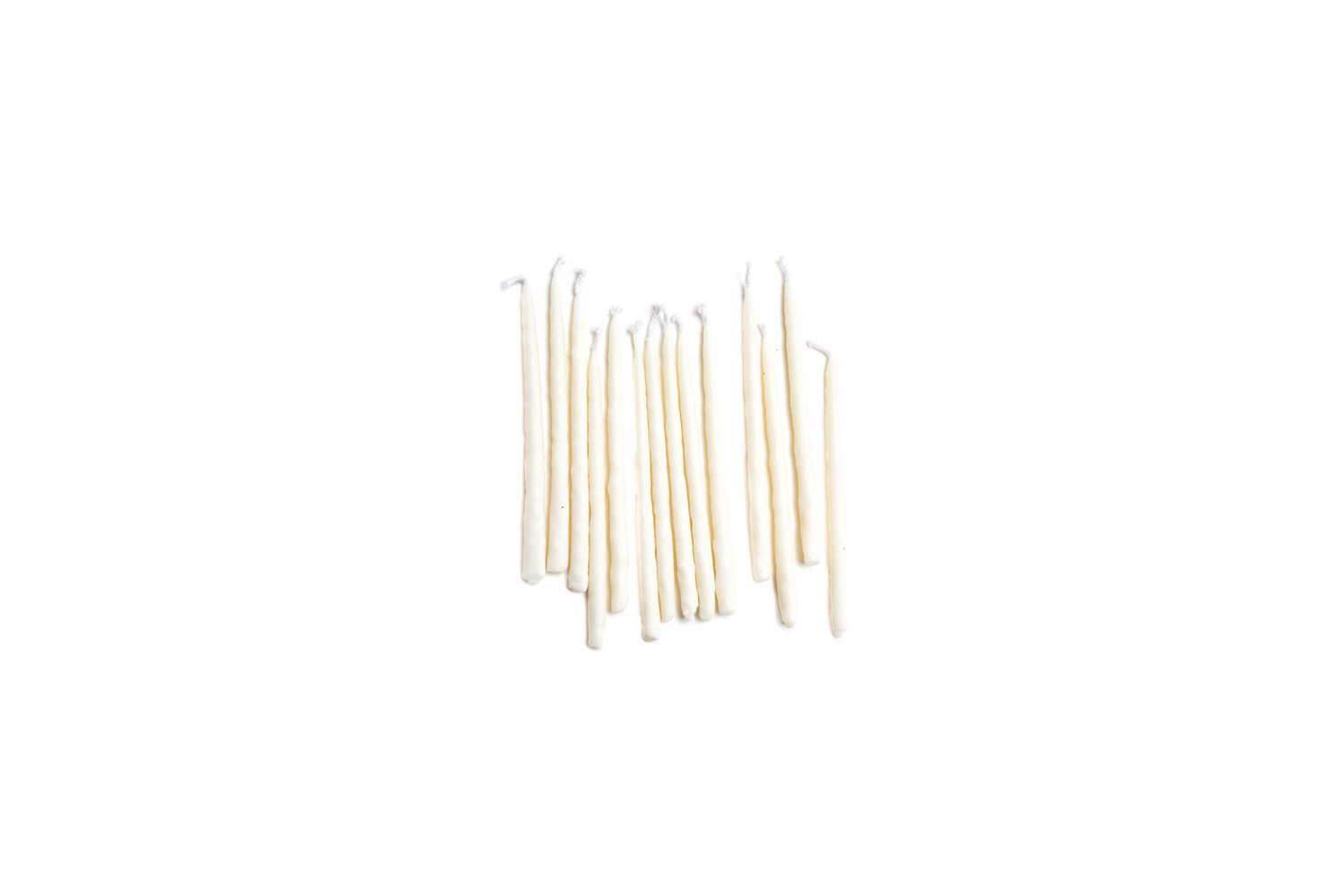
Beeswax is one of the most popular materials for natural Hanukkah candles. It has a warm golden color, a subtle honey-like aroma, and a long burn time. Many hand-dipped beeswax Hanukkah candles are unscented, though beeswax naturally carries a gentle fragrance from the hive. That makes them appealing for families who want a candle that feels traditional, natural, and elegant without smelling like a holiday-cookie factory exploded.
Beeswax candles are often more expensive than paraffin candles, but they usually feel more substantial. They may drip less when properly made, burn with a steady flame, and look beautiful in both modern and heirloom menorahs. For shoppers seeking eco-friendly Hanukkah candles, 100% beeswax with cotton wicks is often a strong choice.
Soy Wax Hanukkah Candles
Soy wax is plant-based and commonly used in natural candles. It comes from soybean oil and is often marketed as a renewable alternative to petroleum-derived paraffin wax. Organic soy Hanukkah candles may be harder to find than beeswax candles, especially in the narrow taper sizes required for many menorahs, but soy blends do exist.
The main thing to check is whether the candle is pure soy, a soy blend, or simply “soy-based.” Some candles combine soy with other vegetable waxes or small amounts of stabilizers to improve firmness and burn performance. That is not automatically bad, but honest labeling matters.
Vegetable Wax and Plant-Based Blends
Some natural Hanukkah candles use vegetable wax blends made from renewable plant sources. These may include palm wax, coconut wax, soy wax, or other plant-derived ingredients. The benefit is that manufacturers can design candles that hold their shape, fit standard menorahs, and burn reliably.
The downside is that “vegetable wax” can be vague. If sustainability is important to you, look for details about sourcing. For example, palm wax may be plant-based, but palm agriculture can raise environmental concerns when it is not responsibly sourced. A greener candle is not only about what it is made from; it is also about how those materials were grown, harvested, packaged, and shipped.
Cotton Wicks
A good wick is the quiet hero of the candle. Natural Hanukkah candles often use cotton wicks because cotton burns predictably and avoids concerns associated with metal-cored wicks. U.S. consumer safety rules restrict lead in metal-cored candlewicks, but many shoppers still prefer simple cotton wicks for peace of mind.
If a candle claims to be organic or natural, the wick should match the promise. A clean wax paired with a mystery wick is like serving organic soup in a plastic shoe. Technically possible, emotionally confusing.
Organic vs. Natural vs. Eco-Friendly: What Do the Labels Mean?
The candle aisle loves words such as “green,” “clean,” “pure,” “natural,” “non-toxic,” and “eco-friendly.” These words sound comforting, but they are not all equal.
Organic usually refers to ingredients produced under organic agricultural standards. In a candle, that might apply to soy wax, cotton wick, essential oils, or plant-based colorants. But unless a product clearly states certification details, shoppers should not assume the entire candle is certified organic.
Natural generally means the candle is made from materials found in nature, such as beeswax or plant wax. But “natural” is a broad term. Paraffin also comes from a natural raw material source, petroleum, though most eco-minded consumers do not consider paraffin a natural-lifestyle choice.
Eco-friendly suggests lower environmental impact, but it needs proof. A truly eco-conscious Hanukkah candle may use renewable wax, minimal packaging, recyclable boxes, plastic-free shipping materials, responsible dyes, and ethical sourcing.
Clean-burning usually refers to a candle that produces less visible soot or smoke when burned correctly. But no flame is completely emission-free. Good candle care still matters: trim wicks if needed, avoid drafts, keep candles upright, and use a proper menorah.
How to Choose the Best Organic Hanukkah Candles
1. Check the Candle Count
For one menorah, you need 44 candles for all eight nights. A 45-candle box is convenient because it gives you one extra candle. If your family lights multiple menorahs, multiply accordingly. Two menorahs need 88 candles, which means two standard boxes usually cover the holiday with a little wiggle room.
2. Measure Your Menorah
Many Hanukkah candles are around five inches tall with a narrow base, but menorahs vary. Before ordering handmade organic Hanukkah candles, check the candle diameter and compare it with your menorah cups. A candle that is too wide may need gentle trimming at the base. A candle that is too narrow may wobble, which is not the kind of holiday suspense anyone needs.
3. Choose Unscented When Possible
Hanukkah candles are ritual candles, not room perfumes. Strong fragrance can distract from the lighting, irritate sensitive guests, or compete with the more important smell of latkes frying in oil. Unscented beeswax candles are a beautiful choice because they may have a naturally mild honey aroma without added fragrance.
4. Look for Drip Control
Dripless or low-drip candles can protect your menorah and table. That said, “dripless” does not mean “immune to physics.” Drafts, tilted candles, uneven holders, and moving air from vents can all cause dripping. Place the menorah on a stable, heat-safe surface and keep it away from open windows, fans, and curtains.
5. Read the Ingredient List
A quality organic or natural candle should not make you solve a riddle. Good labels identify the wax, wick, colorants, scent status, burn time, and candle size. If the listing only says “premium eco candle” and nothing else, keep scrolling. Your menorah deserves better than marketing fog.
6. Consider Packaging
If sustainability is part of your goal, packaging matters. Look for recyclable cardboard, minimal plastic, soy-based inks, and compact shipping. A candle made from natural beeswax but wrapped like a fragile spaceship in layers of plastic may not match your values.
Are Organic Hanukkah Candles Safer?
Organic Hanukkah candles may reduce exposure to synthetic fragrance, petroleum-derived wax, or artificial dyes, depending on the product. But “organic” does not remove the basic safety issue: a candle is still an open flame.
The safest Hanukkah setup starts with common sense. Place the menorah on a sturdy, nonflammable surface. Keep candles away from curtains, napkins, books, decorations, and anything else that can burn. Do not leave the room while candles are lit. Keep children and pets at a safe distance. Use a menorah that holds candles securely, and never move it while wax is melted.
This is especially important during the winter holiday season, when homes may be full of greenery, paper decorations, gift wrap, table linens, and guests moving through crowded rooms. A beautiful flame should inspire awe, not a call to the fire department.
Organic Hanukkah Candles and Jewish Tradition
The heart of Hanukkah is not luxury wax. It is memory, gratitude, resilience, and publicizing the miracle. The menorah lighting recalls the rededication of the Temple and the story of oil that lasted eight days. Whether a family uses classic blue-and-white paraffin candles, olive oil, beeswax tapers, or natural vegetable wax candles, the purpose remains spiritual.
That said, choosing organic Hanukkah candles can deepen the ritual for some households. It turns candle lighting into a moment of intention: honoring tradition while also thinking about health, air quality, sourcing, waste, and the planet. In Jewish life, physical objects often carry ethical meaning. The kiddush cup, the challah cover, the mezuzah, the menoraheach object can remind us how ordinary materials become meaningful through use.
Organic candles are not required for Hanukkah. They are not automatically more religious, more authentic, or more impressive to your ancestors. But they can be a thoughtful way to align the Festival of Lights with values of stewardship, simplicity, and care.
Best Uses for Organic Hanukkah Candles
Organic Hanukkah candles work especially well for families who prefer natural home products, households with fragrance sensitivities, eco-conscious gift givers, and anyone who wants a more elevated menorah display. A box of hand-dipped beeswax candles can also make a lovely host gift, especially when paired with fair-trade chocolate gelt, a small jar of local honey, or a handwritten Hanukkah card.
They are also a good option for minimalist holiday decor. Natural beeswax candles have a warm, understated look that pairs beautifully with brass, ceramic, glass, wood, and modern metal menorahs. Multicolored natural candles can bring a joyful, child-friendly feel without relying on harsh artificial dyes.
For schools, synagogues, and community events, cost may be a bigger factor. Organic candles are often pricier, so some groups reserve them for special programs, small gatherings, or family workshops about sustainability. A conversation about candle materials can become a meaningful lesson about Jewish values, environmental responsibility, and mindful consumption.
Common Mistakes to Avoid
Buying Candles That Do Not Fit
The most beautiful organic candle in the world is not very useful if it cannot stand safely in your menorah. Always check size before buying, especially with handmade tapers.
Assuming “Organic” Means Certified
If certification matters to you, look for specific certification language. If a product simply says “organic-style,” “green,” or “natural inspired,” treat it as marketing until proven otherwise.
Using Scented Candles for the Menorah
Added scent may sound festive, but ritual candle lighting is usually better with unscented candles. Let the sufganiyot do the aromatic heavy lifting.
Forgetting Fire Safety
Natural wax still burns. Organic wax still burns. Expensive artisan wax definitely still burns. The menorah should always be watched, placed safely, and kept away from flammable objects.
Personal Experiences With Organic Hanukkah Candles
The first time many people switch to organic Hanukkah candles, the difference feels small at first. You open the box, and instead of a sharp waxy smell or a burst of artificial color, there is a soft, honeyed scent or almost no scent at all. The candles may look slightly irregular because they are hand-dipped. One may be a little slimmer, another a little more golden. At first, that can feel imperfect. Then you realize the imperfection is part of the charm.
Lighting beeswax Hanukkah candles often feels calmer. The flame has a warm tone, the candle body glows gently, and the whole menorah seems less like a decoration and more like a living ritual. In a quiet room, especially on the later nights when the menorah is full, natural candles can create a soft pool of light that makes everyone pause. Even the person checking sports scores under the table may look up for a second. Miracles happen.
Families with children may also find that organic candles open the door to useful conversations. Kids ask good questions: Why are these candles yellow? Why do they smell like honey? Why do we need so many? Why can’t I touch the melted wax? That last question is usually answered very quickly by a parent using the ancient educational method known as “because I said so.” But the larger discussion can be meaningful. Children can learn about bees, plants, farming, fire safety, Jewish tradition, and why buying fewer but better things can matter.
There is also a hosting experience. When guests notice beeswax candles, they often ask about them. The conversation may move from menorahs to local beekeepers, from sustainable packaging to childhood Hanukkah memories, from candle colors to favorite latke toppings. Organic Hanukkah candles are not the main event, but they can become a gentle conversation starter. They make the table feel considered without feeling fussy.
Of course, natural candles are not perfect. Beeswax can cost more. Some hand-dipped candles need a tiny adjustment to fit older menorahs. A low-drip candle can still drip if placed near a draft. And if you are lighting several menorahs, the price difference becomes real. For large families or classroom celebrations, budget-friendly candles may make more sense. Sustainability should not become a guilt machine. Hanukkah is about light, not lifestyle perfection.
The best experience comes from balance. Use organic candles when they fit your budget and values. Choose unscented, well-sized candles from transparent sellers. Save the box so you know what to buy next year. Place foil or a tray under the menorah if you are worried about wax. Let the candles burn safely, enjoy the glow, and resist the urge to turn the moment into a product review while everyone is singing.
By the eighth night, the full menorah has a way of making the room feel both ancient and immediate. Organic Hanukkah candles can add to that feeling. They remind us that small choices matter: the wax, the wick, the flame, the table, the people gathered around it. A candle is tiny, but during Hanukkah, tiny lights carry a big assignment. They push back darkness, one night at a time.
Conclusion: A Brighter, Cleaner Way to Celebrate
Organic Hanukkah candles are not just a trendy holiday upgrade. They are a practical and meaningful choice for families who want their menorah lighting to feel beautiful, natural, and aligned with mindful living. Whether you choose 100% beeswax, organic soy, cotton wicks, plant-based dyes, or plastic-free packaging, the goal is the same: bring more light into the home with less unnecessary stuff attached.
The best organic Hanukkah candles fit your menorah, burn long enough for the ritual, avoid overpowering scents, and come from sellers who are clear about ingredients. They should support the celebration, not complicate it. When chosen well, they make each night feel warmer, cleaner, and a little more intentional.
Hanukkah has always celebrated the power of light that lasts longer than expected. Organic Hanukkah candles carry that idea into modern homes, where tradition and sustainability can sit together at the same tablehopefully next to a plate of latkes that has not yet been completely demolished.