
If your bathroom feels less “spa retreat” and more “plain tile, mild disappointment,” it may be time for a tiny style rebellion. Enter vintage jewelry: brooches, clip-ons, orphan earrings, costume chains, old lockets, and sparkly bits that have been sitting in a drawer waiting for their second act. And no, we are not suggesting you hot-glue your great-aunt’s diamond heirloom directly onto the shower wall like a tiny royal sacrifice. We are talking about smart, stylish, moisture-aware ways to repurpose vintage jewelry for shower-area decor and bathroom organization.
The idea is simple: use vintage jewelry as decorative detail, not as a helpless victim of steam. With the right placement, the right hardware, and a little common sense, old jewelry can become shower curtain accents, glam labels, decorative tie-ons, charm clusters, wall hooks, bath tray embellishments, and one-of-a-kind bathroom decor that feels collected rather than cookie-cutter. It is charming, sustainable, and a lot more interesting than buying the same generic bath accessory set everyone else found in aisle seven.
Better still, this trend taps into two very real design cravings: the love of vintage bathrooms and the desire to reuse what you already own. So if you have a jewelry box filled with single earrings, tarnished brooches, bead strands with a mysterious past, or clip-ons that have not touched an earlobe since the Eisenhower era, you may be holding the makings of your next favorite bathroom upgrade.
Why Vintage Jewelry Works in Bathroom Decor
Vintage jewelry has what most bathroom accessories desperately lack: personality. Even inexpensive costume pieces bring texture, shine, age, and story. A rhinestone brooch can soften the hard lines of tile. A strand of faux pearls can make a plain shower curtain feel a little more dressed up. A brass clip-on earring can become a decorative marker on a linen basket or a glam little accent on a storage jar.
This look also plays beautifully with several popular bathroom styles. If your space leans cottage, antique, grandmillennial, traditional, or apothecary-inspired, vintage jewelry fits right in. Gold-tone pieces warm up white baths. Silver-tone jewelry works with cooler palettes and black-and-white spaces. Colorful gems and enamel add playful contrast to neutral tile and glass.
And then there is the sustainability angle. Repurposing old jewelry keeps beautiful materials in use. Instead of buying new, you are rescuing forgotten objects and turning them into decor with a real point of view. That is good for your budget, good for your clutter problem, and excellent for your ego when guests ask where you found that fabulous shower detail and you get to say, “Oh, that? It used to be a brooch.”
First, the Reality Check: Not Every Piece Belongs in the Splash Zone
Before we get too carried away with visions of chandelier-worthy shower curtains, let us talk about the one thing vintage jewelry and bathrooms do not naturally love: humidity. Bathrooms are wet, steamy, and full of products that can be rough on metals, glue, plating, pearls, and delicate stones. That means the smartest way to repurpose vintage jewelry in the shower is to use it near the shower, on removable accessories, or in areas that are damp-resistant rather than constantly soaked.
Use these pieces with confidence
Broken costume jewelry, single earrings, sturdy brooches, metal charms, glass beads, and pieces that are decorative rather than precious are your best candidates. Think “pretty and practical,” not “museum-grade and irreplaceable.”
Use caution with these materials
Pearls, opals, fragile glued settings, heavily tarnished pieces, plated finishes, lockets with paper inside, and sentimental heirlooms should stay out of direct steam and water. They may still work in the bathroom, but only in drier spots like a vanity tray, closed display box, or decorative wall arrangement outside the shower spray.
A good rule of thumb
If losing or damaging the item would ruin your week, do not let it live in a wet bathroom. Use reproductions, costume pieces, or damaged jewelry that is already halfway to retirement. Let your treasures stay treasured.
Best Ways to Repurpose Vintage Jewelry in the Shower Area
1. Dress Up Shower Curtain Rings
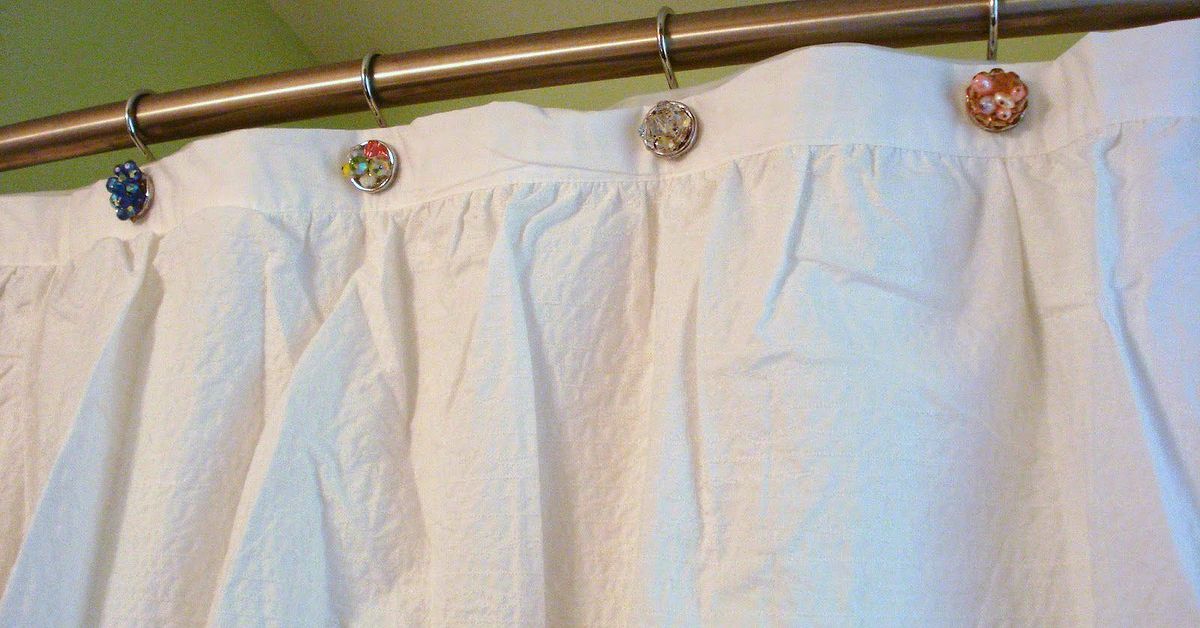
This is the easiest and most effective idea of the bunch. Attach lightweight brooches, clip-on earrings, charm clusters, or beaded strands to shower curtain rings or hooks. The jewelry becomes a decorative face on the outside of the curtain, where it can be seen but does not need to sit under direct water all day.
Try matching six or twelve pieces for a coordinated look, or mix styles on purpose for a collected vintage effect. Rhinestones add sparkle, floral brooches create cottage charm, and brass or cameo pieces give the room old-world elegance. If you want the look without risking damage, use the original pieces as inspiration and recreate the design with thrifted costume jewelry components.
2. Create a Glam Tie-Back for a Shower Curtain
If you have a claw-foot tub with a shower curtain or a decorative outer curtain, use old chains, broken necklaces, or large clip-ons to make a dramatic tie-back. This is especially effective in guest bathrooms where the curtain can be styled open between uses.
The trick is balance. A little sparkle says “thoughtful design.” Too much sparkle says “your shower may be attended by a Vegas lounge singer.” Aim for one standout focal point and let the rest of the bathroom breathe.
3. Embellish Bath Storage Labels and Small Baskets
Vintage jewelry can make the plainest shower caddy or bath basket feel custom. Add an old brooch to the front of a wire bin. Tie a charm or earring onto a labeled jar of bath salts. Fasten a decorative button earring onto a linen basket. These little details make everyday storage feel more styled and less “I panic-bought this at a big-box store.”
4. Upgrade Hooks and Caddies
Bathroom-safe hooks and caddies can be given a jewelry-inspired twist with removable decorative add-ons. For example, a plain bathroom hook can be dressed up with a charm cluster, bead tassel, or small metal ornament attached to the lower section, away from the adhesive mount. This lets the functional part stay bath-rated while the decorative element adds charm.
Just keep embellishments lightweight. In a humid bathroom, the more weight and movement you add, the more likely you are to stress the hook or make the whole setup wobble like it has stage fright.
5. Make a Decorative Shower-Side Art Piece
Instead of exposing jewelry directly to water, mount select pieces in a shadow box, small frame, or glass-front display and hang it near the shower, not in it. This captures the spirit of “vintage jewelry in the shower space” without inviting actual corrosion. A framed arrangement of costume brooches can look like botanical art with a better sense of humor.
How to Install It Without Regret
Here is where style meets survival. Bathrooms demand moisture-smart installation. If you are attaching anything near the shower, your methods matter as much as your design choices.
Choose bath-friendly support first
For the actual mounting system, use products intended for bathrooms and wet conditions, especially on smooth surfaces like tile, glass, mirror, or fiberglass. Do not assume a random adhesive from the junk drawer will suddenly become a marine engineer just because you believe in it.
Keep jewelry decorative, not structural
The jewelry should not be doing the heavy lifting. Let proper hooks, rings, caddies, or hardware carry the load. Vintage jewelry should be attached as an accent, topper, or embellishment. In other words, your 1960s brooch can be glamorous, but it should not be responsible for holding up a soaked curtain and three wet loofahs.
Protect pieces from constant splash
Place embellished items on the outer curtain, upper ring line, or nearby wall zone rather than the direct spray path. The farther you can get from constant soaking, the longer your finish will last.
Test one piece before doing twelve
Before creating a full matching set, test one piece for a week or two. Watch for rust, discoloration, loosened stones, adhesive failure, or weird residue. Better to sacrifice one thrift-store earring than a full afternoon of crafting optimism.
Cleaning and Maintenance Tips
Repurposed jewelry decor still needs care, especially in a bathroom. Dust, hairspray, soap film, and moisture all conspire to make glamorous things look tired. A little maintenance keeps your #BathroomBeautify moment from turning into a science project.
Wipe gently and often
Use a soft dry cloth after steamy days, and a slightly damp cloth for sturdier metal or glass pieces when needed. Dry thoroughly. If a piece includes pearls, opals, glued stones, or questionable vintage finishes, be extra gentle and avoid aggressive cleaners.
Skip harsh chemicals
Bathroom cleaners, bleach sprays, and abrasive scrubs are not the friends of old jewelry finishes. Clean the surrounding surface first, let it dry, and then return the decorative piece.
Watch your bathroom humidity
Ventilation is not just for mirrors and mold. It also helps preserve decorative metals and finishes. Run the exhaust fan, allow surfaces to dry, and avoid turning your bathroom into a tropical greenhouse with shampoo.
Rotate delicate pieces seasonally
If you love a particular vintage accent, do not leave it in the bathroom forever. Rotate it in for a few months, then move it to a dresser tray or shelf. This keeps the look fresh and protects fragile items from long-term exposure.
Styling Ideas That Actually Look Good
The secret to making this trend feel elevated is restraint. The goal is “charming vintage detail,” not “pirate treasure exploded in the guest bath.” Start with one area and build slowly.
For a cottage bathroom
Use floral brooches, faux pearls, and soft gold finishes with white curtains, painted wood, and woven baskets.
For a glam vintage bathroom
Use rhinestones, crystal-look pieces, mirrored trays, and silver-tone accents against white tile, black trim, or marble-look surfaces.
For a moody apothecary look
Use brass, lockets, chain details, old keys, and darker gem tones with amber bottles, deep paint colors, and antique-style hooks.
For a playful eclectic bath
Mix colorful clip-ons, enamel brooches, and quirky charms with patterned shower curtains and thrifted mirrors. The more curated your weirdness, the better it works.
Mistakes to Avoid
The biggest mistake is using valuable jewelry where cheaper decorative pieces would do the job. The second biggest is ignoring moisture. The third is overdecorating every possible inch until your shower looks like it is wearing costume jewelry to brunch.
Avoid overly heavy add-ons on adhesive hooks. Avoid direct water exposure for fragile materials. Avoid gluing jewelry permanently to expensive tile unless you are truly committed and very sure of the result. And avoid mixing ten finishes with no plan unless your design philosophy is “beautiful chaos,” which, to be fair, can work in the right hands.
Why This Trend Has Real Staying Power
Repurposing vintage jewelry for bathroom decor works because it solves two problems at once: it adds character to an often-overlooked room, and it gives old objects a reason to be seen again. Bathrooms are no longer purely functional spaces. They are styled, photographed, scented, painted, organized, and gently judged by guests. A few jewelry-based details can make the room feel layered and personal without requiring a full renovation.
It also scales beautifully. You can try one thrifted brooch on a curtain ring for almost no money, or build an entire vintage-inspired bath around antique metals, decorative hooks, and collected accents. The project can be as simple or as elaborate as you like, which is ideal for decorators with champagne taste and a very sparkling but suspiciously soda-sized budget.
of Real-Life Experience and Inspiration
The first time I tried repurposing vintage jewelry in a bathroom, I was absolutely convinced I was a genius. I had found a small pile of costume brooches at a thrift store, all with that slightly dramatic, “someone wore this to a fancy luncheon in 1964” energy. I brought them home, lined them up on the counter, and imagined my shower curtain transformed into something between a boutique hotel and a very stylish aunt’s powder room.
My original plan, it turns out, was wildly too ambitious. I wanted every ring on the curtain to have a different brooch, plus a few dangling bead strands for movement. It looked fantastic for about six minutes. Then I realized two things. First, some of the brooches were heavier than I thought, which made the curtain bunch awkwardly. Second, one bead tassel had placed itself directly in the splash zone and was already rethinking its life choices. That was my first lesson: beauty is wonderful, but bathrooms are not neutral territory. Steam, water, soap, and gravity are all active participants.
So I edited. I took the heaviest pieces off, kept the prettiest three on the outermost curtain rings, and moved the rest to a nearby wall basket that held washcloths. Suddenly, everything looked intentional. The shower still had sparkle, but it was not trying to audition for a period drama. Even better, the jewelry details tied the whole room together. A plain white curtain looked custom. A cheap wire basket looked collected. The bathroom stopped feeling like a utility room and started feeling like a room-room.
Another memorable experiment involved a pair of giant clip-on earrings with faux amber stones. They were too large for actual human ears, unless the human in question was a chandelier, but they were perfect clipped onto small fabric loops I added to a shower curtain tie-back. That tiny touch made the whole setup look more expensive than it was. Guests noticed it immediately. One person asked if I had bought the curtain from a designer brand, which is the sort of compliment that can power a DIY enthusiast for weeks.
I also learned that bathrooms reward restraint. The most successful versions of this idea are usually the simplest: one brooch on a linen basket, one charm cluster on a bath hook, one strand of beads draped on a tray, one framed arrangement of old earrings near the mirror. Vintage jewelry is naturally detailed, so it does not need much help. Give it a little breathing room and it will do the work for you.
Perhaps the best part of the whole idea is that it feels personal. Plenty of bathrooms are pretty, but not all of them tell a story. When you use old jewelry, even inexpensive costume pieces, the room gains a sense of history and humor. It feels found, layered, and loved. It says the person who decorated this room has an eye, a point of view, and possibly a dangerously enjoyable relationship with thrift stores. And honestly, that is exactly the energy a bathroom deserves.
Conclusion
Repurposing vintage jewelry in the shower area is one of those rare decorating ideas that is equal parts clever, affordable, and genuinely charming. The key is to think like a stylist and a realist at the same time. Use old jewelry as decorative detail, not heavy-duty hardware. Keep sentimental or delicate pieces away from direct water. Choose bathroom-friendly supports, maintain good ventilation, and let a few beautiful accents do the talking.
Done well, this idea can turn a standard bathroom into a space with warmth, wit, and real personality. It is proof that design magic does not always come from expensive renovations. Sometimes it comes from a forgotten brooch, a plain shower curtain, and the decision to make your bathroom a little more fabulous than strictly necessary. Which, frankly, is the best kind of fabulous.