
Four mutant ninjas traded their weapons for keytars, ditched their shells for sparkling denim, and launched a concert tour sponsored by Pizza Hut. It sounds like the purest possible example of corporate nonsense. Yet the infamous Teenage Mutant Ninja Turtles: Coming Out of Their Shells tour began as a sincere theatrical dream, and its most ridiculous costume choice was made to protect exhausted performers. Beneath the glitter, prerecorded rock, and flying plastic pizza, this bizarre chapter of Turtlemania is a surprisingly human story about ambition, improvisation, and keeping a show alive without cooking the cast inside rubber reptile suits.
A Peak-Turtlemania Idea That Sounds Like a Parody
There are many absurd moments in Teenage Mutant Ninja Turtles history. The heroes have traveled through time, met aliens, fought a walking brain in a mechanical body, and developed pizza preferences that would make a delivery driver request reassignment. Still, few ideas can compete with the 1990 decision to turn Leonardo, Donatello, Raphael, and Michelangelo into a touring rock band.
The production was called Teenage Mutant Ninja Turtles: Coming Out of Their Shells. The Turtles sang, danced, played instruments, and battled Shredder, who had decided that music itself must be destroyed. This was not a metaphor whispered by a serious playwright in a black turtleneck. Shredder literally wanted to eliminate music, and the audience had to help the heroes defeat him with the power of noise, enthusiasm, and merchandise purchased in the lobby.
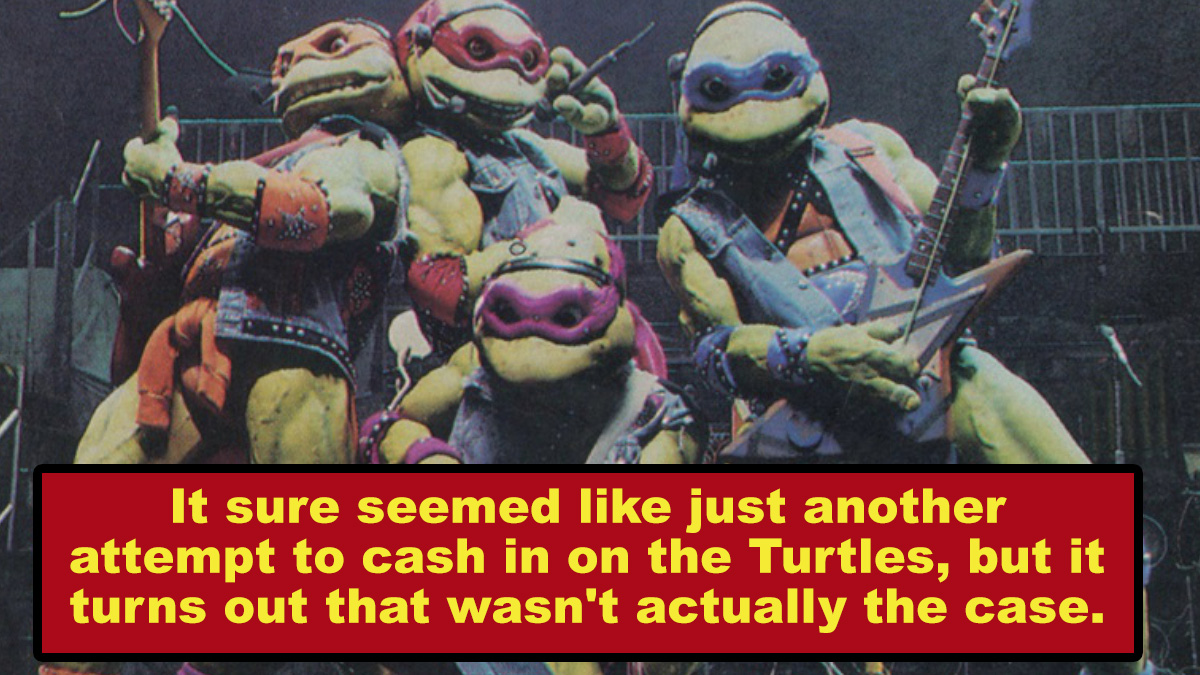
Onstage, Donatello handled keyboards, Michelangelo played guitar, Leonardo took up bass, and Raphael worked the drums and saxophone. Their ninja weapons were mostly pushed aside in favor of musical equipment. Their usual shells vanished beneath denim vests decorated with enough sparkle to guide aircraft. To modern viewers, the footage resembles an arena-rock concert performed during a fever brought on by expired pizza cheese.
It is easy to call this the stupidest moment in Ninja Turtles history. The more interesting question is why it happened.
How Four Comic-Book Turtles Became a Cultural Avalanche
The tour only makes sense when placed inside the astonishing rise of the franchise. Kevin Eastman and Peter Laird created the Teenage Mutant Ninja Turtles as an independent black-and-white comic in the 1980s. The central joke was beautifully simple: turtles are slow, ninjas are fast, so combining them is funny. What began as an affectionate parody of popular comics rapidly grew beyond its creators’ modest expectations.
The lighter 1987 animated series gave the brothers color-coded masks, catchphrases, distinct personalities, and an almost spiritual devotion to pizza. Action figures followed. Video games followed. Lunch boxes, pajamas, cereal, party supplies, and nearly every other object capable of holding a logo followed. By 1990, Turtlemania was less a trend than a weather system.
Then the first live-action film arrived. Made as an independent production and powered by elaborate creature suits, martial arts, and the Jim Henson Creature Shop, the movie became a major box-office success. Suddenly, a live musical about the Turtles did not seem impossible. It seemed inevitablealthough “inevitable” is doing heroic work when the plan includes an animatronic turtle singing about pizza.
The Sweet Truth: It Started as a Passion Project
The easiest explanation is that a room full of marketing executives invented the show to sell pizza and cassette tapes. That explanation is tidy, cynical, and incomplete.
Bob Bejan and Godfrey Nelson were young theater artists and musicians who believed popular music belonged in musical theater. Bejan had worked as a performer and wanted to create something larger than a conventional stage role. After encountering the original Turtles graphic novel, he and Nelson saw theatrical possibilities in the characters. They brainstormed and wrote four songs before they had permission, funding, or any sensible reason to expect the project would exist.
That is the first charming part of the backstory. They were not handed a corporate assignment titled “Monetize Reptiles, Q3.” They made songs because the idea delighted them.
Cold Calls, Big Nerves, and an Improbable Yes
Bejan and Nelson contacted Eastman and Laird directly and pitched the concept. They also approached experienced producer Steven Leber after Bejan read about him. The project advanced through a combination of preparation, nerve, and the apparently magical ability to make cold calls without immediately hanging up in terror.
Once the creators granted live-performance rights and the 1990 movie increased the franchise’s popularity, the team approached major pizza chains. Pizza Hut agreed to an enormous partnership. The company purchased millions of records in advance and committed substantial money to marketing. That funding transformed a comparatively scrappy stage idea into a national spectacle with elaborate sets, touring crews, promotional appearances, and a pay-per-view performance at Radio City Music Hall.
Corporate money certainly shaped the final product. Pizza Hut branding was hardly hiding behind a potted plant. Yet sponsorship did not create the original artistic impulse; it gave that impulse an enormous, cheese-scented amplifier.
“Shell Night” Explains the Infamous Denim Vests
Now we reach the visual choice that made the concert immortal: the shell-free Turtles dressed like a craft store had sponsored a hair-metal band.
The original costumes were much closer to the familiar movie design. They used neoprene, articulated body elements, large heads, and full rubber shells. Because the performers needed to dance through a long show, the suits were designed for more movement than the film costumes. During rehearsals without every costume component, the setup appeared workable.
Then came the first full-costume run, remembered by the production team as “Shell Night.” Two Turtle performers overheated and passed out during the show.
At that point, aesthetic purity became less important than not turning musical theater into a reptilian endurance test. The production needed a rapid redesign that reduced weight and heat while preserving the characters’ identities. The heavy shells were removed. Sparkling denim vests and sweaters tied around the waist helped cover the Turtles’ backs and gave each performer a lighter costume.
So the outfit that looks like the most shameless example of early-’90s excess was actually a safety solution. The vests were not merely the result of someone asking, “What if ninjas, but mall fashion?” They helped real performers survive two hours of movement under stage lights inside bulky, heat-trapping suits.
Ridiculous Can Also Be Responsible
This detail changes the entire joke. The shell-free costumes remain goofy. No historical revelation can make rhinestone denim visually quiet. But the decision was practical, compassionate, and urgent. People noticed a dangerous problem and rebuilt the show rather than demanding that performers suffer for visual accuracy.
In other words, one of the dumbest-looking choices in the franchise may also have been one of the smartest choices backstage.
The Show Was More Ambitious Than Its Reputation
The concert is often remembered through short clips stripped of context: giant green heads, suspiciously perfect backing tracks, broad choreography, and lyrics that treat pizza as both dinner and renewable energy. Seen only that way, the production appears to be a 90-minute toy commercial that escaped containment.
Yet the tour required a complicated blend of theater, concert staging, puppetry, prerecorded audio, live performance, animatronics, pyrotechnics, elevators, and audience participation. Equipment traveled in multiple trucks, and each venue required extensive setup. The performers had to execute choreography while wearing restricted-visibility costumes and coordinating their movements with audio-animatronic faces.
The Radio City launch included its own backstage chaos. During a rehearsal, a pyrotechnic effect involving a sewer lid went wrong badly enough to threaten part of the famous curtain. The effect was adjusted, and the show continued. This is the recurring theme of the tour: a wonderfully foolish concept kept functioning because professionals repeatedly solved very real problems.
The production also committed completely to the fiction. Promotional material treated the Turtles as actual musicians rather than actors in costumes. A making-of video presented their creative process in character. The group appeared on radio, sang the national anthem at a Yankees game, and received an entire episode of The Oprah Winfrey Show, an appearance now remembered partly for dialogue that sounded far more suggestive than anyone probably intended.
Did Children Think It Was Stupid?
Adult viewers can watch the show today and immediately begin writing jokes. Contemporary children had a different assignment: lose their minds.
Reviews from the 1990 tour describe young fans arriving in Turtle clothing, waving glowing toy weapons, collecting confetti, cheering the heroes, and reacting enthusiastically when plastic pizzas flew toward the audience. One contemporary newspaper review cleverly included the verdict of a five-and-a-half-year-old critic, who correctly predicted that Shredder would lose and still remained absorbed for roughly two hours.
That response matters. Children’s entertainment is not obligated to preserve adult dignity. For a kid who knew the Turtles from television, toys, and a movie screen, seeing them emerge through a stage floor at arena scale could feel miraculous. The prerecorded music did not cancel the spectacle. The denim did not ruin the encounter. A giant Michelangelo was right there, playing guitar and possibly pointing in your general direction.
The album circulated in enormous numbers through the sponsorship arrangement, the tour traveled widely, international touring companies were mounted, and a follow-up show appeared. The production was strange, but it was not invisible. It delivered exactly the kind of all-encompassing franchise event that defined early-’90s children’s pop culture.
Why the Backstory Makes This Moment Better
Learning how the tour was created does not require pretending that every song is a lost masterpiece. Affection and mockery can share a pizza. The concert is still excessive, awkward, and endlessly funny. Its charm comes from the collision between its silliness and the seriousness of the people making it.
Bejan and Nelson were ambitious young creators who saw an opportunity to combine rock music, theater, and comic-book characters. They wrote material before anyone promised them a stage. They persuaded rights holders, found a producing partner, secured sponsorship, recorded an album, and built a touring production around four heroes who could not comfortably bend their elbows.
The performers, technicians, designers, musicians, puppeteers, and stage crew then had to make that dream function in the physical world. When costumes became dangerous, they changed them. When effects misbehaved, they adjusted them. When the premise demanded that Shredder rap about hating music, someone took a breath and gave Shredder the microphone.
That sincerity is the sweet backstory. The tour was commercial, but it was not emotionally empty. It was made by people who cared enough to attempt something absurd at full scale.
The Experience of Watching the Ninja Turtles Concert Today
Watching Coming Out of Their Shells decades later is not a single experience. It is a sequence of emotional gear changes, most of them occurring while a six-foot turtle attacks a keyboard.
Stage One: Disbelief
The first reaction is usually simple confusion. Why are the Turtles in glittering denim? Why does Splinter have a ballad? Why is Shredder behaving like a villain who lost a regional rap battle and decided to outlaw melody? The production arrives with such total confidence that the viewer briefly wonders whether this was normal in 1990. It was not normal, exactly, but 1990 had a much higher tolerance for neon fog machines.
Stage Two: Comedic Archaeology
Next comes the joy of examining every dated detail. The keytars, power poses, synthetic drums, arena-rock gestures, and aggressively inspirational lyrics form a perfect cultural time capsule. Nothing is embarrassed by itself. That lack of irony makes the show funnier and more appealing than a modern production deliberately trying to manufacture “so bad it’s good” energy.
The viewer also begins noticing the practical limitations. The performers cannot use ordinary facial expressions, so emotion must be communicated through entire-body movements. A nod becomes a declaration. A raised arm becomes Shakespeare. A guitar solo becomes a controlled negotiation between choreography and limited peripheral vision.
Stage Three: Unexpected Respect
Once the costume story is known, the experience changes. The denim vests stop looking like random fashion crimes and start looking like evidence of backstage problem-solving. Every energetic dance step carries more weight because the audience understands how physically demanding the production was. The laughter remains, but it becomes warmer.
There is also admiration in seeing how completely the cast and crew commit. Children’s theater succeeds when performers respect the imaginative world of the audience. The Turtles are never introduced as fake celebrities created for a promotion. Within the show, they are brothers who formed a band in a sewer and now must save music. The premise is treated as fact, which allows children to participate without being nudged by an adult voice saying, “We all know this is silly.”
Stage Four: Nostalgia, Even for People Who Were Not There
Finally, the concert creates a peculiar borrowed nostalgia. Viewers who never attended the tour can still recognize the ritual: parents buying tickets, kids dressing as their favorite Turtle, cassette tapes in Pizza Hut, glowing toys in dark arenas, and the certainty that the heroes would win. It recalls a period when a popular children’s property could expand into a live event and ask audiences to accept the transformation without explanation.
For fans who did attend, the experience may be even sweeter. Adult judgment cannot erase the childhood memory of confetti, music, and enormous Turtles walking onstage. The production’s technical roughness becomes part of the memory rather than a defect in it.
That is why the concert still matters. It demonstrates that pop-culture history is not preserved only by flawless classics. Sometimes the most durable artifacts are strange, sincere, overdecorated experiments. They survive because people cannot believe they happenedand because, once the full story is known, they are glad they did.
Conclusion: A Beautifully Bad Idea Done With Heart
Teenage Mutant Ninja Turtles: Coming Out of Their Shells may remain the franchise’s easiest target. It replaced ninja weapons with instruments, put reptile superheroes in sparkling vests, and asked children to defeat Shredder through musical enthusiasm. On paper, it reads like a dare.
Behind the spectacle, however, was a sincere creative gamble. Two young artists believed the Turtles could carry a rock-theater production. A huge sponsorship allowed that unlikely vision to grow. Performers and crew members tackled the difficult job of making animatronic heroes sing and dance in arenas. Most importantly, the infamous costume redesign happened because the original suits were dangerously hot, and protecting the cast mattered more than keeping the shells.
The result was ridiculous. It was also inventive, ambitious, and kind. That combination is more memorable than polished corporate perfection. The stupidest moment in Ninja Turtles history did not happen because nobody cared. It happened because a lot of people cared very much about making an impossible show work.
Note: This article is a cultural retrospective. It distinguishes the tour’s intentionally theatrical fiction from documented production history and avoids treating promotional character performances as literal events.
SEO Metadata