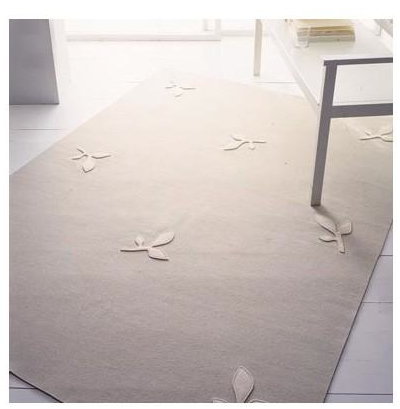

Some rugs quietly behave themselves. They sit under a coffee table, collect the occasional popcorn crumb, and ask for nothing more dramatic than a vacuum. The Paola Lenti Foglia Rug is not that kind of rug. It has presence. It has texture. It has the calm confidence of a design object that knows it could be hung on a wall, placed beneath a sculptural chair, or used to make an otherwise sensible room suddenly look like it has a passport and excellent taste.
In the world of walls, windows, and floors, rugs often do the heaviest visual lifting while receiving the least applause. Paint gets the credit. Windows get the sunlight. Floors get blamed for everything. But a rug like the Paola Lenti Foglia Rug reminds us that the floor can be more than a surface. It can be a design statement, a soft architectural layer, and, in this case, a piece of textile craftsmanship with a leaf-like personality.
Designed and produced by Paola Lenti, the Italian design house known for color, material research, and high-end indoor-outdoor furnishings, the Foglia Rug belongs to a broader design language where craft meets modern minimalism. Its name, “Foglia,” means “leaf” in Italian, which is not a shy little clue. The rug’s appliquéd felt pattern gives it an organic quality: graphic enough for a contemporary loft, soft enough for a reading corner, and elegant enough for anyone who has ever whispered, “Maybe the room needs one expensive thing.”
What Makes the Paola Lenti Foglia Rug Special?
The Paola Lenti Foglia Rug is best understood as a meeting point between art, utility, and textile engineering. Unlike mass-produced rugs that rely primarily on printed pattern or machine-made repetition, Foglia uses felt construction and surface appliqué to create dimension. The leaf-inspired design is not merely decorative; it gives the rug depth, shadow, and movement.
Paola Lenti’s felt is made from pure new wool, processed through complex manufacturing stages to produce a material that is compact, durable, and resistant to pilling. That matters because felt rugs can sometimes be dismissed as delicate or decorative only. Foglia pushes back politely, probably in Italian. It offers softness underfoot while maintaining the structural integrity expected from a luxury contemporary rug.
A Rug with a Sculptural Personality
The Foglia Rug is available in single-layer or double-layer felt, with the felt design applied to the surface. Its border is finished with Cavallo stitching, a refined detail made with highly resistant polyester thread. This stitching is not just a finishing flourish; it frames the rug, reinforces the edge, and adds a handmade signature that quietly says, “Yes, someone cared about this corner.”
Standard sizes have historically included formats such as 80 x 100 cm, 100 x 220 cm, 200 x 200 cm, 200 x 240 cm, and 200 x 300 cm, with custom dimensions typically treated as special orders. This flexibility makes the rug suitable for compact entry areas, long transitional spaces, living rooms, bedrooms, and design-focused commercial interiors.
Why Felt Works So Well in Contemporary Interiors
Felt is one of those materials that looks simple until you spend five minutes thinking about it. Then suddenly it becomes fascinating, and your friends start avoiding you at dinner because you keep saying things like, “Actually, wool felt has architectural qualities.”
In interior design, felt offers several advantages. It has a soft matte finish, which helps reduce visual glare in rooms with large windows. It absorbs sound better than many hard surfaces, making it helpful in open-plan homes where every footstep can become a dramatic sound effect. It also brings warmth to minimalist spaces without overwhelming them with heavy pattern.
The Foglia Rug by Paola Lenti uses felt in a particularly refined way. The leaf motif creates an organic rhythm, but the rug remains modern rather than rustic. It does not scream “forest cabin.” It whispers “Milan apartment with really good lighting.”
How the Foglia Rug Fits into Walls, Windows, and Floors
The phrase walls, windows, and floors sounds practical, almost like a checklist from a renovation spreadsheet. Yet these three elements define the mood of a room more than almost anything else. Walls hold color and artwork. Windows control light and view. Floors ground the entire design, literally and visually. A rug like Foglia becomes the bridge between them.
With Walls: Create Contrast or Calm
If your walls are white, cream, greige, or soft gray, a white or pale Foglia Rug can create a serene, gallery-like atmosphere. This approach works beautifully in rooms with sculptural furniture, low-profile seating, and natural wood accents. The rug becomes part of a tonal composition, adding texture without adding noise.
For stronger interiors, choose a deeper or more saturated version. Paola Lenti is widely associated with an extensive color palette, and the Foglia concept benefits from color because the appliqué pattern becomes more visible when there is contrast. A warm ochre, deep blue, muted green, or clay-like red can turn the floor into a focal point without requiring the walls to perform circus tricks.
With Windows: Let Natural Light Do the Styling
Natural light is a rug’s best unpaid intern. It reveals texture, highlights stitching, and changes the mood of wool throughout the day. Near large windows, the Foglia Rug can look crisp in morning light and softer by evening. That shifting quality is part of the charm.
However, smart placement matters. Wool felt should be protected from excessive moisture and harsh conditions, and pale colors may require more careful maintenance in high-traffic zones. If your window area doubles as a muddy dog runway, a white Foglia Rug may be a brave choice. Beautiful? Absolutely. Practical? Let’s say it has main-character energy.
With Floors: Add Warmth to Hard Surfaces
Foglia works especially well over wood, polished concrete, stone, and large-format tile. These surfaces can be elegant but sometimes visually cold. A felt rug softens the room without hiding the floor completely. In a living room, it can define the seating area. In a bedroom, it can soften the first step out of bed. In a hallway, a runner-style format can make a long passage feel intentional instead of accidental.
Design Ideas for Using the Paola Lenti Foglia Rug
The beauty of the Paola Lenti Foglia Rug is that it can support several design moods. It is not locked into one aesthetic. Think of it as a sophisticated guest who knows how to behave at both a museum opening and a relaxed Sunday brunch.
1. The Minimalist Living Room
Pair a neutral Foglia Rug with a low sofa, a round coffee table, and a pair of sculptural lounge chairs. Keep the palette soft: ivory, oatmeal, warm gray, pale oak, and matte black accents. The leaf motif gives the space a subtle organic note, preventing minimalism from turning into “I forgot to decorate.”
2. The Artistic Reading Nook
Use a smaller Foglia Rug beneath an accent chair, side table, and floor lamp. Add a textured throw, a stack of books, and one ceramic object that looks mysterious enough to start a conversation. The rug helps create a defined zone without needing walls or partitions.
3. The Bedroom with Quiet Luxury
In a bedroom, Foglia can sit partially beneath the bed, extending beyond the sides to create softness underfoot. Choose calm colors that support rest: soft gray, warm beige, muted blue, or gentle green. The pattern brings visual interest while keeping the room peaceful.
4. The Gallery-Style Entry
A compact Foglia Rug near an entry can make a strong first impression, especially when paired with a slim console, art above, and a mirror that kindly tells guests they look wonderful. For practical reasons, avoid using very pale felt in wet or dirty entryways unless the space is carefully managed.
Color Strategy: White Is Gorgeous, But Life Exists
The white Foglia Rug is undeniably beautiful. It has the kind of pure, sculptural look that makes a room feel edited and serene. It also has the kind of vulnerability that makes coffee nervous. If you live in a shoes-off household, have no pets, eat only invisible snacks, and treat red wine like a controlled substance, white may be perfect.
For most real homes, however, one of Paola Lenti’s richer colors may be more forgiving. Mid-tones are especially useful because they show the texture and appliqué while hiding minor everyday evidence of life. Soft taupe, heathered gray, dusty rose, warm terracotta, olive, and deep teal can all make the Foglia pattern feel intentional and livable.
Care and Maintenance Tips
A luxury felt rug deserves thoughtful care. Regular vacuuming with a gentle setting helps remove dust before it settles into the fibers. Rotate the rug occasionally to balance wear and light exposure. Blot spills immediately rather than rubbing, because rubbing can push liquid deeper into the wool and create a larger problem. In other words, do not panic-clean. Panic-cleaning is how small stains become family legends.
For deeper cleaning, professional rug care is usually the safest choice, especially with wool felt and appliquéd construction. Always follow the manufacturer’s care guidance and consult an authorized dealer when in doubt. A designer rug is not the place to test a random internet cleaning hack involving vinegar, baking soda, and misplaced confidence.
Is the Paola Lenti Foglia Rug Worth It?
The Paola Lenti Foglia Rug is not a budget impulse buy. It belongs to the category of investment pieces: items chosen for their design pedigree, material quality, craftsmanship, and long-term visual value. For homeowners, designers, and collectors who appreciate tactile surfaces and refined color, Foglia offers more than floor covering. It offers atmosphere.
It is especially worth considering if your room already has good bones but lacks softness, if you want a rug that feels artistic without being loud, or if you are designing a space where the floor should participate in the architecture. It may not be the right choice for rough-and-tumble mudrooms, chaotic playrooms, or households where spaghetti frequently travels through the air. But in the right setting, it can be unforgettable.
Experience Notes: Living with the Idea of a Foglia Rug
Imagine walking into a room where the furniture is already beautiful, the windows are generous, and the walls are painted the kind of warm white that took fourteen sample cans to choose. Everything looks good, yet something is missing. The space feels finished on paper but not quite alive. This is where a rug like the Paola Lenti Foglia becomes more than a decorative accessory. It changes how the room behaves.
In a living room, the Foglia Rug can make furniture feel connected. Without a rug, chairs and tables sometimes look as though they are attending the same party but refusing to speak to one another. Once the rug is placed beneath them, the seating area gains a center. The sofa belongs. The chair belongs. Even the coffee table suddenly looks like it had a plan all along.
The first thing people notice is usually the texture. Felt has a visual softness that photographs well, but in person it is more dimensional. The appliquéd leaf pattern gives the eye something to follow. It is not busy like a high-contrast geometric rug, and it is not invisible like a plain neutral mat. It sits in that lovely middle zone: noticeable, but not needy.
The second experience is the way it changes sound. In rooms with hard floors, especially concrete, stone, or wide-plank wood, sound can bounce around like it has had too much coffee. A wool felt rug helps soften that echo. Conversations feel warmer. Footsteps feel quieter. The entire room becomes less sharp around the edges.
Then there is the color experience. Choosing white feels glamorous, and in the right space it can be breathtaking. A white Foglia Rug near floor-to-ceiling windows, paired with pale upholstery and natural wood, creates a calm, almost gallery-like mood. But real life should be invited to the design meeting. If the room sees heavy traffic, pets, kids, snacks, or guests who believe shoes are indoor accessories, a deeper color may be wiser. The good news is that Paola Lenti’s color language is one of the brand’s greatest strengths, so choosing practical does not mean choosing boring.
In a bedroom, the experience is quieter. The rug can make the bed feel anchored and the morning routine softer. A felt rug beside the bed gives that first step of the day a gentler landing, which is important because mornings are already rude enough. The leaf motif adds a natural reference without turning the bedroom into a botanical theme park.
In an entry or hallway, Foglia can work as a visual introduction to the rest of the home. It tells visitors that the space values design, texture, and craft. Still, this is where practicality must be respected. A felt rug in a high-traffic area needs a clean environment and regular care. If the entry receives rain, mud, or beach sand, place Foglia somewhere more protected and let a tougher mat handle the daily battle.
The most satisfying experience of the Foglia Rug is how it makes a room feel intentional. It does not simply fill space. It edits space. It gives the floor a voice, supports the walls, catches the light from the windows, and turns the room into a more complete composition. That is the real value of a design rug: not just softness, not just pattern, but the feeling that the room finally knows what it wants to be.
Conclusion
The Paola Lenti Foglia Rug is a refined example of how a floor covering can become an architectural design element. With its wool felt construction, leaf-inspired appliqué, careful stitching, and sophisticated color potential, it offers a balance of craft and contemporary style. It works best in thoughtful interiors where texture, light, and proportion matter. Whether used in a living room, bedroom, reading nook, or gallery-style space, Foglia proves that floors do not have to be background characters. Sometimes, they deserve the spotlight.
Note: Product availability, sizes, colors, and customization options may vary by dealer and production period. Always confirm current specifications with Paola Lenti or an authorized retailer before purchasing.