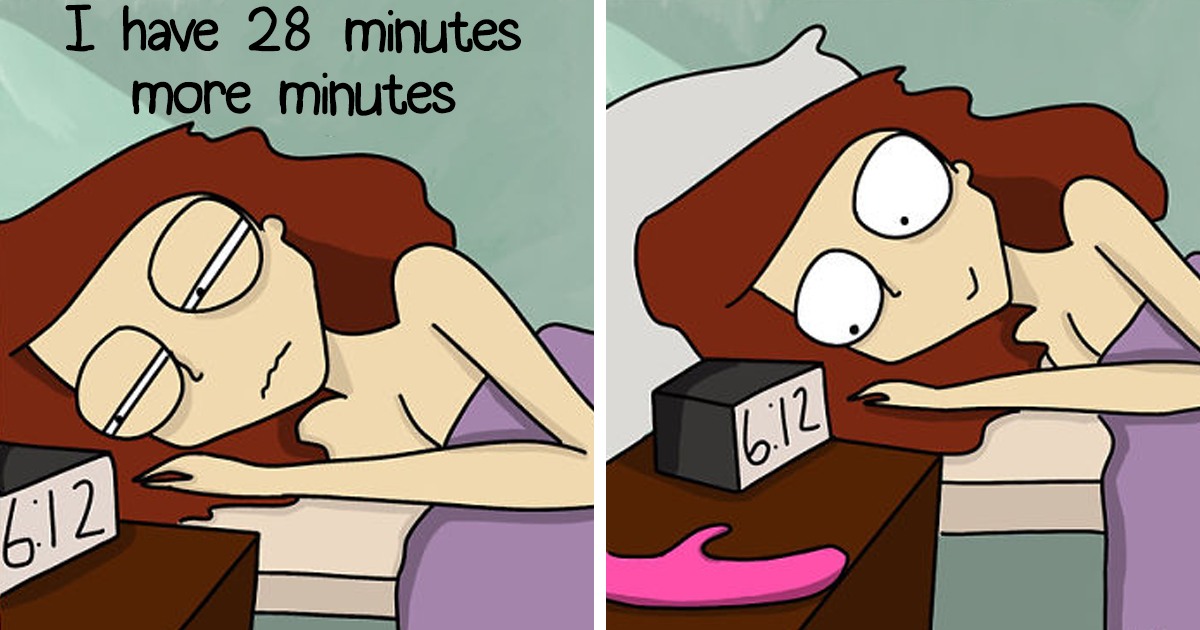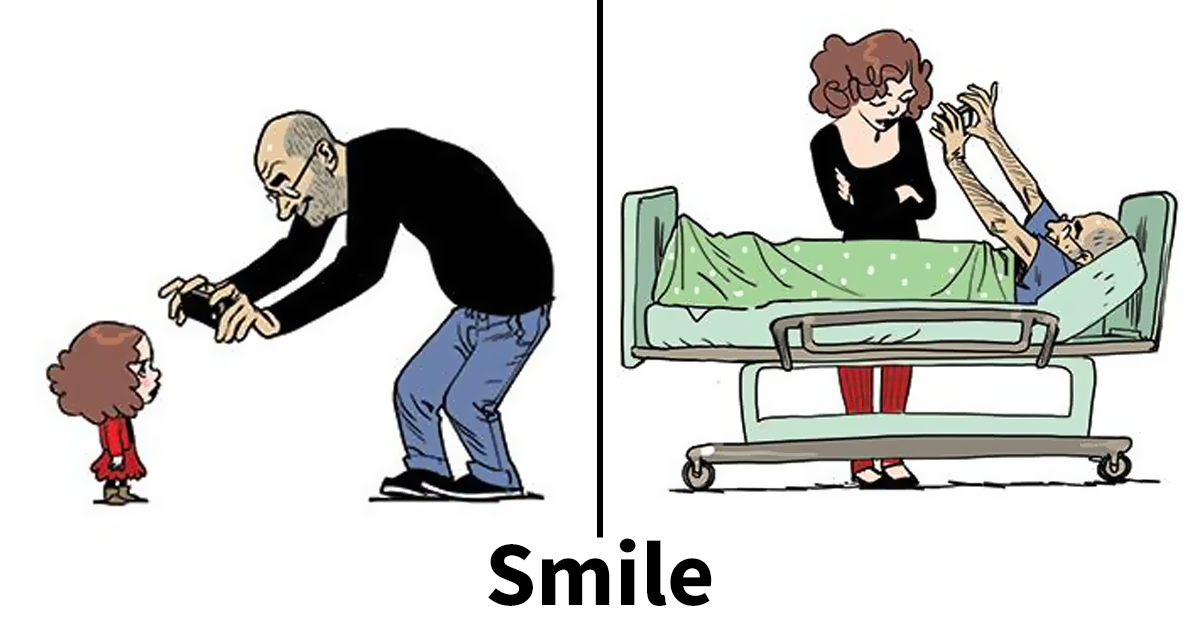

Some illustrations make you laugh. Others make you uncomfortable. The best ones somehow manage to do both before breakfast.
That is the territory explored by Israeli cartoonist and illustrator Asaf Hanuka in The Realist, his autobiographical comic series about family life, creative work, technology, money, politics, and the quiet anxieties humming beneath ordinary routines. A widely shared online collection brought together 64 of these satirical illustrations, introducing many readers to a world where smartphones become body parts, financial worries grow teeth, and parenthood resembles a superhero assignment with no training manual or reliable sleep schedule.
Hanuka’s images are colorful, surreal, and immediately accessible, but they are rarely simple. A scene may begin with a father sitting beside his child, an artist staring at a deadline, or a couple sharing a room. Then reality cracks open. A body turns into machinery. A shadow becomes a monster. A familiar domestic space transforms into a battlefield, prison, factory, or science-fiction landscape.
The joke arrives quickly. The uncomfortable recognition usually arrives half a second later.
Who Is the Artist Behind The Realist?
Asaf Hanuka is a Tel Aviv-based comic-book writer and illustrator whose professional career has included editorial work for major international publications and collaborations on graphic novels such as Pizzeria Kamikaze, The Divine, and I’m Still Alive. He has also worked with his twin brother, illustrator Tomer Hanuka, and contributed artwork to the animated documentary Waltz with Bashir. His honors include recognition from the Society of Illustrators, Communication Arts, 3×3, and the Eisner Awards.
The Realist began in 2010 as a weekly comic for the Israeli financial newspaper Calcalist. The initial premise followed Hanuka and his family as they struggled to find an affordable home in Tel Aviv. Once the housing problem stopped producing enough narrative fuel, the strip expanded into a visual diary about whatever had occupied his thoughts that week. Money remained important, but it was joined by fatherhood, marriage, professional insecurity, identity, technology, social conflict, and the occasional existential monster hiding behind the furniture.
The comics were later collected in English-language volumes, including The Realist, The Realist: Plug and Play, and The Realist: Last Day on Earth. Critics have praised the series for combining autobiographical storytelling with visual fantasy, social commentary, humor, melancholy, and emotional vulnerability.
Why These 64 Satirical Illustrations Feel So Familiar
The situations in Hanuka’s comics are shaped by life in Israel, yet the emotional machinery is strikingly universal. Readers do not need to live in Tel Aviv to recognize the fear of disappointing their children, the pressure of paying bills, the distraction of a glowing phone, or the suspicion that everyone else received an adulthood instruction booklet that mysteriously skipped their mailbox.
Hanuka does not present himself as the wise observer standing safely outside society. He places his own face, habits, weaknesses, and contradictions inside the experiment. That decision gives the satire its warmth. The artist is not pointing at foolish people across the street. He is sitting with them, checking his notifications, worrying about money, and wondering why the refrigerator is making that sound.
Modern Technology Becomes Part of the Body
One of the strongest recurring themes in The Realist is the strange intimacy between people and their devices. Phones, computers, cables, screens, alerts, and operating systems appear not merely as tools but as extensions of the nervous system.
A person may look physically present while being mentally absorbed by a screen. A conversation can feel preprogrammed, as though two people are replaying the same emotional recording. Social-media approval becomes nourishment, while endless notifications behave like mosquitoes that have earned software-engineering degrees.
Hanuka has described the pings and likes of digital life as something that becomes integrated into the flesh. His visual metaphors turn that idea into something viewers can immediately feel: technology is not simply in our hands anymore. It occupies attention, memory, relationships, and self-worth.
The satire works because it avoids the lazy conclusion that technology is automatically evil. These devices connect families, distribute art, and make creative careers possible. They also tempt people to experience life through a rectangular middleman. The comedy lies in our willingness to complain about digital dependency while reaching for the phone to post that complaint.
Parenthood Looks Like Heroism and Total Confusion
Children play a central role in Hanuka’s autobiographical comics. They can be tiny philosophers, unstoppable alarm clocks, emotional wrecking balls, or innocent witnesses to adult hypocrisy. Their presence raises the stakes of every domestic scene.
In conventional superhero stories, the hero receives powers and eventually learns how to use them. Parenthood reverses the arrangement. Adults receive enormous responsibility and discover that their powers include carrying snacks, locating missing socks, and remaining calm while someone screams because a banana broke in half.
Hanuka often borrows the visual language of superhero comics to examine this contradiction. A father may imagine himself as a rescuer while privately feeling helpless. A child may appear vulnerable in one panel and impossibly powerful in the next. These transformations capture a central truth of parenting: love can make a person feel stronger than ever and completely defenseless at the same time.
The humor does not erase the tenderness. It protects it from becoming sentimental. Instead of portraying family life as a flawless parade of hugs and matching pajamas, the illustrations allow affection to coexist with impatience, exhaustion, embarrassment, and fear.
Marriage Is Shown Without the Advertising Brochure
The couples in these satirical illustrations are not posed beneath sunset skies while a gentle breeze approves of their communication skills. They are tired, distracted, worried, occasionally irritated, and still connected.
Hanuka explores the distance that can develop between two people who share a home, children, bills, and history. Silence becomes a storytelling device. A blank space between characters may reveal more than a speech balloon. In other scenes, fantasy exposes the emotional content that ordinary language cannot carry.
This is where the comics become especially effective. The characters may be discussing schedules, groceries, or work, but the image reveals loneliness, desire, resentment, dependency, or fear. The visible conversation and the invisible conversation happen simultaneously.
It is relationship satire without the usual winner and loser. No one delivers the perfect comeback and walks away in slow motion. Both people remain in the room because real intimacy is less like winning a debate and more like repairing a complicated machine while it is still running.
Money Is Never Just Money
Because The Realist began in a financial publication and grew from a housing struggle, economic anxiety runs through the series. Apartments, debt, employment, bills, consumerism, and class pressure appear repeatedly.
Hanuka’s financial satire is effective because money rarely stays abstract. It becomes physical weight, restricted space, machinery, hunger, or a force dividing people from the lives they expected to have. A number in a bank account can affect where a family lives, how much time a parent spends at home, and whether an artist feels free to create personal work instead of accepting another commercial assignment.
The illustrations also examine the performance of success. Modern adults are encouraged to appear productive, fulfilled, financially stable, romantically happy, physically healthy, politically informed, and available for a video call at 8:30 Monday morning. Maintaining the appearance can become a second unpaid job.
Hanuka punctures that performance by admitting insecurity. His characters are not polished lifestyle brands. They are people attempting to hold together careers, families, principles, and grocery budgets with a combination of effort and nervous laughter.
Politics Enters Through the Front Door
Although many comics focus on domestic life, the wider political environment is never far away. Conflict, military danger, social protests, discrimination, immigration, housing inequality, and national identity interrupt everyday routines.
Hanuka often approaches these subjects from the perspective of an ordinary citizen rather than an all-knowing commentator. In interviews, he has explained that when depicting war and attacks, he was less interested in issuing a complete geopolitical verdict than in expressing the helplessness of a parent caught inside events larger than his family.
Academic analysis of The Realist has highlighted Hanuka’s use of mirrored or contrasting images to criticize social attitudes, economic decisions, and the treatment of marginalized groups. Two scenes placed beside each other may initially appear unrelated, only to reveal that one group’s inconvenience is another group’s catastrophe.
This visual juxtaposition is satire at its sharpest. It does not shout instructions at the audience. It arranges the evidence, opens the door, and allows the viewer’s conscience to walk in.
How Asaf Hanuka Turns Anxiety Into Visual Metaphor
Many artists draw what a situation looks like. Hanuka frequently draws what it feels like.
Anxiety may appear as a stain spreading across the page. Creative burnout may become bodily disintegration. Emotional distance can be represented by machinery, walls, masks, or altered anatomy. Consumer pressure may transform people into products. Domestic routines become cosmic events, while political events invade bedrooms and breakfast tables.
Hanuka has explained that creating a comic helps him reduce an overwhelming fear into frames and narrative structure. Once the hidden monster has been drawn and brought into the light, it becomes smaller and easier to examine.
That process also benefits the reader. An emotion that felt vague suddenly has a shape. We may not have imagined our anxiety as a mechanical creature, a flooded room, or a dismantled body, but once the metaphor appears, recognition is immediate.
Color Carries the Emotional Temperature
The polished color in The Realist is not decorative frosting. It helps organize attention and establish mood. Hanuka often works with a controlled palette so the viewer understands where to look and how the scene should feel.
Warm colors can suggest intimacy, embarrassment, danger, or pressure. Cooler shades may create emotional distance or isolation. A sudden contrast can separate internal fantasy from external reality. According to Hanuka, words create meaning, lines describe characters and spaces, and color expresses the emotional condition of the story.
The result is artwork that remains readable even when the underlying idea is complicated. The page may contain political context, family tension, visual symbolism, and a joke, yet the composition guides the eye without requiring a flashlight and a graduate seminar.
Silence Gives the Reader Work to Do
Several of Hanuka’s strongest illustrations use little or no dialogue. The absence of words creates room for interpretation, allowing viewers to notice posture, spacing, visual echoes, and symbolic details.
This silence is important because satire loses power when every meaning is labeled. A cartoon that explains itself too thoroughly resembles a comedian laughing at his own punchline and then distributing a worksheet.
By leaving gaps, Hanuka invites participation. The viewer must decide what has happened, what the metaphor represents, and why the scene feels funny, sad, or disturbing. Different readers may reach different conclusions, especially when an image deals with identity, politics, marriage, or social responsibility.
Why the Illustrations Are Funny Even When They Hurt
Hanuka’s humor often comes from disproportion. A small inconvenience receives an apocalyptic visual treatment. A familiar adult fear becomes a science-fiction disaster. An ordinary family interaction is presented with the dramatic intensity of a final battle.
This exaggeration is funny because the emotion beneath it is genuine. Anyone who has stared at an unanswered email for forty minutes understands that the message has not literally become a monster. Emotionally, however, the creature already has claws and a dental plan.
Self-deprecation also keeps the satire humane. Hanuka repeatedly uses his own weakness as source material, presenting insecurity and failure without trying to manufacture a more impressive public image. That openness encourages empathy because the reader is not being lectured by a perfect person.
The laughter therefore becomes communal. We are not laughing only at the character. We are laughing because we recognize ourselves inside him.
How to Look at the 64 Illustrations More Carefully
A rapid scroll will reveal beautiful drawings and clever concepts, but these works reward slower attention. Begin by identifying the ordinary situation: a family conversation, a work deadline, a financial problem, a phone call, a political event, or a moment of solitude.
Next, locate the visual interruption. What has become impossible? Has a body changed? Has the room expanded or collapsed? Is an everyday object behaving like a living creature? Has a familiar cultural symbol been placed in an unfamiliar context?
Finally, compare the fantasy with the original situation. The gap between them usually contains the satire. That is where a private emotion becomes social criticismor where a social problem becomes painfully personal.
Small details matter. Logos, background screens, shadows, toys, clothing, facial expressions, and color shifts can alter the interpretation. Hanuka’s pages often look immediate, but their clarity is constructed with careful visual hierarchy.
A Reader’s Experience: What Happens After Spending Time With the Gallery
Reading a collection of 64 satirical illustrations is different from reading a conventional comic with a continuous plot. There is no single hero traveling toward a final confrontation. Instead, the reader encounters a sequence of emotional snapshots. Each one opens a door, provides a glimpse of a life under pressure, and closes before everything is neatly resolved.
At first, the experience can feel playful. The artwork is vibrant, and the surreal transformations invite curiosity. You begin by appreciating the technical cleverness: a human body merged with a device, a domestic scene reimagined as an adventure, or a familiar social habit turned into an absurd machine.
After several images, however, patterns emerge. The same invisible forces keep returning in different costumes. Money limits freedom. Technology interrupts intimacy. Love creates vulnerability. Political decisions enter private homes. Creative ambition collides with the need to earn a living. Parents want to protect their children while knowing that complete protection is impossible.
The experience becomes less like browsing cartoons and more like walking through a hall of distorted mirrors. Every reflection is exaggerated, but not enough to become unrecognizable. One image may remind you of checking your phone during a conversation. Another may bring back the strange guilt of working while your family waits for attention. A third may capture the exhaustion of trying to remain informed about world events without allowing those events to consume every peaceful moment.
The strongest illustrations often create a delayed reaction. The first response is amusement: that is a clever visual joke. The second response is interpretation: the image is really about anxiety, privilege, loneliness, or responsibility. The third response is personal and slightly rude: apparently the image is also about me.
This delay is one reason visual satire can remain memorable. A written argument may be understood and filed away. A powerful metaphor continues operating in the mind. The next time a phone interrupts dinner, an old image may return. The next time someone presents a carefully edited version of success online, the machinery behind that performance becomes easier to imagine.
The collection also encourages empathy. Because Hanuka repeatedly shows uncertainty and weakness, viewers are invited to see vulnerability as ordinary rather than shameful. The exhausted parent, distracted partner, anxious worker, and confused citizen are not separate species. They may all occupy the same body before lunchtime.
There is also a productive discomfort in seeing private life connected to larger systems. Housing costs are not merely personal failures. Digital distraction is not solely a matter of weak discipline. Political violence does not remain inside television screens. The illustrations show how economics, media, technology, and national conflict enter individual relationships and shape emotional life.
By the end of the gallery, the title The Realist begins to feel intentionally paradoxical. These scenes are filled with impossible transformations, yet they often describe reality more accurately than literal representation could. A photograph might show a person holding a phone. Hanuka’s version shows the phone occupying the person. A photograph might show a father sitting quietly with his child. The comic can reveal the enormous responsibility, fear, and love compressed inside that silence.
The overall experience is not purely pessimistic. Beneath the anxiety is an insistence that attention matters. Drawing a fear gives it boundaries. Recognizing a contradiction creates the possibility of changing it. Laughing at a weakness can reduce its power without denying its existence.
That may be the collection’s most valuable effect. It does not offer a motivational slogan or a seven-step program for repairing modern civilization by Thursday. It offers recognition. Sometimes recognition is where honest change begins.
Conclusion: Satire That Refuses to Look Away
The 64 satirical illustrations associated with Asaf Hanuka’s The Realist succeed because they combine visual spectacle with emotional precision. They examine technology, consumerism, parenthood, marriage, politics, creative work, and economic insecurity without pretending that any of these subjects can be separated from ordinary life.
Hanuka’s surreal imagery makes invisible pressure visible. His humor prevents the work from becoming a sermon, while his vulnerability keeps the satire compassionate. He does not claim to have escaped the contradictions he illustrates. He draws from inside them.
That honesty is what makes the comics linger. You may arrive expecting colorful jokes and leave thinking about the machinery of your daily routine, the people waiting beyond your screen, and the monsters that become smaller once someone finally turns on the light.
Note: This article analyzes the themes, creative methods, and cultural significance of the collection without reproducing or ranking the copyrighted illustrations.