Inspired by Absence: Art and Old-World Architecture at Hotel Palazzo Daniele in Italy

Some luxury hotels compete by adding more: more marble, more technology, more pillows than any human could reasonably use. Palazzo Daniele takes the opposite route. Inside this historic palace in southern Italy, emptiness is not a decorating failure waiting for a sofa. It is the main event.
Located in Gagliano del Capo, a small Salento town near the southern tip of Puglia, Palazzo Daniele blends 19th-century architecture, contemporary art, minimalist interiors, and intimate Italian hospitality. Its weathered walls and grand frescoes remain visibly old, while carefully placed artworks and modern fixtures introduce an entirely different era. The result feels neither like a museum nor a conventional boutique hotel. It feels like someone opened the doors to a family palazzo and invited the present day insidebut asked it to wipe its shoes first.
A Historic Palazzo at the Tip of Italy’s Heel
Palazzo Daniele was constructed in 1861, the year Italy became a unified kingdom. It served as the ancestral home of the Daniele family and still rises from the main square of Gagliano del Capo with the self-assurance of a building that has watched generations come and go.
The property eventually passed to Francesco Petrucci, a lawyer, art collector, and co-founder of the contemporary art organization Capo d’Arte. Rather than turning the family home into a polished reproduction of aristocratic life, Petrucci imagined it as a setting where architecture, creative work, and hospitality could interact.
He collaborated with hotelier and collector Gabriele Salini, whose GS Collection also includes G-Rough in Rome. Milan-based architects Ludovica Serafini and Roberto Palomba of Palomba Serafini Associati were entrusted with the transformation. Their approach respected the palazzo’s history without treating every crack like a medical emergency.
Architecture Shaped by Courtyards
The old building unfolds around interconnected courtyards, steps, arches, terraces, and rooms facing one another across open space. This layout encourages both visual connection and a slow, wandering style of movement. Guests do not simply march from reception to elevator to room. They pass through layers of indoor and outdoor space, noticing how sunlight, shadow, greenery, and stone alter the atmosphere throughout the day.
High vaulted ceilings, original mosaic floors, neoclassical details, mirrored salons, and ornate frescoes preserve the palazzo’s old-world grandeur. Behind it, gardens, palms, citrus trees, creeping vines, and a dark swimming pool create a secluded retreat despite the property’s central position in town.
What “Inspired by Absence” Actually Means
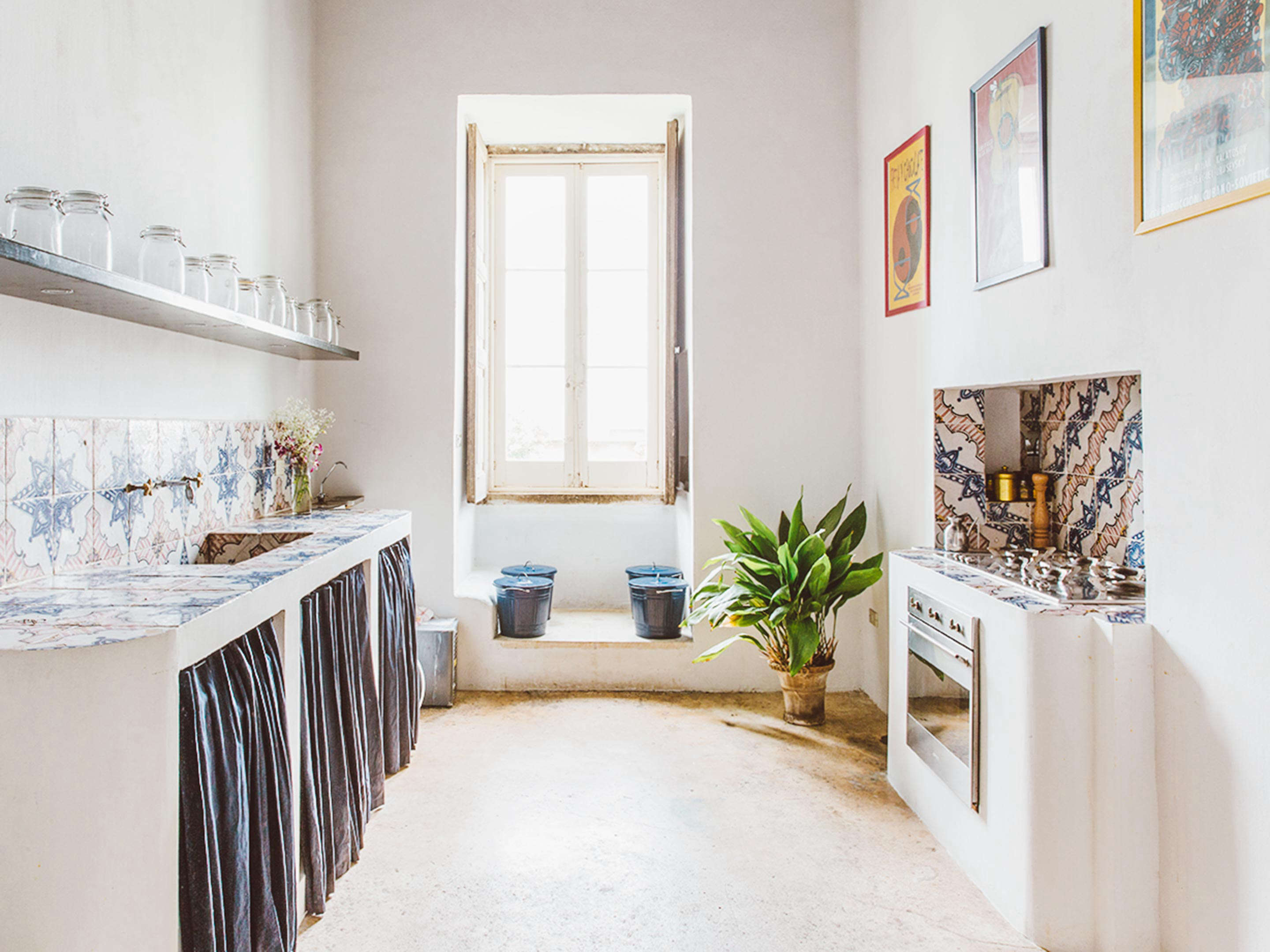
The hotel’s design is often described through the idea of absence. In practice, that meant removing unnecessary furniture, decorative clutter, and later additions so the original architecture could breathe. The designers sought to “exalt the void,” allowing volume, proportion, patina, and light to become active parts of the interior.
This is minimalism, but not the chilly, everything-is-beige variety commonly found beside suspiciously uncomfortable designer chairs. Palazzo Daniele’s rooms possess warmth because their surfaces carry evidence of time. Plaster is uneven. Walls reveal cracks. Frescoes show their age. Patterned floors retain the subtle irregularities that modern reproductions work very hardand usually failto imitate.
By resisting cosmetic perfection, the renovation preserves a sense of continuity. Guests can see that the building had a life before the hotel and will probably have one long after their vacation photos disappear into cloud storage.
Preservation Without Pretending It Is 1861
The project does not attempt to recreate a complete period interior. Antique portraits and historic motifs may appear beside sculptural lamps, contemporary furniture, or industrial-looking fixtures. The contrast makes both sides more noticeable. A modern object appears bolder against a faded wall, while a ceiling fresco seems even more elaborate above a nearly empty room.
This approach offers an important lesson in adaptive reuse. Historic buildings do not always need to be filled with matching antiques to feel authentic. Sometimes removing distractions is the most respectful way to reveal craftsmanship that has been present all along.
Contemporary Art That Belongs to the Building
Art at Palazzo Daniele is not confined to a designated gallery. It appears throughout bedrooms, salons, passageways, and functional spaces, creating an ongoing conversation with the architecture. Petrucci’s collection includes work by established contemporary artists as well as site-specific commissions created with the palazzo in mind.
Pieces associated with the property have included a sculptural lamp by Luigi Presicce, stools by Nicolas Party, work by Roberto Cuoghi, and a lithograph by Carla Accardi. Ancestral portraits and neoclassical ornament remain part of the visual story, ensuring the contemporary collection never erases the family history surrounding it.
When a Shower Becomes an Installation
One of the hotel’s most memorable intersections of art and daily life is the dramatic rain shower designed with artist Andrea Sala. Water descends from high within a vaulted room into a large circular basin, transforming an ordinary shower into something between a theatrical performance and a very luxurious baptism.
The installation demonstrates the hotel’s broader philosophy: useful objects can also challenge perception. Lighting does more than illuminate. Furniture does more than occupy a corner. Even bathing can briefly make a guest feel like the protagonist of an experimental Italian film.
Later additions extended this dialogue through custom stone bathtubs, suspended showers, contemporary lighting, vintage brass bed frames, patterned tiles, and carefully chosen modern furniture. These elements are distinct from the historic shell, yet restrained enough to avoid overwhelming it.
Rooms Defined by Space, Patina, and Restraint
Palazzo Daniele has evolved from its original intimate hotel configuration and now presents a larger collection of individually designed suites. Some occupy the palazzo’s noble rooms, while newer accommodations extend into areas once used by household staff or for agricultural storage.
Bedrooms favor monastic simplicity: high ceilings, uncluttered walls, crisp linens, limited furniture, and strong architectural proportions. Views may open toward a courtyard, garden, pool, or town square. Instead of distracting guests with dozens of decorative objects, the rooms direct attention toward frescoes, flooring, art, and changing natural light.
The Royal Suite illustrates the property’s refusal to flatten history into perfection. Created partly from a former kitchen and storeroom, it retains unusual features such as a sloping floor and a shortened doorway. Pastel colors, antique books, a custom rain shower, and sculptural furniture give the space contemporary comfort without disguising its earlier purpose.
This style will appeal most strongly to travelers who value atmosphere over excess. Anyone requiring a control panel for seventeen lighting scenarios may need a brief adjustment period. Those who enjoy texture, scale, silence, and design with a point of view may find the rooms difficult to leave.
A Hotel That Still Feels Like a Home
Although Palazzo Daniele is visually sophisticated, its hospitality is rooted in domestic life. Shared spaces invite guests to read, talk, eat, drink, and linger rather than retreat immediately behind a bedroom door. The kitchen plays a central role, reinforcing the sense that this is a lived-in Italian residence rather than a sealed luxury compound.
A communal space created in a former olive oil mill strengthens that social character. Its tall arches and curved white ceiling frame a long dining table, vintage seating, and a sinuous Pierre Paulin sofa. The room can accommodate dinners, morning activities, drinks, and informal gatherings while preserving the dramatic volume of the original structure.
Puglian Food Without Unnecessary Acrobatics
The culinary experience emphasizes seasonal ingredients and recognizable regional cooking. Puglia’s food culture is built around excellent produce, olive oil, handmade pasta, legumes, vegetables, seafood, and recipes in which simplicity depends on ingredient quality rather than culinary smoke machines.
Meals may feature vegetables prepared according to local traditions, freshly made pasta, fish from nearby waters, and wines from southern Italian producers. In summer, the pool area becomes a natural setting for a light meal or aperitivo. The atmosphere is refined but relaxedthe sort of place where one more plate somehow seems reasonable.
Gagliano del Capo and the Salento Landscape
The location is essential to Palazzo Daniele’s identity. Gagliano del Capo sits close to Santa Maria di Leuca, near the point where the Salento peninsula narrows between the Adriatic and Ionian seas. The surrounding region combines rocky coastline, swimming coves, sea caves, sandy beaches, olive groves, and towns shaped by Byzantine, Baroque, and neoclassical influences.
Unlike better-known destinations elsewhere in Italy, Gagliano del Capo remains an everyday town rather than a stage set created primarily for visitors. Guests can hear activity in the square, walk along ordinary streets, visit local shops, and observe the rhythms of southern Italian life.
The town also has a meaningful connection to contemporary culture through Capo d’Arte, which has brought international artists and exhibitions to this corner of Puglia. That relationship helps explain why art inside Palazzo Daniele feels integrated with its setting rather than imported as fashionable decoration.
Why Palazzo Daniele Matters in Modern Hotel Design
Many historic hotels promise preservation but deliver newly manufactured nostalgia. Palazzo Daniele presents a more thoughtful alternative. Its renovation accepts weathering, irregularity, and emptiness as sources of character. New interventions are legible, allowing guests to distinguish contemporary design from the older building rather than blending everything into a vague “luxury heritage” smoothie.
The hotel also challenges the assumption that comfort requires visual abundance. A room can feel luxurious because of its scale, natural materials, craftsmanship, privacy, and emotional atmospherenot merely because every surface has been assigned a decorative accessory.
Design Lessons to Borrow at Home
Few people have an inherited Italian palazzo available for experimental renovation, which is frankly inconsiderate of our ancestors. Still, the property’s principles can inform ordinary interiors:
- Remove objects that compete with a room’s strongest architectural feature.
- Preserve honest signs of age when they are structurally safe.
- Use fewer artworks, but give each piece enough room to command attention.
- Mix historic and contemporary elements instead of creating a rigid period theme.
- Treat functional items such as lamps, chairs, and fixtures as opportunities for expression.
- Allow empty space to provide visual balance and a sense of calm.
The goal is not to make a home look unfinished. It is to decide what deserves attentionand then stop adding things before the room begins resembling an antiques store during an earthquake.
Experiencing Palazzo Daniele: A Slow Day in Salento
A stay at Palazzo Daniele is best understood as a sequence of small sensory experiences rather than a checklist of amenities. Morning might begin with sunlight entering a courtyard and moving across the old stone. The building is quiet enough that footsteps, birds, and the distant sounds of the town become part of the atmosphere. Breakfast encourages a slower pace, especially when local fruit, bread, pastries, coffee, and seasonal ingredients are involved.
Afterward, guests can explore the palazzo as they would a private collection. A weathered arch frames a modern sculpture. A restrained bedroom leads to an unexpectedly theatrical bathroom. A faded wall reveals several generations of paint. The most rewarding approach is to look closely rather than rushing around photographing every corner. The building’s personality emerges through transitions: bright courtyard to shadowed corridor, grand salon to spare bedroom, ancestral portrait to contemporary lamp.
By late morning, the coast becomes tempting. A short excursion toward Santa Maria di Leuca can include viewpoints over the sea, swimming, or a boat trip past caves and rocky inlets. The Adriatic side tends toward dramatic cliffs and clear coves, while the Ionian side offers stretches of softer, sandier coastline. Travelers with a car can shape the day around weather, wind, and whichever beach looks least like it has been discovered by every other person in Europe.
Returning to the hotel in the afternoon provides the pleasure of contrast. After the brightness and heat of the coast, the palazzo’s deep interiors feel cool and protective. The dark pool, surrounded by garden greenery, offers an elegant place to recover from the exhausting work of looking at beautiful water. Reading beneath a tree or lingering over an aperitivo may become the afternoon’s most ambitious achievement.
Depending on current programming, guests may also encounter yoga sessions, cultural events, art-related activities, or locally focused excursions. Experiences involving area producers, food traditions, or coastal life can deepen the connection with Salento. The attraction is not simply access to an activity; it is the opportunity to understand how the hotel relates to the community around it.
Evening is when Palazzo Daniele’s domestic character becomes clearest. Guests gather for drinks or share a meal around a communal table. Regional dishes arrive without needing elaborate introductions. Conversation flows more naturally in rooms that were designed for family life long before they welcomed hotel guests.
Later, the frescoes and courtyards take on a different mood under artificial light. Contemporary lamps emphasize selected details while much of the architecture retreats into shadow. The palazzo feels theatrical but never overproduced. There is no need for scheduled entertainment when the setting itself keeps changing.
The ideal stay leaves room for this kind of unstructured time. Palazzo Daniele is not merely a base for racing through Puglia’s famous towns. It rewards guests who can spend an hour doing very little and notice quite a lot. In a travel culture obsessed with maximizing every day, that may be its most luxurious experience of all.
Conclusion: The Luxury of Leaving Something Out
Palazzo Daniele succeeds because it does not force its history, art, and design into perfect agreement. Old frescoes coexist with contemporary installations. Cracked plaster surrounds polished fixtures. Monumental rooms contain surprisingly little furniture. These contrasts give the hotel its energy.
More than a beautiful boutique hotel in Puglia, Palazzo Daniele is an argument for restraint. Its designers understood that preservation sometimes requires subtraction and that empty space can hold memory, light, and imagination. In a world continually asking what else can be added, this old Italian palace offers a more interesting question: what can be removed so that the important things are finally seen?
Note: Suite configurations, dining programs, activities, and seasonal services may change. Travelers should confirm current offerings directly with the hotel before booking.